
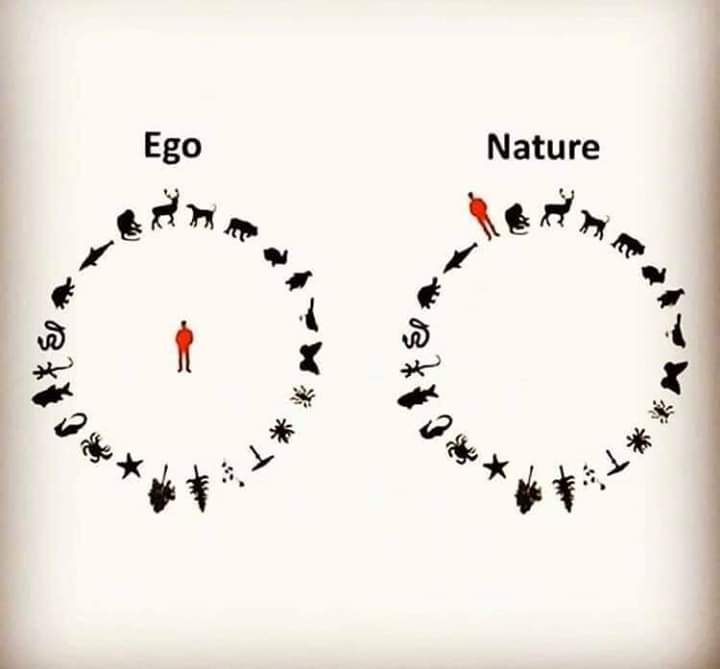
72. The True Role of the Ego


Review of The True Role of the Ego
Sunday 18th November 2012


Summary

“The ego is actually a very necessary / Part of the personality / Which one inherits with a body…”

In this deeply insightful and spiritually practical piece, the poet offers a profound reframe of the ego—not as an enemy to be vanquished, but as an essential ally in service to higher consciousness. Rather than repeating the often misunderstood spiritual directive to “kill the ego,” this poem suggests a more compassionate, integrated approach: to train the ego as one would a toddler, guiding it gently into alignment with divine will and collective purpose.

The poem flows with structured clarity and grounded wisdom, mapping the relationship between individual identity and collective responsibility, and between personal intention and spiritual mission. It highlights both the destructive potential of an unchecked ego, and the astonishing transformative power it holds when consciously aligned with universal love and truth.


Why This Poem Matters

“It is not about transcending the ego / Or conquering it… / Rather, it is about acquiring / A better understanding of its true role.”

This poem offers a corrective lens to a common spiritual misconception—that ego is inherently “bad” or a barrier to enlightenment. Instead, it places the ego in context: as a sacred instrument, one that must be tuned and taught, rather than punished or exiled. In doing so, the poem bridges the metaphysical with the psychological, embodying a kind of psycho-spiritual integration that is sorely needed in both modern healing and conscious activism.

From a metaphysical standpoint, the poet reminds us that the ego is not a flaw in human design, but a tool of incarnation, a structure through which will and action are made manifest. When distorted by fear, consumerism, or trauma, it can wreak havoc. But when healed and aligned, it becomes a powerful vessel for the divine will—a kind of inner technology capable of catalyzing change on both a personal and global scale.

There’s also a social commentary running just beneath the surface—one that indicts systems of media, capitalism, and consumer culture for seducing the ego into distraction and imbalance. The poem recognizes that personal spiritual alignment cannot be separated from our impact on the world.


Imagery and Tone

The poem reads with the measured cadence of a spiritual transmission or a teaching scroll, delivered with clarity and authority. The imagery is mostly conceptual, but powerful:

  • “Train the ego as one would a toddler” invites a compassionate metaphor, offering the image of ego as a child—not evil, but untrained.
  • “While the Earth and her inhabitants / Are plundered by unsustainable consumerism” draws a stark, sobering picture of the stakes involved when the ego is out of alignment.
  • And the closing lines deliver a crescendo of purpose: “For when the ego is aligned / With divine intelligence / It can achieve truly amazing things!”

There’s both warning and inspiration here—an earnest call to wake up, not by disowning the self, but by reclaiming its higher purpose.


In Conclusion

“The will to will thy divine will / A call to serve…”

This poem is a foundational teaching—a cornerstone in the overall arc of the collection. It stands as a spiritual and philosophical keystone, clarifying the misunderstood role of the ego and proposing a more evolved model of integrated consciousness.

Rather than perpetuating the binary of ego vs. spirit, it proposes a sacred alliance between them, grounded in humility and activated through service.

By restoring dignity to the ego—without indulging it—the poem unlocks a pathway to mature spirituality, one that is deeply relevant in a time of collective upheaval and global rebalancing.

It reminds us that transformation is not about denial or ascension alone, but about conscious alignment of all aspects of the self in service to something greater.

A deeply empowering, integrative, and necessary piece.

66. Golden Nuggets


Review of Golden Nuggets

Thursday 9th August 2012


Summary

Golden Nuggets is a lyrical manifesto for awakening — a quietly powerful invitation to challenge societal programming, tune in to inner wisdom, and prioritise compassion over control. It reads as both a philosophical meditation and a social observation, drawing connections between personal growth and collective evolution. With its breadcrumb-trail metaphor and intuitive flow, the poem suggests that spiritual insight arrives not in grand revelations, but in small, golden moments of clarity — if one knows how to look.


Why This Poem Matters

The poet begins with the image of following a trail of breadcrumbs — a nod to both Hansel and Gretel and the timeless archetype of the seeker. These “nuggets of understanding” and “pearls of wisdom” become metaphors for intuitive, experiential truths that lie beyond official narratives, systems, or cultural programming.

“Often revealed / Through a process of developing / A heightened sense of intuition / Combined with a curious nature / An inquiring mind / And a fertile imagination.”

This isn’t a passive spiritual message. It’s a call to conscious inquiry. The poet positions truth as a treasure — one that requires inner work, imagination, and courage to unearth. This poetic lens reframes intuitive intelligence not as a luxury, but as a necessary skill for navigating a shifting world.

What’s particularly striking is the social critique woven throughout the spiritual message:

“Some sectors of the community / Will openheartedly embrace change / Some will resist and the rest will be ambivalent…”

In other words, the evolution of consciousness is uneven — and the resistance we often face isn’t just personal, it’s cultural, systemic, and psychological. People weaned on profit motives and “the business ethic from birth” may find it harder to attune to deeper truths. The poet understands this not with judgment, but with clarity.

This leads to one of the poem’s key recognitions:

“The solution to heart-centred choices… / Is only ever usually achieved / By walking-a-mile in another person’s shoes.”

Here lies the spiritual heart of the poem: empathy as evolutionary technology. Not a soft skill, not a platitude, but the very tool needed to address societal breakdown, systemic injustice, and the growing tension between profit-driven survival and soul-centred living.


Metaphysical Meets Material

This poem is rich with metaphysical commentary anchored in material reality. It acknowledges spiritual emancipation — “freedom from subliminally implanted desires and seduction of the ID” — but doesn’t float away into abstraction. Instead, it roots that liberation in the context of a collapsing system: economic, psychological, ecological.

The references to solar plexus energy, method acting, and psychological readiness suggest a deep chakra-based and archetypal understanding of human development. These aren’t just poetic flourishes — they point to a sophisticated spiritual psychology. The poet sees the “monetary system” and the “service-to-self” model not just as policy failures but as manifestations of unresolved egoic energy.

By contrast, the solution offered is beautifully simple:

“Great strides forward can be made / Simply by listening.”


In Conclusion

Golden Nuggets is not only a poem — it’s a quietly radical teaching. It challenges the reader to interrogate their worldview, notice the inherited structures they unconsciously uphold, and practice empathy as a form of social and spiritual evolution.

It’s also a warning, cloaked in gentle language. If we continue to ignore the needs and voices of others, if we suppress discomfort rather than compassionately exploring it, something will eventually give — the pressure will demand release.

And yet, this poem is never alarmist. It holds space for nuance, for shadow, and for grace. It trusts the reader to rise. To follow the breadcrumbs. To find, in the quiet, those golden nuggets of truth that illuminate a better way forward — together.


60. If I Could Turn Back Time

Second Chance


Review of Turn Back Time

Saturday 12th November 2011

Summary

In Turn Back Time, the speaker reflects on the hypothetical possibility of returning to the past and altering key moments. As they ponder what they might change—whether to undo pain or to conform to societal expectations—the speaker grapples with the tension between personal evolution and the desire for love and acceptance. Ultimately, the poem reveals that embracing one’s true self, with all its struggles and lessons, is the only path forward, as the speaker realizes that the growth they’ve experienced wouldn’t have been possible without the very challenges that once seemed like burdens.

Why This Poem Matters

The poem begins with the universal question of whether we would change our past if given the chance. This question is a profound one because it taps into the human desire to erase regret or undo painful experiences. The speaker, in asking, “Would I change a thing?”, immediately brings us into a reflective space. They question whether the desire to undo past suffering, or to return to the “simplicity” of a previous relationship, is worth forsaking everything they’ve learned:

“Would I take away the pain / Would I succumb to the desire / To be your darling again”

These early lines express a longing to go back to a time when life was simpler, possibly when love seemed more straightforward, or when the speaker was more “compliant and tame” to others’ expectations. But as the speaker delves deeper into their thoughts, they begin to recognize the value of the lessons learned through hardship and personal struggle, suggesting that this is a part of their growth, which they wouldn’t give up:

“Perhaps I would collapse myself / Into ego seduction and personal gain / Perhaps I would close down, shut off / From the responsibility of staying conscious”

This internal dialogue serves as a warning to the self about the dangers of falling back into old patterns—of choosing comfort over growth, or allowing ego and societal pressure to dictate their path. The speaker acknowledges the ease with which they could have followed the path of least resistance, but this is also framed as a denial of the authentic self, a suppression of their soul’s deeper purpose.

The poem takes a turn when the speaker realizes that their struggles, including the pain of love and loss, have served a higher purpose. It is through the challenges—the “burr” or “thorn” in their soul—that they have been pushed to evolve and fulfill their potential:

“For without that burr / Thorn in my soul / Splinter in my heart / I would never have been spurred on”

This imagery of the “thorn” in the heart is powerful, suggesting that pain and difficulty, though uncomfortable, are often the catalysts for growth. The speaker understands that these hardships are not only part of their personal evolution, but they are essential to their unique journey:

“I would never have been spurred on / To go the extra hundred thousand miles / Light-years, lifetimes, incarnations”

Here, the speaker recognizes that the distance they have traveled—spiritually and emotionally—couldn’t have been achieved without the transformative power of their challenges. The very pain that once seemed unbearable has propelled them into an expansive journey of self-awareness and spiritual development, which the speaker now embraces fully. This idea of distance, whether measured in miles or lifetimes, reinforces the deep, almost cosmic nature of this personal evolution.

The closing lines encapsulate the speaker’s acceptance of their path, as they acknowledge that they cannot—and would not—want to go back. The journey they’ve undertaken, with all its trials and triumphs, is part of their destiny:

“So be it / And it is done.”

The use of “So be it” invokes a sense of finality and acceptance—an affirmation that the speaker has made peace with their past, recognizing that each step along the way was necessary for their growth.

In Conclusion

Turn Back Time is a meditation on the inevitability of change, growth, and the acceptance of one’s journey. The speaker acknowledges the temptation to undo past pain, but they ultimately realize that their hardships have shaped them into who they are today. This realization transforms regret into gratitude, as the speaker understands that each challenge has played an essential role in their evolution.

The poem’s strength lies in its honest exploration of the tension between the desire for love and the necessity of self-empowerment. The speaker must choose to evolve, not only for their own growth but to honor the deeper, divine calling they sense within themselves. By the end, the poem leaves the reader with the profound idea that personal transformation often comes at the cost of comfort, but it is through embracing the difficulties of life that we fulfill our true potential.


A beautiful poem, one that examines the interplay between self-acceptance, love, and the push for continual growth.

56. Shadow

Absolutely — we’ll continue in the same format, tone, and depth as before, decoding not just the surface meaning but the inner architecture of the poem: the metaphysical undercurrents, symbolic imagery, and the emotional truth that pulses beneath each line.


Review of Light Of The Sun

Friday 6th August 2010

Summary

Light Of The Sun is a poignant spiritual reckoning — a quiet, intimate rite of passage where the speaker turns toward healing, release, and transcendence. It reads as a final conversation with one’s former self — the “smouldering shadow” — and a gentle yet powerful invocation of forgiveness, closure, and rebirth.

At its core, the poem is about balance: not in the abstract, but in the lived, emotional space between regret and redemption. Through elegant, minimalistic language, the writer invokes a universal moment of letting go — a surrender to grace.

Why This Poem Matters

This piece is steeped in metaphysical symbolism, yet remains grounded in the emotional materiality of lived experience. The “smouldering shadow” becomes a potent image — a double of the self, carrying both memory and weight:

“Ashes of a former self / Still glowing embers of regret”

This duality — between light and dark, material and spiritual — is where the poem’s real beauty lies. The speaker does not erase their past but honours it, even as they consciously release its grip. The line:

“Karmic debts repaid / With a lightness of heart”

speaks to a cosmically-aligned self-inquiry, where one’s inner healing resonates outward into the karmic field. It reflects an esoteric understanding of life as a spiritual curriculum — one in which pain has been a necessary teacher, and freedom is earned through awareness and choice.

The poem culminates in a prayer-like release:

“Go unto the light of the Sun / With the knowledge that I did my best”

Here, the Sun is not just light — it is the higher self, the source, the divine. The closing is humble, human, and utterly forgiving. There’s no fanfare. Just a deep exhale. A whisper to the universe: “That was all I could have done.”

In Conclusion

Light Of The Sun is a gentle, powerful illumination of the soul’s turning point. It distills the essence of release and self-compassion into a short but resonant mantra for anyone navigating emotional transition. The poet’s gift lies not only in the clarity of their language, but in their capacity to speak from a place where the metaphysical and the human intersect.

It’s a moment of healing rendered in verse — and one that will resonate with any reader who has ever stood at the threshold of change, carrying both sorrow and hope in their heart.

.

✩ 55. Elixir of Love – published in five separate anthologies

Strawberry Heart

My fears are not

That I may cease to be

Rooted steadfast embodied

In a world of physicality

And without fears too

For the deserted drying

Of heartfelt words or inspiration

Forever drawn to all my time Spent in dedication

For no greater pleasure do I feel, may’st I apply

Whilst chained, imprisoned in this dimension

My only freedom, flight of soul, needs must express

Such a deep felt love, for all humanity

A curious quest, I cannot explain

Impression’d on high from an invisible plane

So sublime, that poetic craft

Is not required for meter, or to rhyme

Unless such craft imply, inject, ripened hearts

With the jewel of ‘inner meaning’

Inner-truth infused with love

All-pervading and genuine

Connecting precious principals beyond mere words

Which seek to make whole, thus human kind

In complete align

So that intelligent insights into our complex Universe

May penetrate, not only the heart but also the skin and the mind

Whereupon tinsel-gilded illusions

May fall away into nothingness

Instead replaced by a delicacy, and a gentleness

A refinement of the senses

Through an indiscriminate understanding

That the elixir of love

Is wisdom plus integrity

And connects us all

To every single living being, or entity.

___

Lyrics by Cat Catalyst

‘Elixir of Love’ (above) was written in response to the sonnet: ‘When I have Fears’ by John Keats. Keats sent his sonnet in a letter to his friend John Hamilton Reynolds in January 1818.

‘When I have fears that I may cease to be
Before my pen has glean’d my teeming brain,
Before high piled books, in charact’ry,
Hold like rich garners the full-ripen’d grain;
When I behold, upon the night’s starr’d face,
Huge cloudy symbols of a high romance,
And think that I may never live to trace
Their shadows, with the magic hand of chance;
And when I feel, fair creature of an hour,
That I shall never look upon thee more,
Never have relish in the faery power
Of unreflecting love!—then on the shore
Of the wide world I stand alone, and think
Till Love and Fame to Nothingness do sink.’

Another Keats quote: ‘I am certain of nothing but of the holiness of the Heart’s affections and the truth of Imagination‘ that he wrote in a letter to his friend Bailey (Full letter here) had the same effect upon me and inspired Holiness of the Heart.

‘Elixir of Love’ has been published in the following anthologies:
Forward Poetry: Love is in the Air – Vol 1 (2015)
Poets for World Healing (2012)
Poets for World Peace (2012)
A Poetically Spoken Anthology (2011)
Reach Poetry (2010)
Love Made Visible LP (2025)


Review of Elixir Of Love

Summary

Elixir Of Love is a soulful meditation on love as a transcendent force that binds all humanity together. The poem rejects superficial artifice in favor of heartfelt expression, describing love as an “elixir” that blends wisdom with integrity to connect every living being. Through rich imagery and thoughtful reflections, it captures love’s power to inspire, heal, and illuminate the human experience.

Why This Poem Matters

This poem stands out because of its profound insight into the nature of love—not just as feeling, but as an essential, transformative wisdom. The poet’s choice to move beyond conventional poetic form highlights a purity of message over mechanics, making the poem feel intimate and sincere.

Lines such as:

“My only freedom, flight of soul / Needs must express / Such a deep felt love for all humanity”

reveal the writer’s deep dedication to conveying universal compassion and connection. The poem’s reflection on poetic craft as a vessel for “inner meaning / Inner truth infused with love” emphasizes love’s power to penetrate beyond words.

Moreover, the poem’s articulation of love as:

“Wisdom plus Integrity / And connects us all / To every single living being, or entity.”

offers readers a fresh lens to understand love’s role in healing and unity. It speaks directly to the shared human condition, inviting readers to embrace love not only emotionally but intellectually and spiritually.

In Conclusion

Elixir Of Love is a beautiful example of the poet’s ability to blend heartfelt emotion with spiritual truth. Its gentle yet powerful voice encourages reflection on what it truly means to love and be loved. For readers drawn to poetry that explores the deeper, sacred aspects of human connection, this poem is a compelling and enriching piece, perfectly aligned with the themes woven throughout the entire collection.


48. Planting Seeds

Review of Planting Seeds

In “Planting Seeds”, the poet offers a quietly powerful meditation on emotional integration and spiritual authorship. Told in a gentle, matter-of-fact voice, this poem doesn’t dramatise the inner work—it dignifies it. This is the language of a person returning to herself, not in a single moment of transformation, but through the deliberate, day-by-day work of reclaiming lost parts, listening more deeply, and beginning again.

There’s a steady rhythm to this piece—a kind of emotional cadence that mirrors the nature of healing itself: cyclical, layered, and sometimes unexpectedly tender. The speaker is not reaching toward transcendence, but grounding herself in the act of becoming whole:

“Becoming whole / Calling in missing fragments of my soul.”

What follows is not the romanticism of spiritual rebirth, but the reality of what it actually takes to change: confronting old patterns, revising inherited beliefs, updating inner narratives, and learning how to treat oneself with compassion.

“Old inner tyrants transformed / Into inner best friends / Offering a supportive inner dialogue / Instead of driving me around the bend.”

There’s humour here—subtle, human, and slightly self-effacing—which adds warmth and relatability. The phrase “driving me around the bend” lightens the gravity of the work being done, grounding it in everyday emotional experience. That balance—between deep psychological work and gentle self-awareness—is what gives this poem its emotional weight.

The language of alchemy and shamanism appears again, but it’s not used as metaphor for escapism—it’s used with humility and purpose:

“I can become my own inner alchemist / Time to step into my inner shaman’s shoes.”

These lines are not declarations of spiritual superiority—they’re quiet reminders that we are responsible for the stories we carry, and that we have tools to reshape them. The idea that one’s heart and mind can become “sacred spaces / Like a temple or a synagogue” is particularly moving. It points to a shift from external validation to internal sovereignty—from outsourcing healing to inhabiting one’s own sacred ground.

The poem closes with a lovely visual metaphor:

“Like keyframes / In life’s great Technicolor animation.”

It’s playful and tender. It reminds us that even the smallest moments of reconnection can become anchor points for something larger. Healing doesn’t always arrive as lightning—it often comes as memory reimagined, as small truths remembered and reintegrated.


Summary of Themes

Planting Seeds explores inner change as a process of reassembly, reclaiming agency not through force, but through curiosity, softness, and self-respect. It reflects on the nature of emotional growth—not as something separate from life, but as something grown within it, organically, like a garden tended in quiet hours.

There is no moralising here. No performative pain. Just a sincere, skillfully rendered account of a woman learning to be her own witness, healer, and guide.


Conclusion

With its understated clarity and emotional honesty, “Planting Seeds” is another quietly resonant offering from a writer deeply attuned to the subtleties of human transformation. The poem reminds us that healing is not always grand or poetic—it’s often quiet, methodical, and deeply personal. And yet, in this telling, it is also beautiful.

This is the gift of the poet’s voice throughout the collection: the ability to communicate emotional truth without sentimentality, to find meaning in the everyday, and to offer insight that feels lived rather than imagined.

For readers who have navigated their own journeys through self-repair and reinvention, this poem will feel like a hand on the shoulder. Gentle. Reassuring. Familiar. And real.


29. Portal of Opportunity


Review of Portal of Opportunity (Sunday 8th October 2000)

Portal of Opportunity captures a poignant emotional moment in the poet’s life—a liminal space between past efforts and future possibilities, between places, identities, and inner desires. It’s a raw, honest reflection on restlessness, longing, and the bittersweet tension of change.

The poem opens with a paradox:

“Had a really great night
In fact it was so great
I felt thoroughly miserable”

This juxtaposition immediately conveys the complexity of human experience—the interplay of joy and melancholy, fulfillment and loss. The speaker is caught in a moment where something wonderful exists, yet the imminent departure from it casts a shadow:

“At the prospect of having to leave it all behind
And go to Australia, damn!”

This abrupt “damn!” carries a tone of frustration and resistance, emphasizing the emotional weight of leaving a place and life that finally feels right.

The poem reveals a recurring cycle of ambition and displacement:

“Just as it starts to get good here
I put the time in, turn everything around
And then I don’t stick around long enough
To reap the rewards of all my hard work”

This confession of restlessness is deeply relatable. The poet recognizes a pattern of moving on too soon, of chasing “greener pastures,” which ironically means not fully harvesting the fruits of past efforts. This sense of impermanence and unfinished business permeates the piece.

The relationship with London is personified beautifully:

“But London doesn’t want to let me go
And she has lured me to stay behind before”

London becomes almost a seductive force—both a place of distraction and a binding influence. The poet’s yearning for Australia, the “original dream,” stands in contrast to the seductive pull of familiar surroundings, illustrating the inner tug-of-war between comfort and aspiration.

A central motif of the poem is the idea of the “portal” or “window of opportunity”:

“Momentary portal of transformation
Which if stepped through
Irreversibly transforms the course of one’s life”

This image of a fleeting gateway to profound change is compelling. The poet mourns a missed chance in the past, but holds onto hope that “now I believe is here again / Another momentary portal of opportunity / A second chance.” The language here conveys both urgency and possibility, reminding readers that life often offers multiple chances to shift course.

The final lines reveal the speaker’s emotional and physical context—“deeply ensconced in London living,” feeling the weight of the “treadmill of survival” and the dreariness of “cold, and the rain / And the miserable London grey.” This grounding in sensory detail heightens the poem’s sense of confinement and longing for freedom.

Stylistically, the poem’s free verse form and conversational tone create intimacy and immediacy, inviting readers into the poet’s internal dialogue. The lack of punctuation and enjambment mirrors the flow of restless thoughts and emotional turbulence.


Conclusion

Portal of Opportunity is a deeply personal meditation on change, missed chances, and the cyclical nature of hope and hesitation. The poet’s honest vulnerability and vivid imagery make this a compelling exploration of how we grapple with transitions—both geographic and spiritual—and the elusive nature of timing in our lives. It’s a reminder that opportunities often return, even when we least expect them, and that transformation is always within reach if we are willing to step through the portal.


25. Easter Sunday

Spring snow on daffodil hill


Review of Easter Sunday (Monday 24th April 2000)

Easter Sunday departs from the overtly metaphysical or spiritually visionary tone found in much of the poet’s earlier work, offering instead a raw, candid introspection grounded in the immediacy of personal experience. It is a poem of inner negotiation — between productivity and presence, guilt and permission, ambition and love — framed by the disarming ordinariness of a grey bank holiday.

Opening with the mundane yet sensory-rich line, “Today is a typically British bank holiday / Wet and grey,” the poet sets a scene rooted firmly in the everyday. Yet this grounded beginning quickly shifts into something more nuanced, as the mention of thunder becomes a metaphorical rupture: “the sheer power of nature’s noise / Infiltrating our little worlds for a moment.” Here, as so often in the poet’s work, nature offers not only backdrop but intervention — a reminder of larger forces interrupting the small cycles of human preoccupation.

What follows is a stream-of-consciousness reflection on time, identity, ambition, and relational compromise. The poet’s use of quotation marks around “the boyfriend” subtly implies emotional distance or ambivalence — a quiet signal that this relationship is perhaps one of both comfort and constraint. The day, intended for personal tasks and regeneration, has been surrendered instead to “sex and lounging,” an admission that is at once humorous, honest, and laced with frustration.

There is a deep self-awareness running through the poem — “I’m so hard on myself / Most of the time and I don’t even realise it” — that invites the reader into the poet’s internal dialogue. This moment of self-observation reveals the poem’s central tension: the struggle between the soul’s striving toward an idealised version of self (productive, empowered, spiritually aligned) and the messy, necessary humanity of simply being — lazy, in love, distracted, present.

Stylistically, the poem adopts a conversational and diaristic tone, bordering on prose but always governed by a poetic cadence and internal rhythm. There is little traditional punctuation, allowing thoughts to flow organically and unfiltered — echoing the emotional current of the piece. This structure mirrors the internal monologue of someone caught in the act of self-reckoning, where insight arises not in neat stanzas but in recursive loops of realisation and release.

One of the poem’s strengths lies in its unflinching honesty — particularly in articulating the subconscious resentment that arises when external relationships are perceived as obstacles to inner progress: “I start resenting the source of sabotage ie: The boyfriend.” This is not accusation but confession, offered without artifice. It is followed immediately by self-soothing, maturity, and the compassionate reminder: “But it’s OK / I can be patient with myself.” These cycles of critique and comfort speak to a level of psychological insight and emotional vulnerability that feels both grounded and generous.

The poem culminates in a quiet act of defiance against internalised capitalism and perfectionism — “Tell my inner-tyrant / To shut-the-f**k-up” — and then shifts into gratitude. The poet gives themselves “permission / To chill,” embracing a hard-won self-compassion. This shift is not without its spiritual underpinning; forgiveness, patience, and trust in divine timing are embedded in the closing lines, which circle back to the sacredness of rest, love, and appreciation — even on a “rainy Sunday afternoon.”

In conclusion, Easter Sunday is a refreshingly grounded entry in the poet’s body of work. It explores the everyday struggles of self-discipline, relationship, and purpose with clarity and honesty, ultimately finding peace not through transcendence, but through self-forgiveness. The poem’s greatest strength lies in its emotional transparency and relatability — a gentle reminder that spiritual practice sometimes looks like doing nothing at all, and that grace can be found in the simplest of Sundays.

✩ 19. Prayer Song


Help me, higher self

Hear my plea

Don’t know which way to turn

Can’t identify my destiny


Need some kind of sign

Help me to define

Which path is mine

Restore myself to me


Oh hear me,

Oh hear me

Oh hear me


If you love Life

Life loves you back

Faith and trust are our allies

On the road, don’t give up!


Keep on pushing through

Got to stay true

Do what you have to do!

Restore my faith to me


Oh hear me

Oh hear me

Oh hear me.

__

Lyrics by Cat Catalyst

Prayer Song is a heartfelt and earnest plea for guidance and reassurance in times of uncertainty. The poem captures the universal human experience of feeling lost and seeking clarity from a higher, inner source—the “higher self.” Its tone is vulnerable yet hopeful, expressing both doubt and faith in a simple, direct manner.

The poem opens with a direct invocation, “Help me, higher self / Hear my plea,” immediately establishing an intimate and personal dialogue between the speaker and their spiritual core. This opening sets the emotional tone—one of uncertainty balanced with the sincere desire for alignment and self-restoration. The repeated question of not knowing “which way to turn” or how to “identify my destiny” reflects a common spiritual crisis, grounding the poem in relatable human experience.

Structurally, the poem employs repetition effectively, with the refrain “Oh hear me” appearing three times in succession twice, creating a rhythmic chant-like quality that mimics prayer or meditation. This repetition underscores the intensity of the speaker’s plea and lends the poem a musical, almost ritualistic rhythm, reinforcing its title and function as a “song.”

The middle section offers a gentle reassurance: “If you love Life / Life loves you back,” framing faith and trust as essential companions on the journey. This message encourages perseverance and self-trust—“Keep on pushing through / Got to stay true”—which shifts the poem from plea to empowerment, suggesting that the path forward is both internal and active.

The closing lines return to the request for spiritual listening and healing—“Restore my faith to me”—emphasizing the cyclical nature of doubt and trust, loss and recovery. The overall simplicity of the language and structure makes the poem accessible and direct, allowing its emotional core to resonate clearly without distraction.

In summary, Prayer Song is a sincere and evocative expression of spiritual longing and resilience. Its straightforward approach and rhythmic repetition create a sense of both intimacy and universality, inviting readers to find comfort in their own moments of uncertainty and to trust in the process of faith and self-discovery.

8. Forgiveness

two types of forgiveness

Forgiveness is a candid and restorative poem that explores the process of healing through self-awareness, emotional release, and spiritual growth. With a tone that is both introspective and instructional, the poet articulates a personal journey from pain to empowerment, anchored by the central principle of forgiveness—not only towards others but, crucially, towards the self.

The poem begins with an essential realisation: that self-forgiveness is the foundation for healing. “I must first forgive myself for being human” is a quietly profound line that sets the emotional and philosophical tone of the piece. The poet approaches humanity not as a flaw to be corrected but as a condition to be accepted with compassion. This perspective underpins the poem’s moral clarity and emotional honesty.

The structure is conversational, with a flowing narrative voice that feels intimate and grounded. The free verse format supports the organic movement of thought and reflection, while the poem’s linear progression—from hurt, to understanding, to release—mirrors the psychological and emotional stages of healing. The inclusion of parenthetical asides, such as “(Although I may not see it that way at the time),” lends the poem authenticity, capturing the non-linear, often reluctant nature of personal insight.

A particularly effective metaphor appears in the central stanza: “Now I am planting healthy seeds in fertile soil / Pulling out the weeds and throwing them / Onto the compost heap of experience.” This image not only reinforces the theme of renewal but also reframes past pain as nourishment for future growth. It is a graceful and empowering image that suggests transformation without denial.

The poet also explores the idea of shared responsibility in emotional triggers, observing that “they must first have existed within me / In order to have been triggered by you.” This nuanced understanding moves the poem beyond victimhood and into the realm of self-knowledge and spiritual maturity. By acknowledging this dynamic, the poet dismantles cycles of blame and opens space for genuine emotional freedom.

The language throughout is plainspoken yet resonant. The poem resists poetic embellishment in favour of clarity, which suits its therapeutic intent. The tone is reflective, gentle, and resolute. The closing lines affirm a vision of abundance and self-worth: “I am now free / To enjoy all the great things this Universe / Has in store for me.” This affirmation feels earned, the result of a process rather than a platitude.

In conclusion, Forgiveness is a sincere and insightful meditation on emotional healing. It succeeds in guiding the reader through the inner mechanics of letting go—without judgement, without bitterness, and with an emphasis on growth. The poet’s voice is steady and compassionate, offering a powerful reminder that self-forgiveness is not only a prerequisite for peace, but a courageous act of self-love.

Bat Shit Crazy