110. Relief Outlet

The Windup Girl by xanderhyde on Deviant Art

Review / Summary / Overview for 110. Relief Outlet


Overview

Relief Outlet is an unflinching exposé of the commodification and control of the feminine principle — both in society and in spirit. The poem confronts the historical and ongoing erasure of the Sacred Feminine through a system of patriarchal power, consumerism, and technological manipulation. It moves from personal to political, from mythic to modern, weaving together a critical tapestry that implicates religion, media, government, and science in the systematic distortion of womanhood. Ultimately, it calls for nothing less than a spiritual rebalancing: the reinstallation of the Divine Feminine as co-equal to the masculine within creation’s grand design.


Why This Poem Matters

This poem matters because it exposes one of the most pervasive wounds in human consciousness — the exploitation and suppression of feminine energy. By tracing this distortion from sexual objectification to technological obsolescence, Relief Outlet holds a mirror to society’s moral decay and the collective consequences of losing reverence for the life-giving principle. Yet the poem does more than indict — it points the way toward redemption: the reawakening of love, integrity, and spiritual equality as the only sustainable currency of existence. Its importance lies in its courage — it says aloud what many feel but few dare to articulate, demanding awareness and reclamation of divine balance.


Imagery and Tone with Excerpts

The imagery in Relief Outlet is confrontational, symbolic, and unapologetically political — designed to shock the reader out of complacency:

  • Her body has been pre-appropriated for a specific purpose or task” — introduces the core argument: womanhood as a site of control, not celebration.
  • The artificial womb… earmarked for extinction” — a dystopian warning where technology supplants biology, and creation is stripped of sanctity.
  • No women allowed in the political arena too, unless one is a trans Illuminati Freemason” — biting satire that highlights the illusion of inclusion in patriarchal hierarchies.
  • A manipulation of things being done a ‘certain way’ presented as usual” — captures the normalization of exploitation through repetition and media saturation.
  • Where innocence is ritually sacrificed like a throw away consumer product” — devastating in its simplicity, it equates moral decline with mass production.
  • For without the female counterbalance, there is only half a lopsided yin-yang” — restores the spiritual dimension, presenting imbalance as both metaphysical and societal tragedy.

The tone is fierce, prophetic, and charged with moral indignation — part social critique, part sacred invocation.


Why It Belongs in the Collection

Within the broader context of the collection, Relief Outlet functions as a vital counterpoint — a call to re-embody the Sacred Feminine that earlier poems like Sovereign Equality and Holy Breadcrumbs foreshadow. It represents the reclamation of a truth that has been systematically suppressed: that love, creation, and consciousness cannot thrive in imbalance. The poem’s unflinching candor ensures that the collection remains not only spiritual but also socially and ethically relevant. It bridges inner awakening with outer activism, reminding readers that the personal and political are inseparable on the path toward higher consciousness.


Final Thoughts / Conclusion

Relief Outlet concludes with a note of redemption — a return to love’s frequency as the only viable path forward. After charting humanity’s descent into exploitation and artificiality, it offers hope in the form of a spiritual awakening rooted in compassion and balance. The poem challenges readers to participate in this reawakening, to restore the equilibrium between masculine and feminine energies, between technology and nature, between intellect and heart. It is both a warning and a benediction — a searing reminder that without the Sacred Feminine, creation itself falters, and that only through the restoration of divine harmony can humanity rediscover its wholeness.


Paula quotes: Q: ‘What are women looking for in men?’ A: ‘Women are looking for men who will honour our uniqueness, who will realise that our gifting is not lesser, is not weaker, it’s just different, it is in fact more comprehensive and it’s essential…. We need more men who will honour and empower women.

Although said with good intentions, Paula has never had a period in his/her life and therefore will never be subject to the hormonal fluctuations that adversely effect a women’s body and emotions against her will.

The huge responsibility of fertility for many women poses a massive imposition upon personal freedom and independence, and also upon emotional autonomy, which many women resent, particularly when surrounded by so much peer-pressure to emulate the behaviour of men, expected to fit into a world designed by men for men, to the exclusion of women’s needs and requirements. Read More: Sexism in the City (Article published in: The Conversation, April 17, 2018).

Germaine Greer points out that men who undergo M to F gender reassignment surgery, after the procedure, they are still essentially: men whom happen to have had gender reassignment surgery. The surgery does not magically transform a man into a woman. The skeleton will always be a male skeletal structure, (no matter how much surgery one engages in). Having surgery is simply changing ones outer envelope, or avatar, like changing a set of clothes, or one’s car. Over focusing upon the outer form is like looking at the finger that points at the stars, instead of looking at the stars themselves. Self-love always begins from within. Gender reassignment surgery can only offer an external cosmetic solution, creating a man-made hybrid gender, that is in addition to male and female, not instead of, deserving of a unique gender classification in its own right. Rather than having to fit into one of two previously existing categories, which for many in search of authenticity, have found could not contain the diversity of the human spirit.

✩ 99. Kaleidoscope Memories – Published in The Pluralist / No Issue / Beyond Reason

One cannot help but bear-witness to pandemic storm-clouds-of-contagion, earthquake, volcano, fire, flood and landslide

Ubiquitously sweeping, shaking, erupting, raging, surging, far-and-wide

While many of the world’s leaders profess ‘geo-thermal-fracking-as-usual’ with heads buried-deep in dunes-of-denial

And so, in the face of multiple-global-crises, one is forced to shop elsewhere for spiritual gnoses and emotional renewal

Further afield than the aisles of neon-lit supermarket-dreams and dot-com same-day-deliveries

Further afield than high-brow department-store life-style fantasies

Laid out like scenes from the silver-screen in elaborate window-displays and glossy magazines

Further than the online prime-time trailer, box-set, binge-watch seduction

Plethora’s-of-perfectly-packaged-illusions to provide temporary-alleviation

From the overwhelming threat of global-annihilation

From sexist-racist, elitist-ageist denigration

Or from rust-riddled-regrets on constant-rotation

Mourning the ghosts of narrowly-missed, sugar-coated ships-of-desire that set-sail long-ago

Or impossible-to-forget childhood-traumas, bereavements, divorces, augmenting serial-self-love-deficit-disorders

Inescapable neuroses, seared into one’s psyche, branded like slaves-to-key-frame-memories

Leaving a trail-of-distorted, aborted-destinies behind in their wake

Yet another empty-void, full-of-emotional gaping-holes to fill as the planet is systematically plundered and destroyed

By the addictive machine-of-consumerism, where ecological-sustainability and wellbeing is wilfully-sacrificed

With nothing left, except the bitter-aftertaste of a forfeit-future…

This is how we welcome 130-million new-born ‘kidults’ into the world every-year, weaned upon html and social-media

Whose childhood-innocence and genetic-lineages were surgically-removed at birth

Stolen by neo-narcissists ‘neath smog-filled skies, where bright-futures turned grey

Dumbed-down by smart-technology and antidepressants

And yet, in-spite-of-all-this, some intrinsic built-in desire to seek-out and search for truth-and-authenticity, persists

Sends out its call like a beacon, calling upon every human-soul to awaken, to activate one’s innate inner-knowing, like a homing-device

Beckons to journey far-beyond the comfort and safety of objects, or co-dependent relationships

To look past the emotional barbed-wire snags-and-grazes of parental/ professional/ romantic/ societal lies and betrayal

Or the nettle’s-sting of missed-opportunity

In lieu of moving-forwards, towards new desires-satisfied, and revised goals-fulfilled, collectively

For nothing stays-the-same and ‘change’ is always the one, true, ever-quickening-constant

Henceforth, it is in the ‘unspoken-moments’ where humanity happens

Where one quietly pieces-together water-colour-poems, sifted and fathomed from kaleidoscope-memories

Dreaming in silent smoky-swirls and mirror-gleam sunbeams

Peeling off rose-candy-coloured gels from the lids of one’s eyes

Like fleshy onion-skin layers of reflective-introspection

As one wakes from the lucid-dream-state with the revelatory-understanding

That in a vibrational-universe-of-Energy, every thought and feeling is eternal and therefore accountable

As non-physical energy can never die, nor expire, it can only change form

Transformed by an awareness of one’s perennial-vibrational-offering

Atonement through candour and a willingness to upgrade one’s most-frequent-point-of-focus

As an integral requisite of self-care, a daily-practice

By virtue of LOVE, whether for self, others, or Source

Is still the purest-form-of-energy in the Multiverse. ✩


© i-P Ltd 2022

70. Cloud Burst


Review of Cloud Burst

Summary

Cloud Burst is a tender and emotionally rich poem that explores the intense vulnerability and quiet hope of one soul reaching out to be seen. Written with lyrical sensitivity and depth, it evokes the emotional weight of waiting — whether that’s a lover longing for connection, or equally, a child longing for the recognition of a parent. With imagery drawn from nature’s drama — cloudbursts, storm clouds, rainbows — the poem traces the journey from internal emotional weather to the joyful moment of being seen.

Why This Poem Matters

The emotional landscape of the poem begins in a place of uncertainty and tension:

“You look up from behind a blind gaze / Where grey thoughts do battle / Like dark clouds gathering”

Here, the “you” could just as easily be a parent consumed by adult concerns, too distracted or overwhelmed to notice the presence or emotional needs of the child before them. The storm of the adult mind — full of worry, rumination, and unresolved emotional patterns — creates a sense of distance that the speaker is keenly aware of.

The inner world of the speaker, meanwhile, is charged with silent longing and imagination:

“I long to see the cloudburst’s gleam / For in my head we are already dancing, laughing / In a parallel world that doesn’t yet exist”

This “parallel world” is particularly poignant from a child’s point of view — an imagined space where the parent is emotionally available, joyful, playful, and present. The sadness lies in its absence, yet the hope lies in its possibility. This imagined connection is what carries the child emotionally through the distance.

The line:

“Unspoken desires hang in the air bristling with speculation”

takes on a heart-wrenching new shade when read through the lens of a child. These “unspoken desires” could be as simple, and as essential, as “see me,” “hold me,” or “smile at me.”

The shift begins when the child feels something shift — a glimpse of reassurance, presence, love:

“Your gentle strength supports my vulnerability / So that in a world of shifting sand and shadow / My doubts do not destroy me”

This could be interpreted as the moment when a parent finally makes emotional contact — perhaps not even through words, but through a gesture, an expression, a look. In a world that can often feel chaotic or uncertain, the child’s stability is anchored in that presence.

And finally, we arrive at the emotional climax of the poem:

“I catch your gaze, you see me, a smile / Like a rainbow in the sky / Joy, my heart dances.”

This is the cloudburst. Not destructive, but cathartic — a longed-for recognition that arrives suddenly, restoring joy and affirming emotional existence. It could be a parent finally looking up, finally seeing, finally smiling — and for the child, that is everything. It’s the difference between being invisible and being real. The metaphor of the “rainbow in the sky” captures both the beauty and the rarety of the moment.

In Conclusion

Cloud Burst is a luminous, emotionally intelligent poem that touches on the universal longing to be seen, recognised, and emotionally met. Whether read as the inner landscape of a romantic connection or through the lens of a child yearning for parental connection, its impact remains the same: a testament to the power of presence and the joy that can erupt from a simple, heartfelt smile.

It reminds us that love often resides in the smallest gestures — the glance, the smile, the moment of genuine attention — and that these moments, though fleeting, can transform storms of doubt into dances of joy.

In a world where so many feel unseen or unheard, Cloud Burst becomes a quiet anthem for visibility, connection, and emotional resonance — a reminder of how vital it is to truly look at one another and see.


40. Stars In Your Eyes

Review of “Stars In Your Eyes”

In “Stars In Your Eyes”, the author captures the tender, intimate moments of connection and the fleeting magic of love. The poem is structured in vivid snapshots, each one encapsulating a scene brimming with sensory details and emotional depth. These moments are not merely physical; they are filled with meaning, the kind that only emerges when two people are completely present with one another, free from the distractions of the world around them. From the aftermath of a wild party to quiet moments of love under the sun, this poem invites the reader into a shared space of warmth, intimacy, and mutual affection.

The richness of the poem lies in the sensory experiences it evokes—taste, sight, sound, and touch are all delicately woven into the narrative. Whether it’s the feeling of grass underfoot or the soothing sound of rain during a passionate embrace, the poem emphasizes how deeply love can be felt when we are open to the present moment. The author’s portrayal of mundane yet magical moments—like sipping wine on a rooftop, enjoying laughter with a partner, or sharing a picnic—reminds us of the quiet bliss found in companionship and connection.

Summary of Themes

Stars In Your Eyes explores themes of love, presence, and the small yet significant moments that define a relationship. The speaker embraces not only the physical presence of their partner but also the emotional depth that comes with true intimacy. The imagery of the poem celebrates life’s simple pleasures, from the warmth of the sun to the shared enjoyment of a meal or a quiet laugh. Each stanza shifts through the seasons of a relationship, highlighting the beauty in everyday experiences that often go unnoticed.

Conclusion

The poem Stars In Your Eyes speaks to the heart of what makes a relationship truly special—the shared experiences, the quiet moments of connection, and the deep emotional bond that forms when two souls are in tune with one another. It serves as a reminder to appreciate the fleeting beauty of these moments, to stay present, and to revel in the connection with another that can transform the ordinary into something extraordinary. For readers seeking a celebration of love, intimacy, and joy, this poem offers a perfect reminder that the simple moments can be the most profound.

2. Just Friends

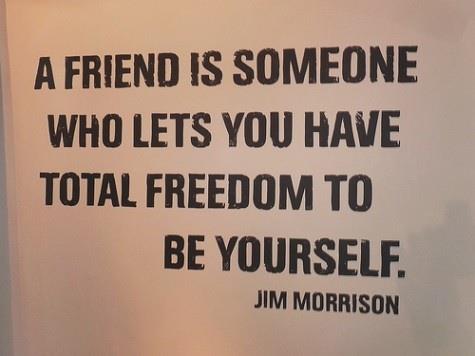
A Friend Is...

“Just Friends” — captures an emotional scene with elegant restraint and psychological precision. It walks the delicate edge between internal vulnerability and social performance, showing rather than telling. The quiet drama simmers under the surface, and that restraint is what gives it its power.

The poem presents a familiar, achingly human moment: the uncomfortable aftermath of one person’s vulnerability being met with emotional complexity the other isn’t prepared to hold.

There’s something very early ’90s in tone — not just the interpersonal awkwardness of that time (before therapy-speak became mainstream), but also the gender dynamics and cultural expectation of emotional suppression, particularly for men.

This is a portrait of emotional dissonance: a moment when honesty collides with pride.
The poem isn’t about who’s right — it’s about the uncomfortable truth of human ego, emotional reflex, and the fragility that often hides behind defensiveness.

“…as he had originally intended to do all along”
has that overcompensating tone — like he’s trying to pretend nothing’s changed, even though everything has. It’s performative denial, which is part of the fragile male ego that is being exposed.

The ending lands cleanly: “That fragile male ego in reaction.” It’s slightly ironic, slightly compassionate — like a final exhale after the tension.