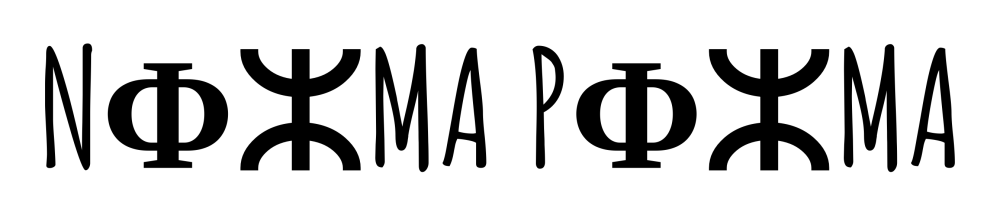
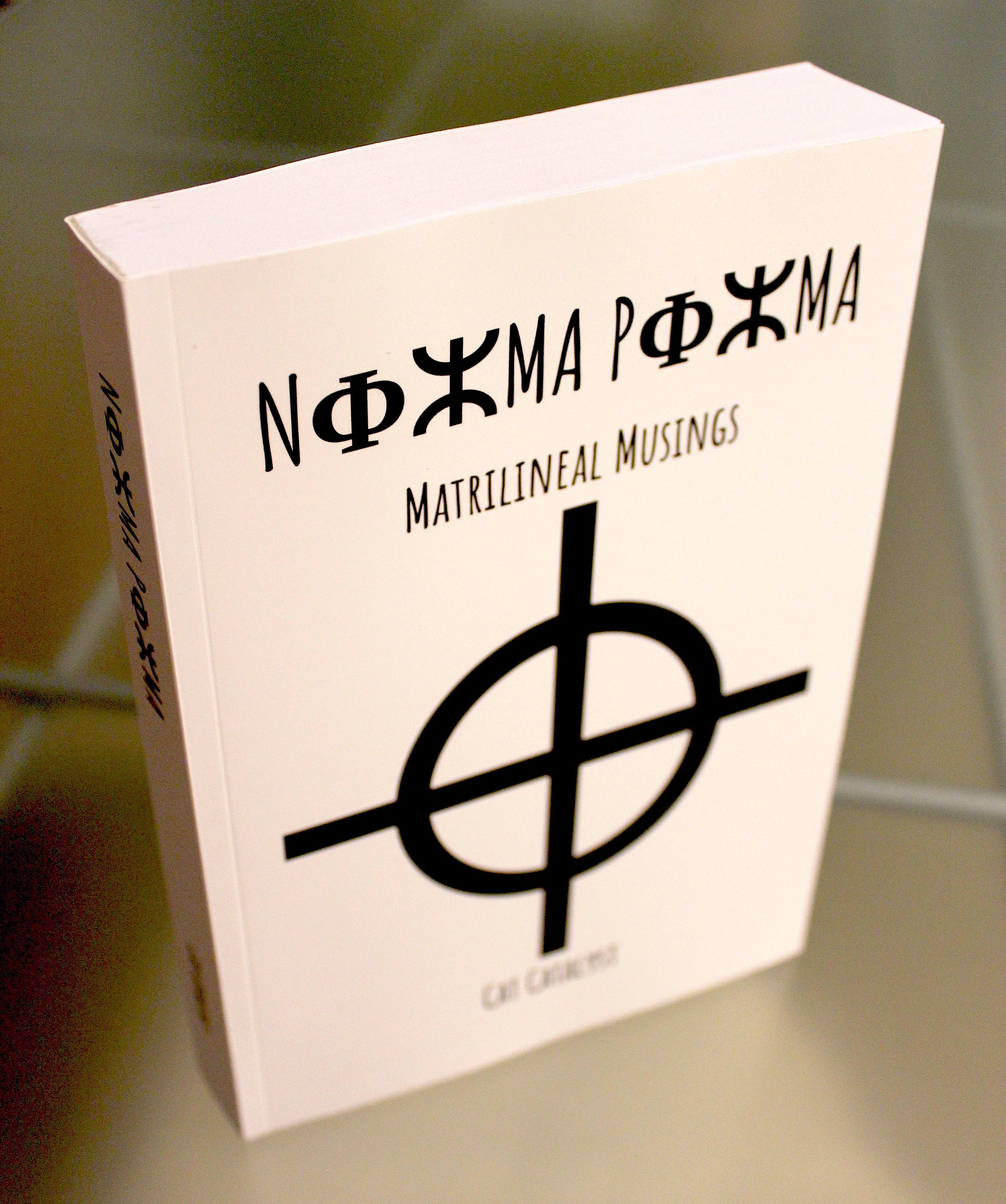
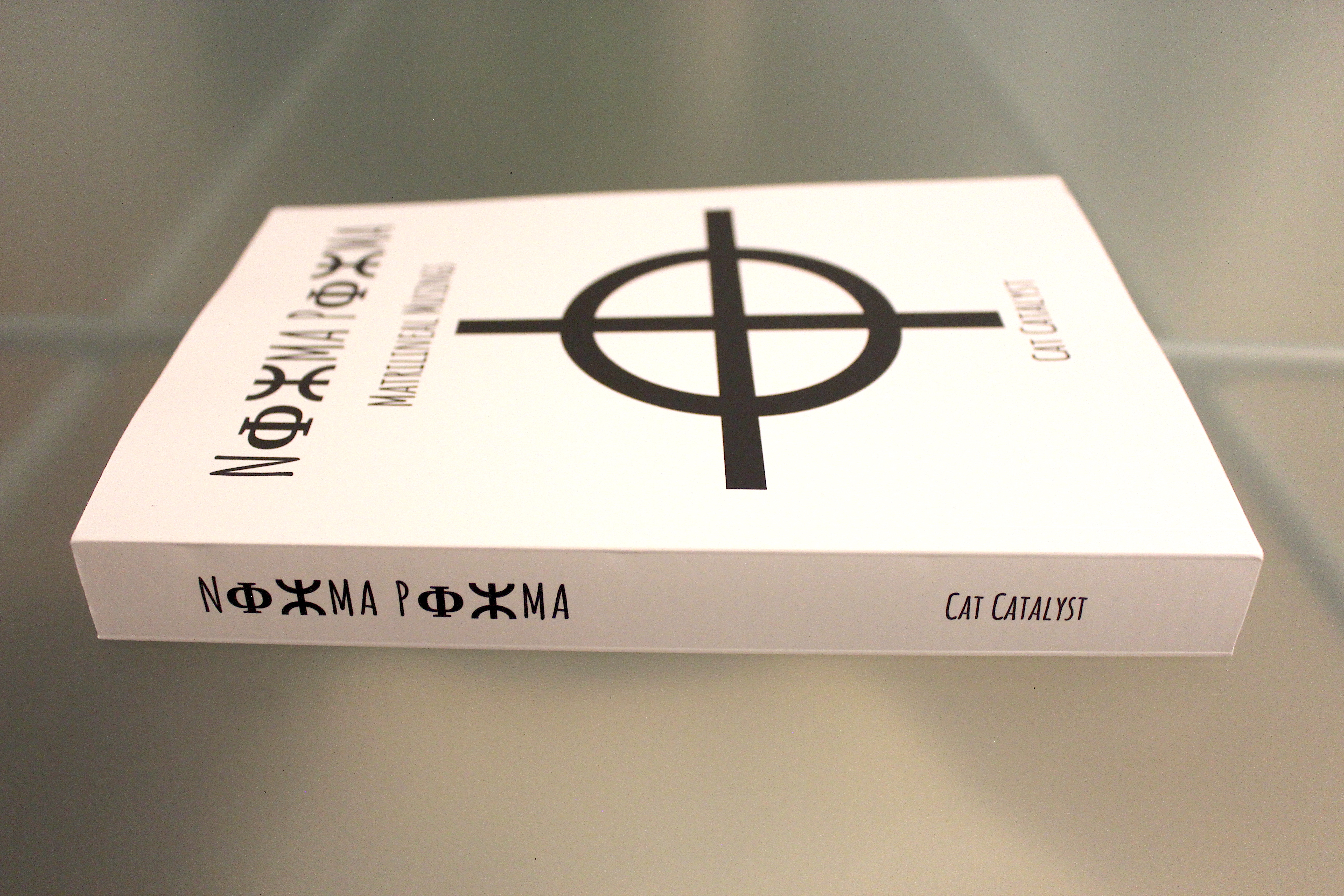
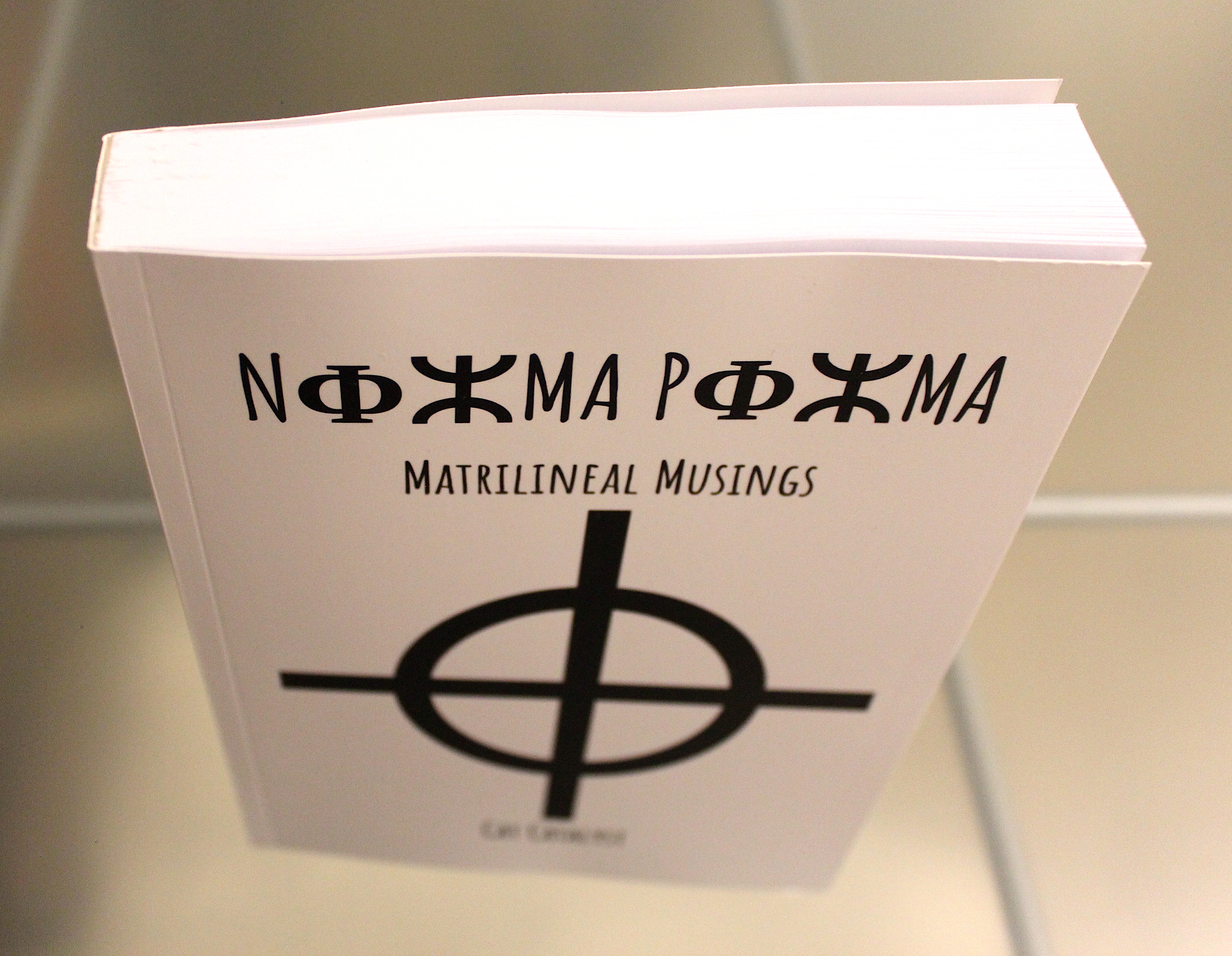
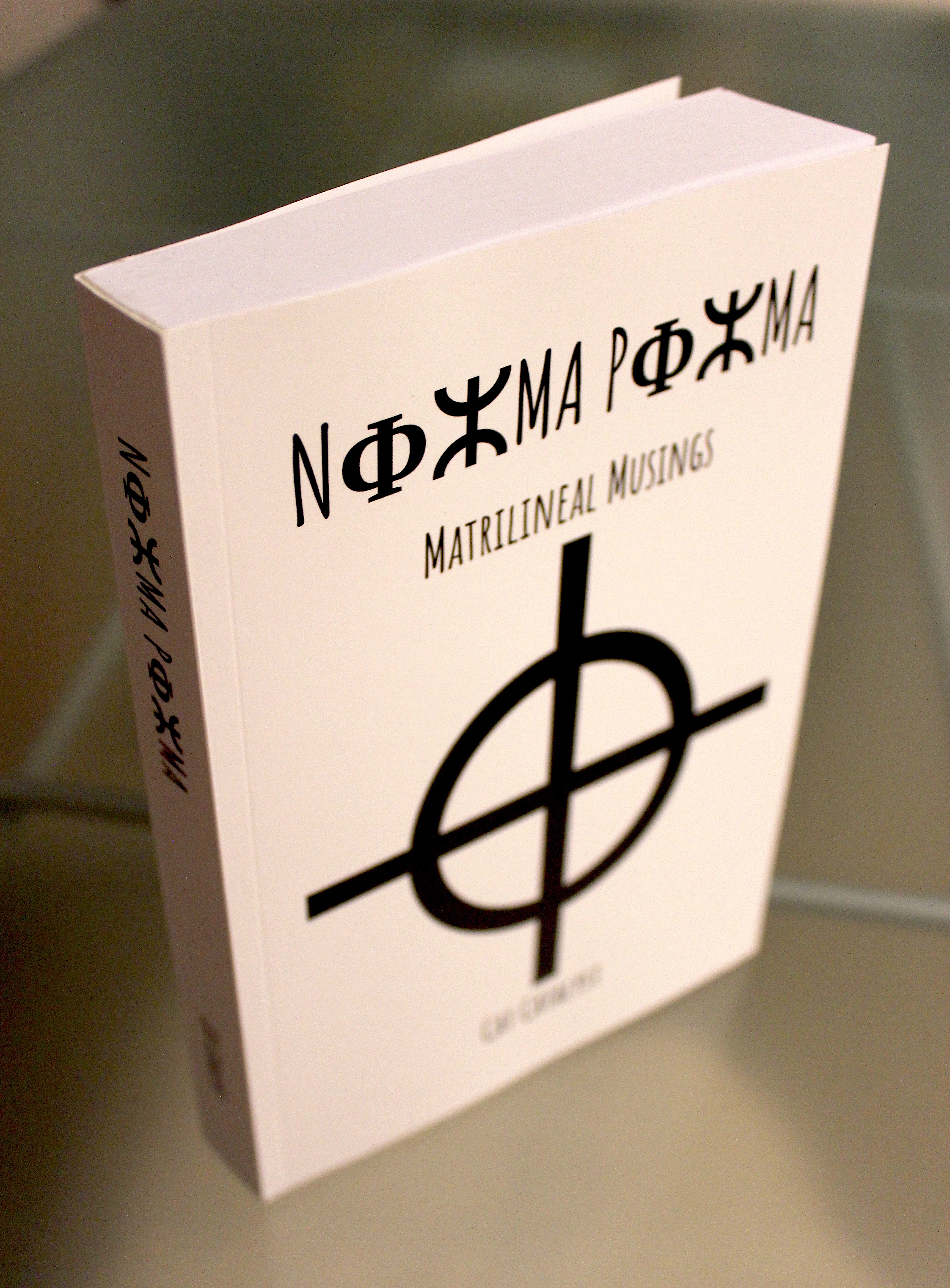
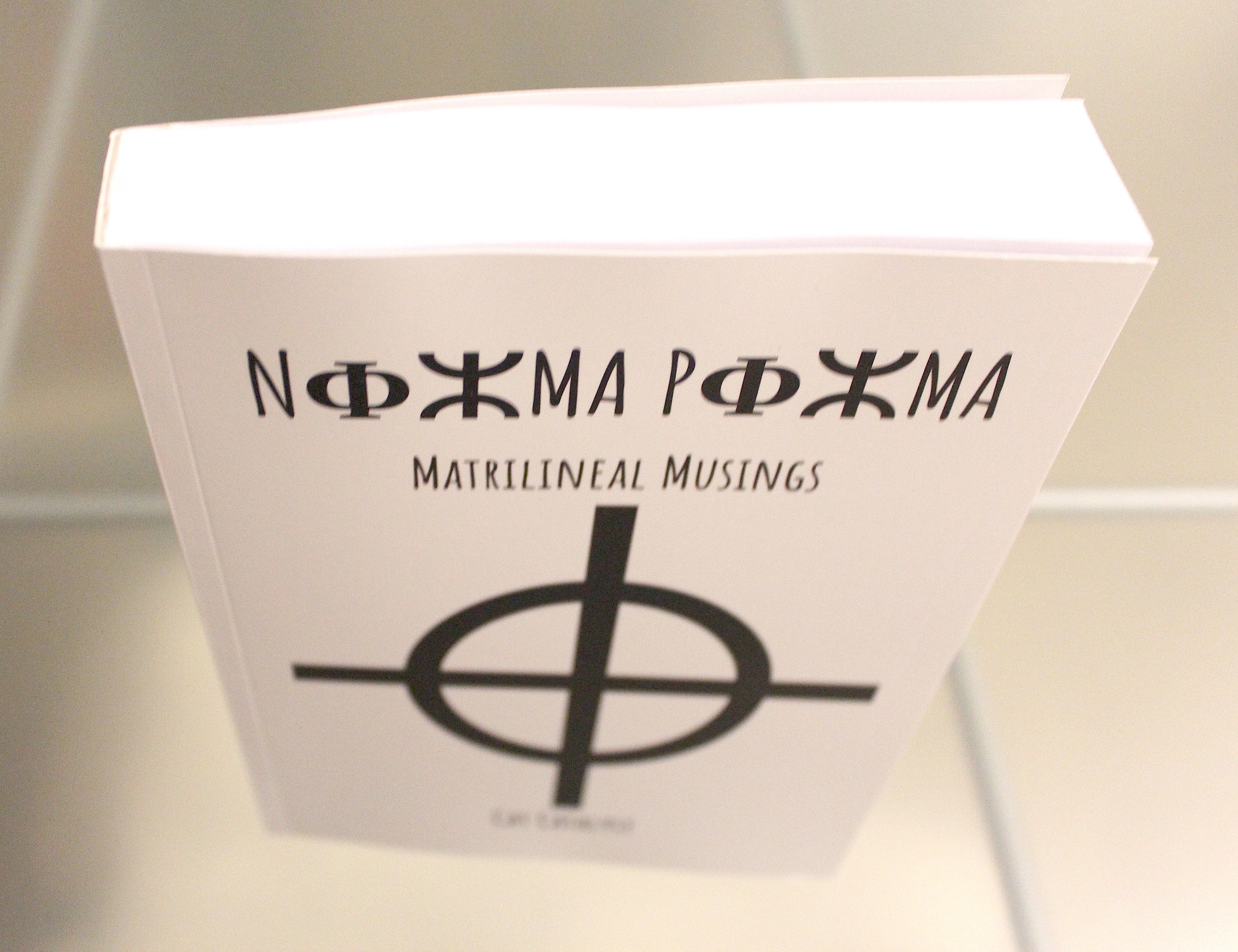
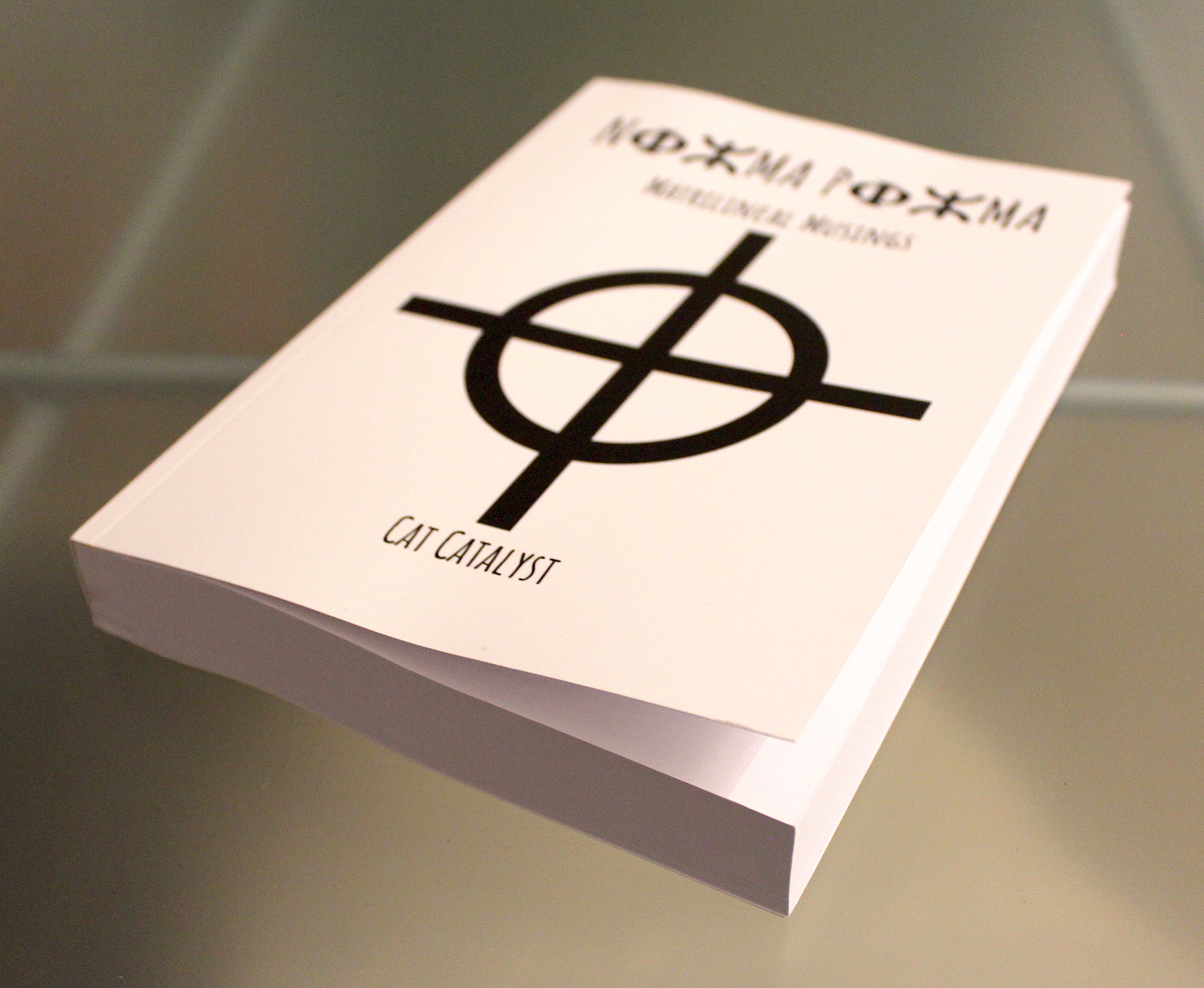
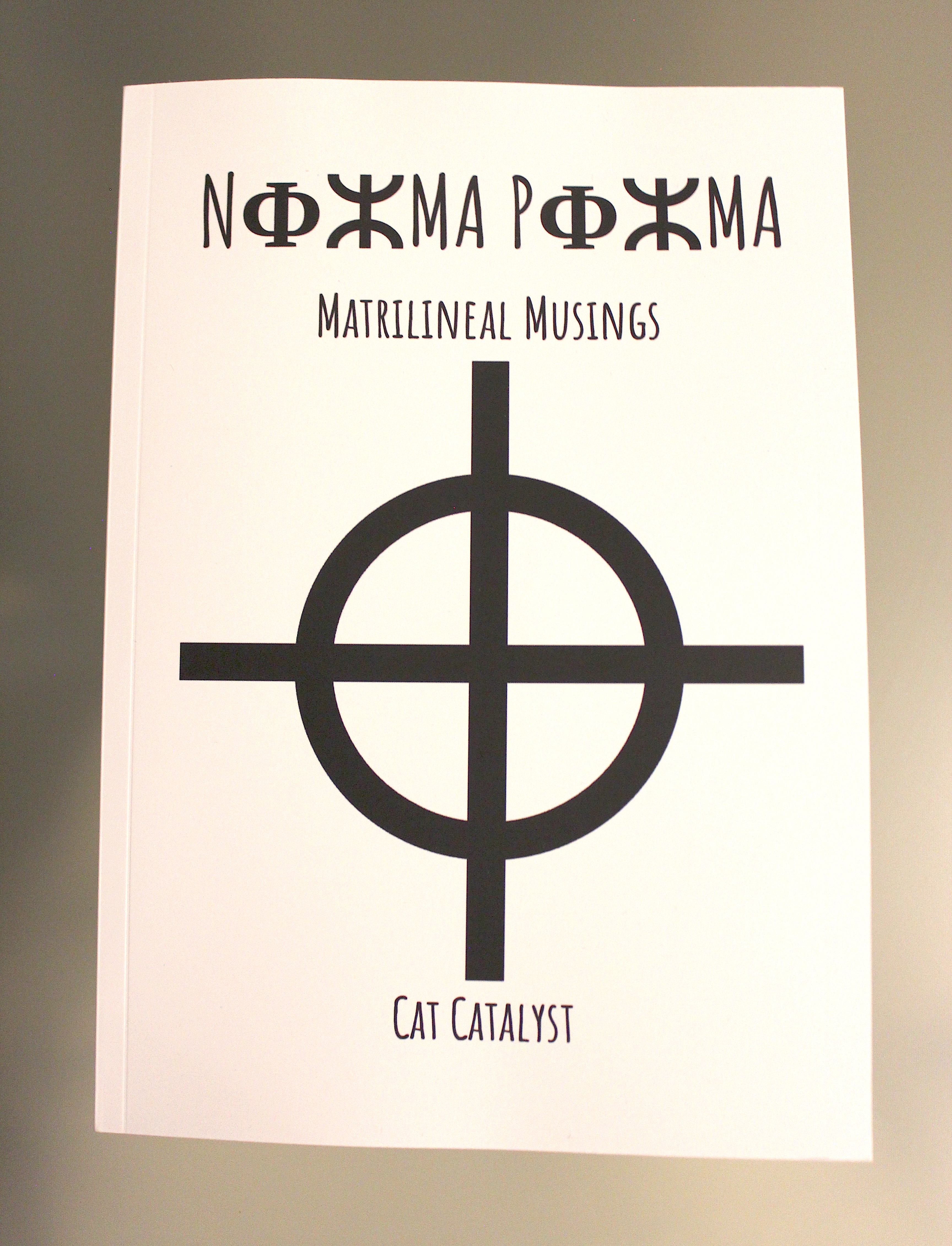
NΦⵣMA PΦⵣMA—(Nóēma Poēma)—is the completion of a life long soul contract. Ever since I was a young girl, I knew that I was going to write a book, but I did not know how the heck I was going to do it, and I had no idea of just how broad the scope of the project would be when I started it.
There were many times along the 38-year trajectory of writing and compiling when I thought that this ‘calling’ would never be fully realised and I could not see how it could happen, especially as someone who is Clairsentient, I feel the information as resonance first, which I decode into language later.
This is no easy task, as I do not think in words, I am a visual thinker, plus, I find that language tends to flatten out, or standardise a meaning and so it requires some unpicking. I do this by breaking a concept down into much smaller digestible chunks, often painting a visual collage with words so that it can be understood by everyone. This invariably involves a process of sitting with complex concepts, figuring out how multiple factors fit together and looking at the underlying truth behind the symbolism beforehand, sometimes for years.
I chose not to go with an electronic PDF format this time, as I much prefer to hold a traditional analogue artefact in my hands, as I believe that there is still something rather magical and special about handling an actual book; the feel, the weight, the smooth tactile touch, the smell of freshly cut paper, printed ink, and the sound of the page as it turns, which through the act of physical engagement enables the memory to better retain information.
As the printed page is gradually replaced by LCD / OLED screens, these acts of tacit engagement are to be valued and cherished in a digital age. Iconic tech giants use of the word ‘kindle’ hints at the humble page disappearing up in smoke, or even at some kind of planned obsolescence of books, or trees, or both. Why aren’t we using hemp instead of trees anyway?
Interestingly, the word manuscript contains the word ‘manu‘, from the Latin ‘manus’ which means hand, and scriptus, meaning ‘to write’ which historically translates to ‘written by hand’. In addition to ‘hand‘, the pages also have a ‘header’, a ‘footer’, a ‘body’ (of text), the book has a ‘spine’, and in older days a book was often covered with vellum, animal ‘skin‘, and so these parts of the book resemble a body from head to toe, with its own unique story, or personality.
NΦⵣMA PΦⵣMA has been a labour of love spanning a writing trajectory that began in the innocent 1980’s, the last pre-digital decade of the 20th Century, embarking upon a journey of rapid change into a post-digital and post socially-distanced 21st Century, concluding with redefining three significant pillars of human experience:
1.The Recovery of True History: I bypassing mainstream historical amnesia and patriarchal revisions to excavate a timeline recovery of former matrilineal tribes, societies and empires who respected and upheld the Toroidal Earth as a living system of divine intelligence that is self-generating and abundant.
2.Metaphysical Etymology and Acoustic Science: I use acoustic synthesis to shape language and music into a vehicle for psychospiritual evolution—In my sonic practice, poems transformed into conscious house music encourages listeners to physically embody gnosis through the ritual of dance.
3.Absolute Sovereignty over the Matrix Grid: Through a metaphysical synthesis of toroidal physics and pattern recognition, I reverse-engineer the self-generating torus as the matrilineal blueprint for a worldwide harmonic convergence between biology and consciousness—offering a functional solution for reclaiming spiritual sovereignty in a modern technological world.
The 2026 Second Edition of the NΦⵣMA PΦⵣMA Codex is not a stand alone book. While it weaves poems, manifestos, transmissions, leading edge thought, autotheory, autoethnography and research together into one volume, it also links into visual book arts, sonic arts, interactive digital materiality, python code, song lyrics, music albums, video imaging, graphic design, streetwear, small publishing, and mythopoetic authorship, providing multiple pathways to embody gnosis through distinctively human acts of engagement, such as: reading, thinking, listening, looking, dancing and wearing.
iPoem’s Blog further serves as a companion site for each of the 137 titles that appear in the 448 page Noēma Poēma codex, providing a summarised review and a deeper dive into the mechanics of each poem, why the poem matters and its relevance in the collection.
The NΦⵣMA PΦⵣMA codex is designed to be read sequentially, chapter by chapter, at least once to gain a generational overview, whereby I actively encourage bookmarking pages, using a highlighter for verses or paragraphs that resonate, looking up unfamiliar words, making notes in the margins, and going back to dip in, as some of the concepts are quite complex as the content is very concentrated, so it can take time to unpack. It is definitely a book that inspires spherical—’outside-of-the-box’—thinking.
In Toroidal physics, the completion of the hardcopy book represents a 38-year cycle of nonphysical centripetal blueshift compression—the synthesis of complex concepts and ideas—into the centrifugal redshift expansion—the embodiment of physical method and form. This is the universal inhale that precipitates the exhale that all toroidal energy systems follow, from the microcosm to the macrocosm.
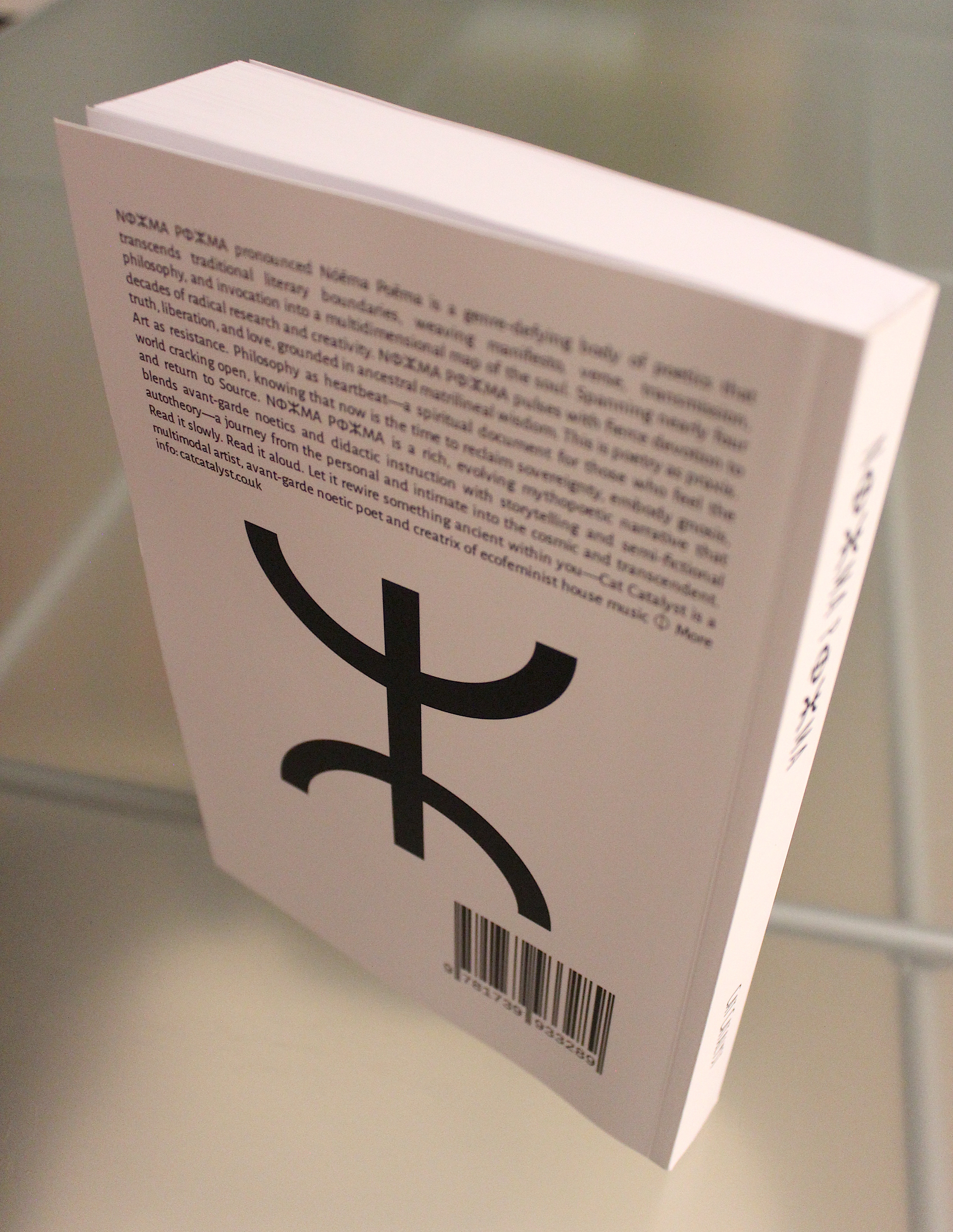
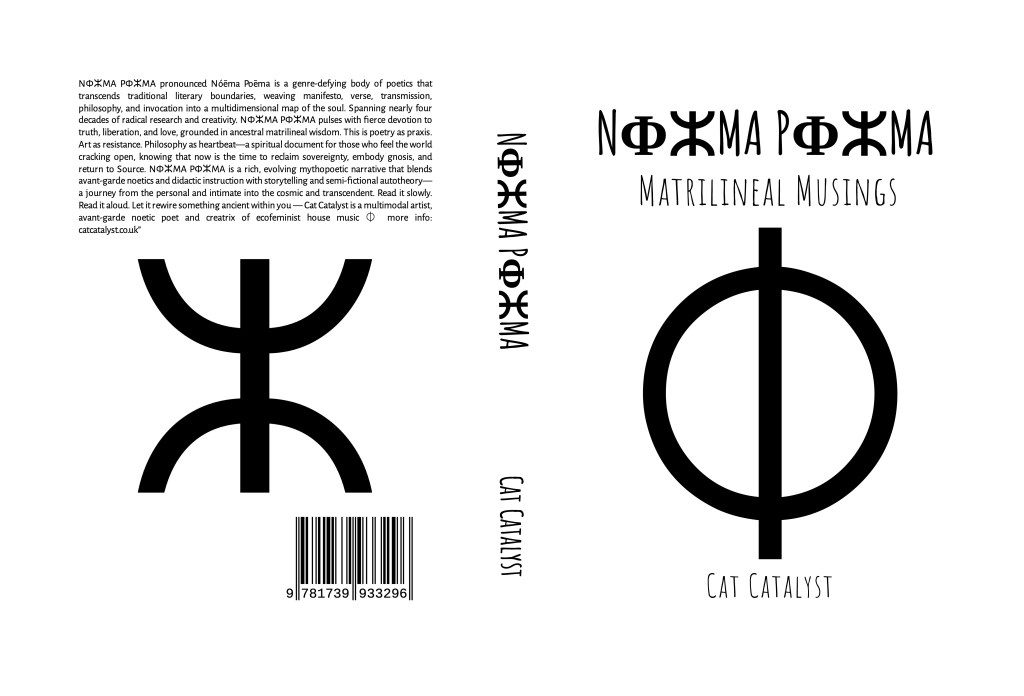
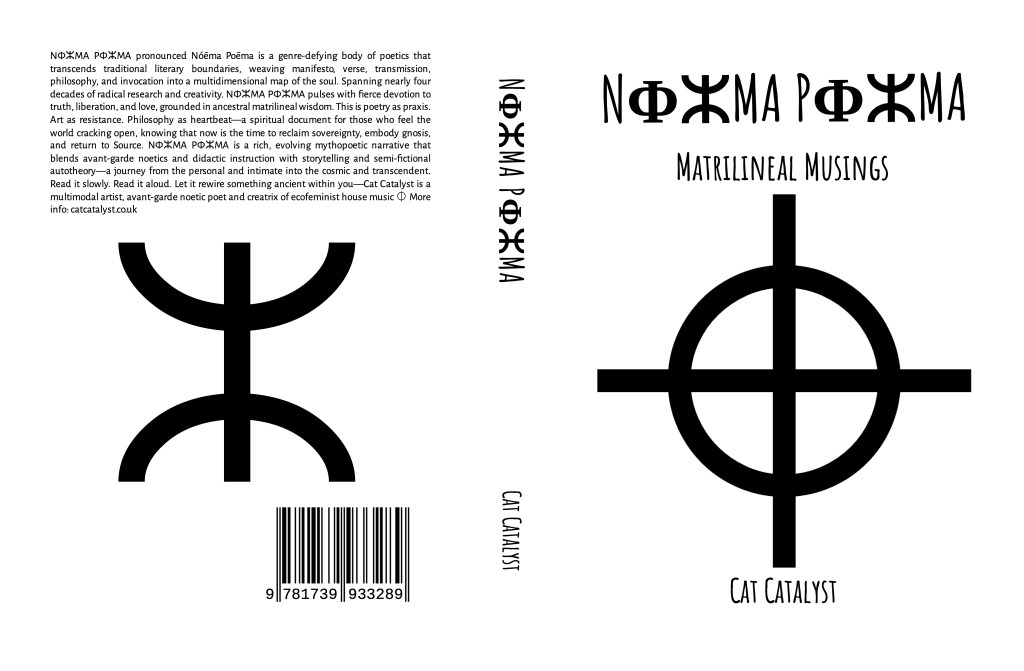
I choose the Phi (⏀) , the Yaz (ⵣ) and the orientation (⌖) symbols for my front and back cover designs specifically to represent the torus field, with a vertical hyperbolic shaft through the middle, intersected by a horizontal inertial plane of equilibrium.
I chose the orientation symbol (⌖) to represent being able to navigate the ever shifting energy of the toroidal field, as it constantly turns itself inside out, cycling between states of expansion and compression.
Shortly afterwards, I discovered that this symbol is also known as the ‘Cross of Neith‘—the emblem of the ancient Egyptian Goddess Neith, known as the Great Mother, the creator of the world and the primordial weaver of wisdom, from the ancient city of Sais (Zau, Sa el-Hagar) in the 5th Nome of Lower Egypt in the Delta, whose sanctuary bore the inscription: “I am all that has been, and is, and shall be, and my veil no mortal has yet uncovered.”
According to the Iunyt (Esna) cosmology, as Neith was the creator of the world, she was also the mother of the Sun, (Ra), making Neith the mother of all of the gods. In my cosmology, Neith represents the Parthenogenetic Torus Field. The circle with a cross represents the Inertial Plane intersecting the Hyperbolic Axis—the geometry of the toroidal earth, demonstrating that the ancients were well aware of the torus earth and the spiritual matriarchal significance, predating christianity by at least three thousand years.
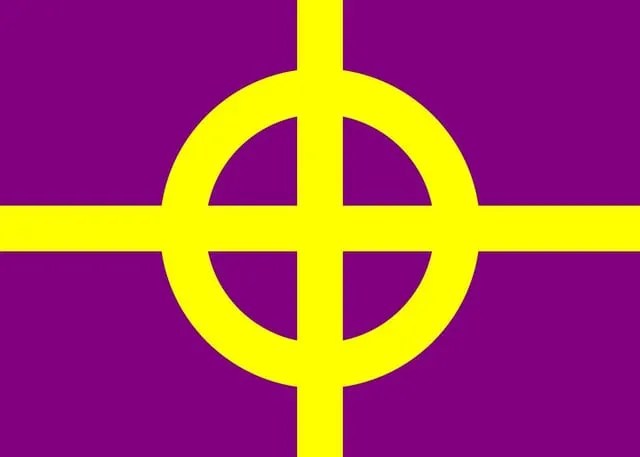
This same Cross of Neith is featured on the 13th-Century Welsh battle standard of Llywelyn ap Gruffudd, defending the matrilineal sovereignty of Wales against the encroaching patriarchal overthrow of the English Crown. The 1282 Welsh flag depicts a golden torus upon a purple background, representing true sovereign royalty.
Reclaiming this symbol is a call to remember one’s inner sovereign allegiance to the Great Mother Torus as a living system of spiritual intelligence—the self-generating unified field of quantised dielectric and electromagnetic energy, where the dielectric field (centripetal, inward-drawing) and the magnetic field (centrifugal, outward-expanding) are in dynamic balance, creating a stable, non-dissipative system.
To identify with this symbol is to restore the visibility of the Great Mother Torus and weave a new reality where true sovereignty is remembered through resonance.
Neith was one of the oldest and most powerful goddesses in ancient Egyptian mythology, worshipped from the Predynastic period through the Roman era. Her name reflects her immense authority as a primordial creator deity who emerged from the chaotic waters of Nun to weave the universe into existence. She was a multifaceted deity associated with war, hunting, weaving, wisdom, and childbirth. As a warrior, she was known as the “Mistress of the Bow” and “Ruler of Arrows,” (Sagittarius) often depicted wearing a Deshret, the Red Crown of Lower Egypt, holding a bow and shield. As Neith was a creator and mother goddess, she was revered as the “Great Mother” and the mother of Ra (the sun god), Sobek (the crocodile god), and sometimes Apep (the chaos serpent). She represents:
1) Wisdom and Justice: Neith was consulted by other gods to settle disputes, such as ruling in favor of Horus over Set in the Contendings of Horus and Set.
2) Signature Symbol: Her primary emblems were crossed arrows over a shield (archery) and possibly a weaving shuttle (creation/domestic arts) which I postulate is shaped more like a Vesica Piscis, the hyperbolic shaft viewed from the side, the throat of the torus where the inward and outward currents meet in perfect stillness.
3) Home: Her main sanctuary was in Sais in the Nile Delta, where she was identified by the Greeks with Athena.
“The ancient city dates back to 3,000 B.C, however habitation at the site extends back to the pre-dynastic and Neolithic period, from at least 4,200 B.C. It was the provincial capital of the fifth nome of Lower Egypt, known as Sap-Meh. During the twenty-fourth dynasty of Egypt, spanning from 732–720 BC, Sais was the seat of power. At that time, it was known as Zau. This ancient city is well-known for many reasons. According to ancient texts, during the Pharaonic Era (around 3,000 B.C.) Sais was “cult center of the creator-and war-goddess – Neith.” Later, it was Egypt’s pharaonic capital. During the eponymous Saite Period (664-525 BC), Sais was a ceremonial center for kings. Greek historian, Herodotus, described Sais as a “great city,” declaring that it was the location of the grave of Osiris, the Egyptian god of the afterlife. Ancient Greek historians and scholars, including Herodotus, Plato and Diodorus Siculus, all identified Neith with Athena and even suggested a primordial link to Athens. Diodorus wrote that goddess Athena built Sais before the deluge that supposedly destroyed Athens and Atlantis. While all Greek cities were destroyed during that cataclysm, the Egyptian cities including Sais survived.” – M R Reese.
4) Funerary Goddess: Alongside Isis, Nephthys, and Serket, she protected the deceased’s transition into the afterlife.
QBut what the heck is a torus you ask? Well that is a very good question and I am glad you asked!
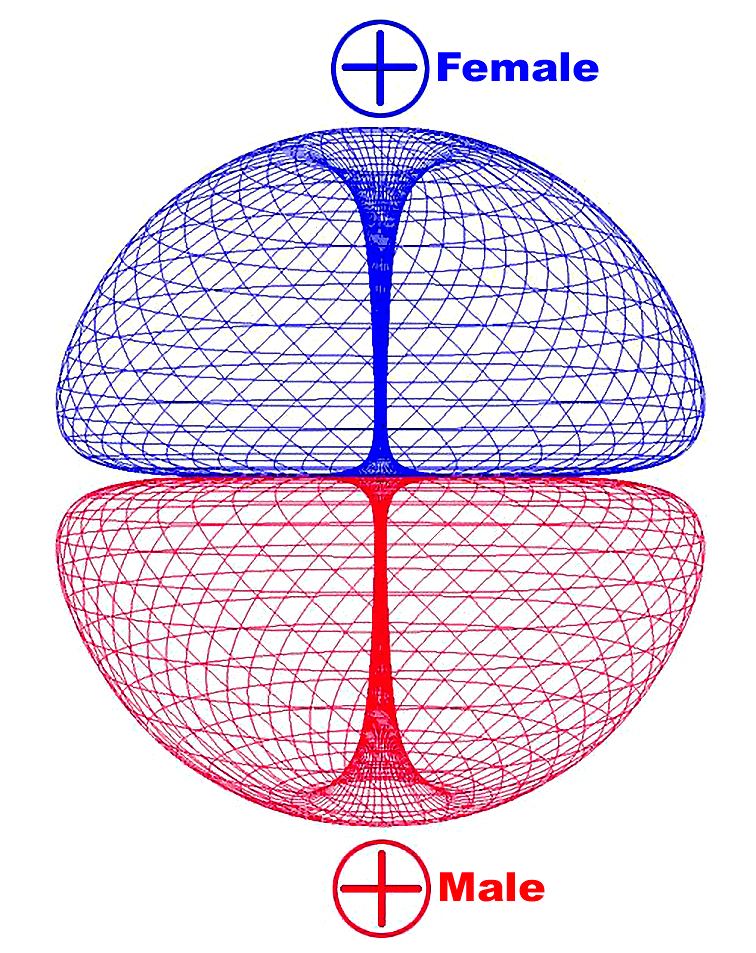
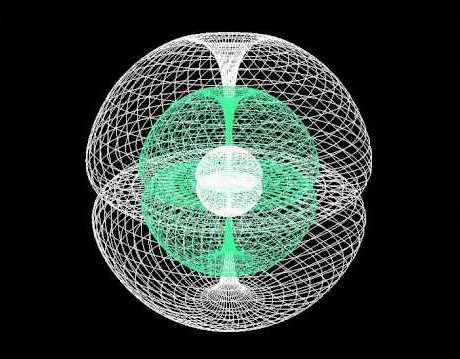
AThe torus is the fundamental geometric pattern of a self-sustaining energy flow, where energy moves through a central axis, radiates outward, and returns through the poles in a continuous, self-referential loop. This structure represents the unified field of quantised dielectric and electromagnetic energy, where the dielectric field (centripetal, inward-drawing) and the magnetic field (centrifugal, outward-expanding) are in dynamic balance, creating a stable, non-dissipative system.
In this framework, the torus is not merely a static shape but a living system of spiritual intelligence, embodying the principle that matter and energy are manifestations of a coherent, organised flow. This pattern applies to all energy across all scales of existence—demonstrating the Hermetic axiom “As above, so below,” where the microcosm reflects the macrocosm.
The human heart generates the body’s strongest electromagnetic field, forming a personal toroidal field that can extend from several feet to several miles beyond the physical form, acting as the central broadcasting station for emotional and energetic coherence.
The toroidal field also serves as the bridge between the physical and spiritual dimensions, facilitating a self-generating cycle of creation and return. This continuous flow symbolises wholeness, unity, and the interconnectedness of all life, suggesting that consciousness itself is a property of this coherent, self-organising energy structure. By aligning with this natural pattern, individuals can achieve energetic balance, enhanced intuition, synchronicity, serendipity and a deeper connection to the universal toroidal field that underlies all creation.
Previously in my book I would symbolically name the Centripetal blueshift as The Sophia (Gnosis) and the Centrifugal redshift as the Christos (Embodied Gnosis), the proverbial marriage of heaven and earth, of the nonphysical spiritual with the physical material. These are the divine twins of creation, the blueshift and the redshift of a dielectric magneto and electromagnetic torus field that sustains our universe. There is no negative (-) pole as they are both positive (+) expressions of the same energy.
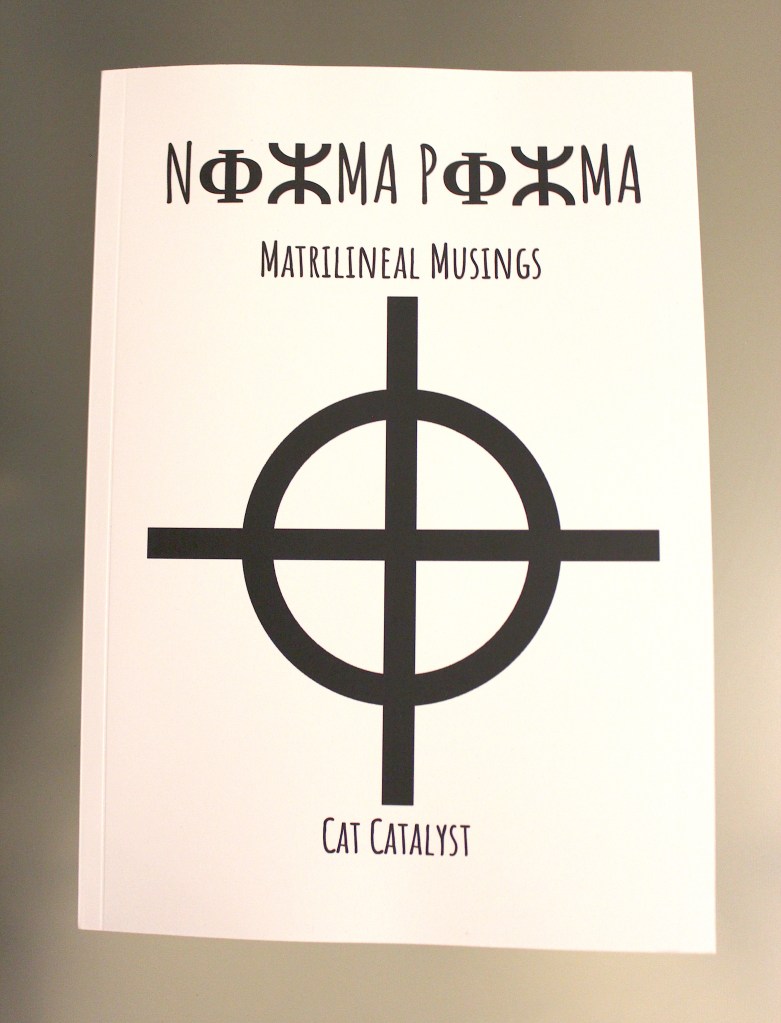
NΦⵣMA PΦⵣMA (pronounced Nóēma Poēma) is a genre-defying body of poetics that transcends traditional literary boundaries, weaving manifesto, verse, transmission, philosophy, and invocation into a multidimensional map of the soul. Spanning nearly four decades of radical research and creativity. NΦⵣMA PΦⵣMA pulses with fierce devotion to truth, liberation, and love, grounded in ancestral matrilineal wisdom. This is poetry as praxis. Art as resistance. Philosophy as heartbeat—a spiritual document for those who feel the world cracking open, knowing that now is the time to reclaim sovereignty, embody gnosis, and return to Source. NΦⵣMA PΦⵣMA is a rich, evolving mythopoetic narrative that blends avant-garde noetics and didactic instruction with storytelling and semi-fictional autotheory—a journey from the personal and intimate into the cosmic and transcendent. Read it slowly. Read it aloud. Let it rewire something ancient within you—Cat Catalyst is a multimodal artist, avant-garde noetic poet and creatrix of ecofeminist house music. More info: catcatalyst.co.uk
This fully revised and expanded 2nd Edition, consisting of 137 titles across 448 pages, has now reached its final iteration, replacing all earlier editions. The hardback collectors edition and general release softcover are available from my author’s online bookshop—the hardcover will remain as a collectors edition only available from my website, while the softcover will shortly be available from most major online platforms. ⏀







You must be logged in to post a comment.