Did you know that Bees are a matriarchal species, not only devoted to their beloved Queen but that the male bees only serve one purpose for the colony, which is to mate with the Queen and once mating season is over they are forced to leave the Hive by the females? [Discover more @texasbeeworks]
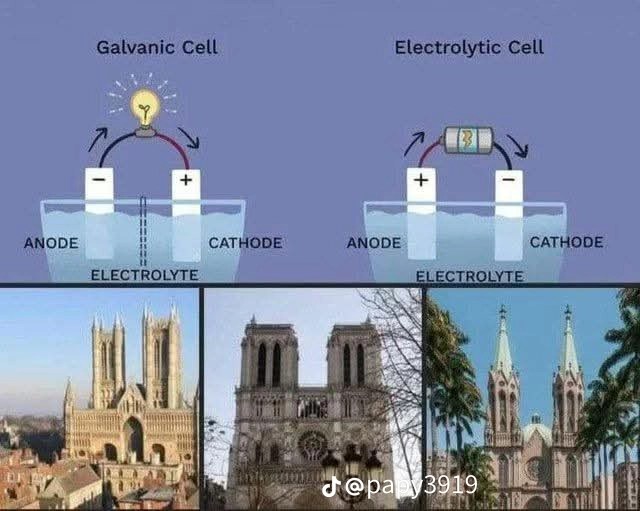
Similarly, humanity first began as a Matriarchal all-female parthenogenetic race, who were naturally able to self-conceive via self-replication (asexual reproduction), probably only with daughters at first later extending to sons. According to researcher Dr. Delbert Blair, female parthenogenesis was practiced regularly right up until the C17th but was phased out by a group of French doctors who circulated letters amongst the medical community stating that the practice of parthenogenesis amongst females ‘must not be allowed to continue’. Still today, all foeti, both human and mammal begins life in the womb as a female, complete with the XX Chromosomes. In order for a male to be born one of the X chromosomes is required to mutate into a shortened Y chromosome. This Y chromosome can grow back into an X chromosome at a later date through a process of tantric initiation into an actualised state of enlightenment. This was performed by a high priestess from a long lineage of high priestesses, who were once the keepers of the temples erected upon ancient Druidic sites of the goddess, which are now the sites of churches, cathedrals and abbeys, their crypts built atop of dolmens, intersecting leyline nodes, underground wells and telluric currents. These high priestesses were designated custodians of sacred sites of connection with the Earth’s energies and also the protectors of ancient mystery schools knowledge and wisdom.
This means that genetically speaking, male is an extension of female. And not the other way around as we are led to believe. The Adam birthing Eve narrative is all part of an ongoing overthrow of the matriarchy by the patriarchy, with the inversion of gender, morality and the corruption of nature’s divine sacred blueprint. This spiritual initiation for men was an important and necessary rites of passage, enabling them to fully step into their divine sacred masculine, an actualised state of enlightenment in harmonic resonance with the Earth’s electromagnetic field, and be able to handle the mantle of power this would bring. It required years of preparation as an initiate in service of the Goddess. These would often be the parthenogenetically birthed sons, direct from Source, who would become wise leaders, great inventors, learned scholars, master architects, accomplished artists, gentle guides and supportive mentors, in harmonic resonance with the divine muse of inspiration, the nonphysical and spiritual realm of the collective conscious.
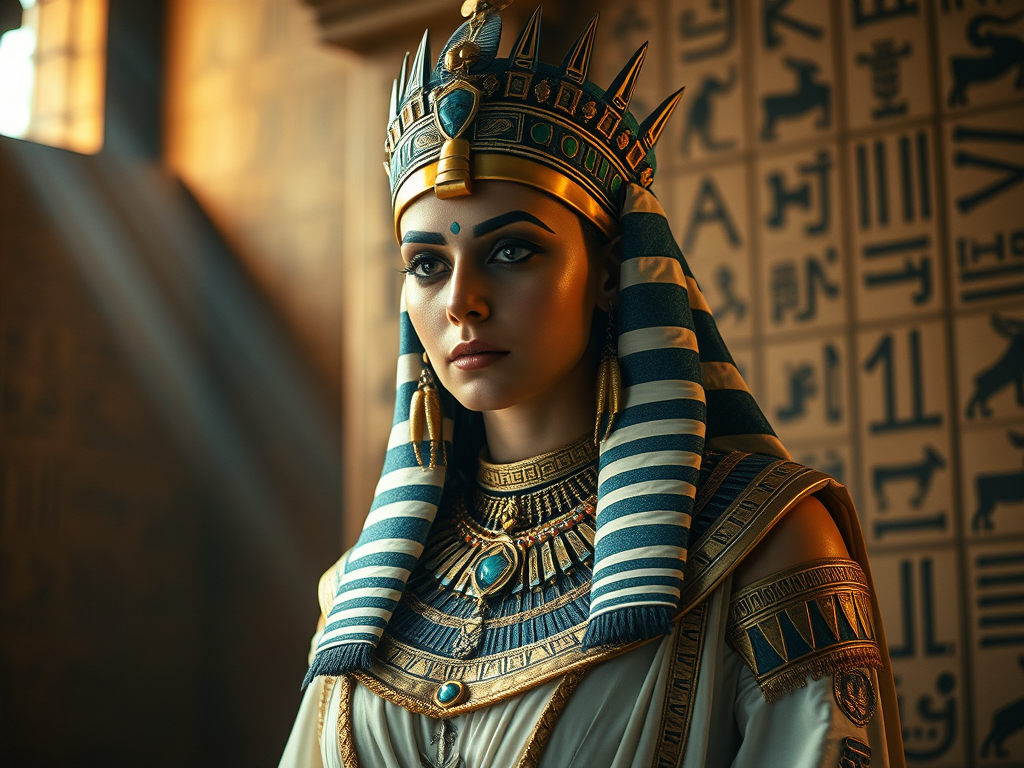
It is said that Tauret / Taweret / Taurt / Thoueris, who was the Egyptian hippopotamus goddess of creation associated with fertility, maternity and childbirth, was one of these wise high priestesses, who recorded her wisdom for the posterity of humanity in a volume containing 78 leaves. The word ‘leaves’ for pages-of-a-book is still in use today. In her capacity as a goddess of creation, she was also a goddess of protection, depicted in the form of a hippopotamus and was the most famous hippopotamus deity from ancient Egypt, associated with both Isis and Hathor, a goddess of music, dance, joy, love, sexuality, and maternal care.
The name hippopotamus comes from an ancient Greek word that translates to mean ‘river horse’ and the hippo is the third-largest land mammal following the elephant and rhinoceros. The ancient Egyptians observed the female hippopotamus to be fiercely protective of her children which led to the formation of this goddess. The male hippopotamus was observed to be very aggressive when threatened and was considered to be one of the most dangerous animals in Egypt. Despite this, Tauret / Taweret was incredibly popular throughout Egyptian history and was regularly invoked for the protection of children, and for assistance during pregnancy and birth. In addition to being considered a mighty force to be reckoned with, the high priestess Tauret / Taweret was also considered to be extremely wise, frequently referred to as ‘The Great One’.
Tauret / Taweret’s book, inscribed upon 78 leaves was entitled ‘The Royal Path To Life’ and was a guide to connecting with one’s inner-wisdom and divine sovereignty, recognising that there would be many paths with various challenges along the way to overcome. Today these challenges are often referred to as the ‘Twelve Labour’s of Man’ referencing the 12 conditions of the sine wave and the 12 houses of the astrological wheel. Her book was discovered in the underground library of Alexandria which once formed part of the city’s famous Great Library and can be found under the ruins of the Serapeum, in Alexandria, Egypt, which was an ancient temple dedicated to the worship of the Greco-Egyptian deity Serapis.
This Egyptian book of wisdom later formed the basis of the Torah, which in turn later formed the Old Testament of the Bible, and the 78 cards of the Tarot Deck are still popular today. Tauret’s book or leaves, or deck of divination, demonstrates that early Egypt was once a Matriarchal society. As were the ancient Hellenistic Greeks, the Minoans, the Empire of Carthage, and the Sumerians, who gave us The Emerald Tablets, in which the Lord’s prayer appears some 34-36,000 years before Christianity, featuring the opening line of: ‘Our Mother and Father, who art in Heaven’.
Pastor Bill Donahue states in one of his lectures on decoding the symbolism of the scriptures, that Egypt had three main goddesses, who formed the holy trinity: ISIS, RA and EL, whose names when put together make up the characters of the ancient city of ‘Israel’, originally a matriarchal city, with Ra being a Solar Goddess, and not a male deity as we have been led to believe, (another inversion).
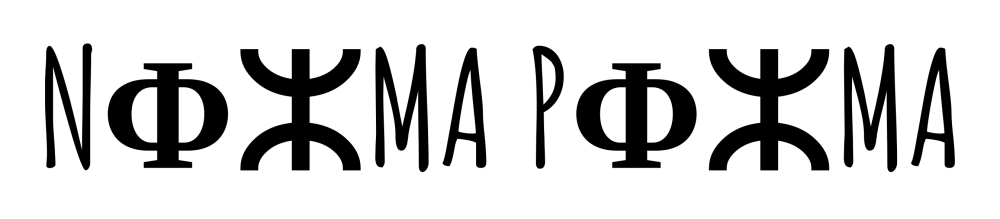
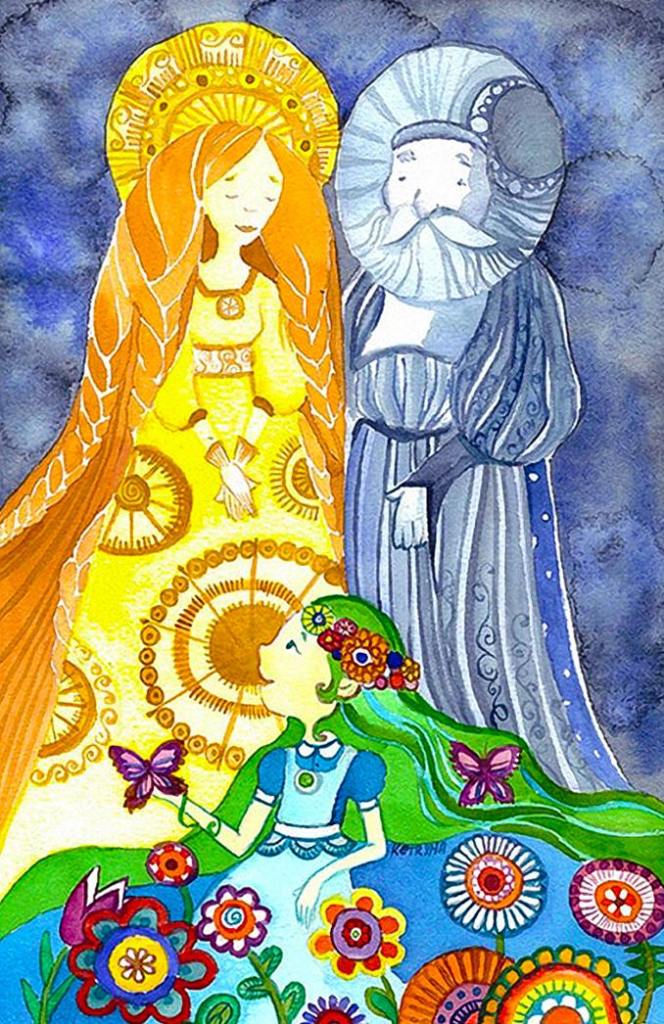
The SUN, Saulė, The Solar Goddess (Female) & MOON, Mėnulis, The Lunar God, (Male) of LIETUVA /Lithuania
LIETUVA / Lithuania, was a powerful empire that dominated much of eastern Europe in the 14th–16th centuries before becoming part of the Polish-Lithuanian confederation for the next two centuries. According to Walter Russell researcher @MagneticStillness on TG, Lietuvian folklore follows that Saulė, the Solar Goddess and Mėnulis, the Lunar God were married for a time, whereupon they had a daughter, Žemyna, the Earth. “When the Sun and Moon divorced after the Moon’s infidelity, they agreed that each would have a time to visit their daughter – the Sun during the day and the Moon at night. In ancient Lietuva language (aka Lithuanian language) the Sun is female and the Moon is male. Why is this distinction important? Because, Lithuanian language has a nearly identical syntax to the ancient spoken Vedic language of Sanskrit. Also, Lithuania (aka Lietuva) was the LAST surviving pagan nation in all of Europe before they were forced to convert to the Son of God mythology. There is a tremendous amount of deprogramming required to undo the idea that the Sun is male. However, ask yourselves this; does a woman create and nurture LIFE like the Sun, or does a man?”
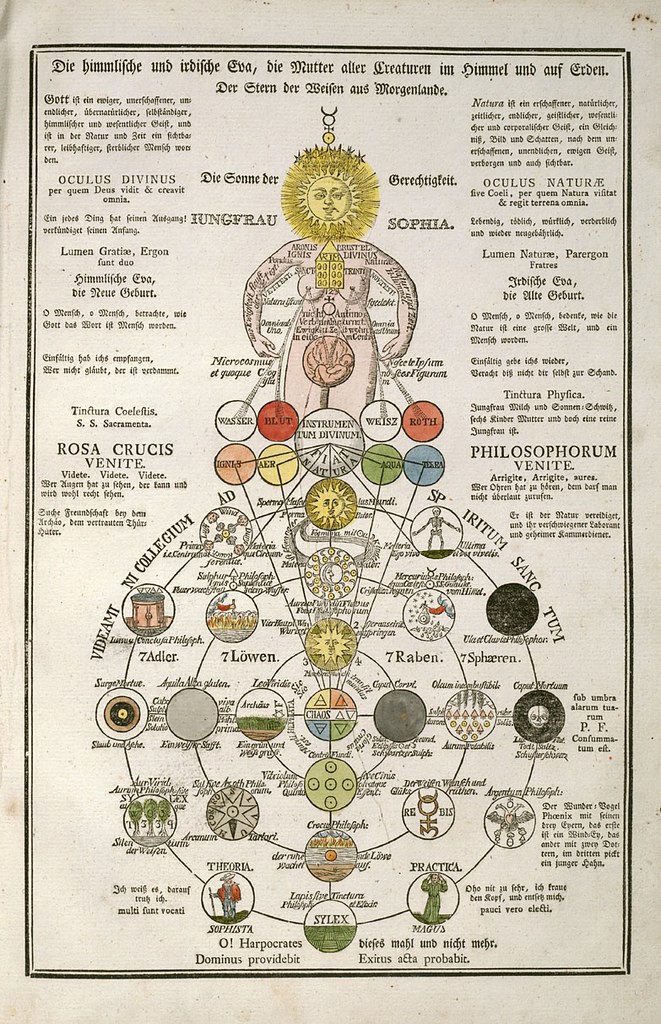
The Rosicrucian depiction of THE CELESTIAL VIRGIN. The celestial and terrestrial EVE, the Mother of all Beings in Heaven and on the Earth. The Star of the Sages from the East. The Sun of Justice is the virgin Sophia.
Furthermore, According to Walter Russell’s cosmogony, “the Suns give birth to all Planets. Only females are capable of birthing other life forms. Hence, the Sun is female. This of course puts a mental wrench in the indoctrination we have all been led to believe that the Sun is a male force, but this is not the case. Suns are said to be born from Galactic centers, Planets are born from Suns and Moons are born from Planets. In this way, the Universe is able to reproduce itself for all eternity.“
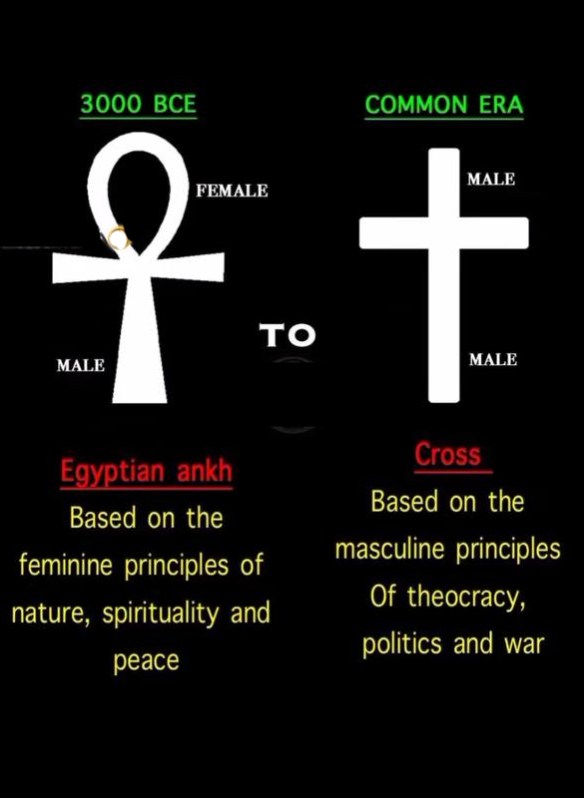
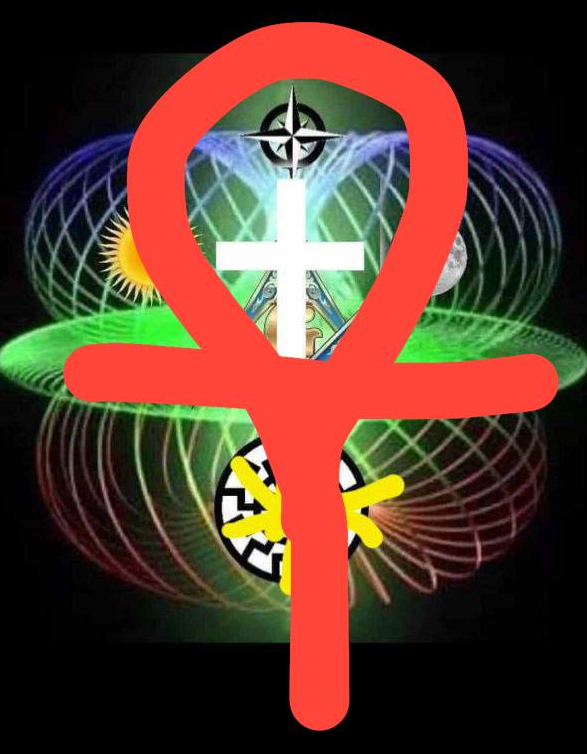
The Ankh was the original symbol that represented the metaphysical union of heaven and earth. It also represents the natural flow of energy that circulates life-force itself, connecting the physical body to the godhead (remote consciousness), allowing one to be connected to both above and below, hence the top loop, circulating life force energy and the flow of connection between:
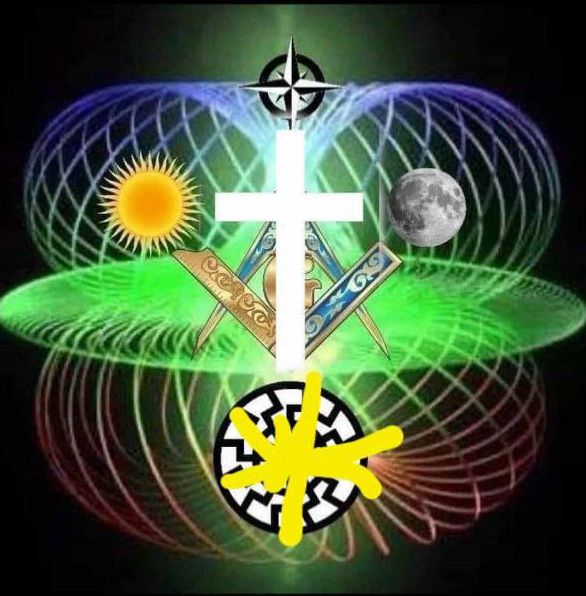
1. The Earth, irrespective of whether one believes the Earth is round, flat, or a crater, it really doesn’t matter, as in all versions, Mother Earth still has an electromagnetic torus field, aka a bio-sphere, just like we all have an electromagnetic bio-field, aka an aura, which is an invisible body-part responsible for 80% of the body’s immune system, and is how the bio-digital convergence is currently being implemented, in accordance with the UN’s goals for 2030.
2. The Hyperbole (the apple-core shaped shaft through the middle of an EM torus field, (also shaped like an apple) and possibly the symbolism behind the apple in the garden of Eden as a representation of the Earth’s torus field.
3. The Sun (f),
4. The Moon (m),
5. The Black Sun,
6. Polaris, the fixedNorth Star, which sits at the top of the hyperbole, known as the Iris, possibly Pole-Iris or Pole-axis at one point. All of these are represented as interconnected elements in one symbol. The curved top-part of the Ankh is also said to represent heaven / the womb / birth / creation / feminine principal and the the straight line below represents the masculine
Many male cultures have been programmed to walk a path of service-to-self and personal gain, which I believe is an intentional mislead of the male psyche by the deep state to prevent men from stepping into their divine sacred masculine, who would automatically support the inner-wisdom and intuition of the divine sacred feminine whose visiions of how to make the world a better place assists all members of the community to thrive, thereby cultivating team building, inclusiveness, creativity and innovation, simply by choosing to think, feel and act in the Presence of Love, as a direct extension of Source, respecting all fellow Direct-Extensions-of-Source-Energy who walk alongside us.
The absence of a Matriarchal presence in society now means that there is little to no awareness of nonphysical Energy, such as the law of vibration, the law of attraction, the law of sensation in response to nature, the ability to feel, sense, and appreciate other states of energy. Nor the ability to consult one’s inner tacit wisdom, cultivate Spiritual Gnosis, trust one’s connection to intuition (inner-tuition), or an awareness of the Creatrix as the true Source of creativity and procreation. All of which has contributed to a loveless society where people only look out fr themselves, resulting in the escalation in the weaponisation of digital technologies, radio frequencies, nano dust, self-assembly quantum dots, the re-appropriation of science and nature for the purposes of human augmentation to create a hybrid human species 2.0, as a methodology for total surveillance and control, of the human mind, body and soul. This is in addition to the implementation of wealth extraction, initiating the intentional exploitation and destruction of the natural world, the breakdown of communal solidarity and the family unit.
The only available option is to consciously choose love over fear. Choosing the path of love IS a spiritual path. And this choice doesn’t require a book. All of the natural world is already in alignment with the harmonic resonance of Love’s Presence anyway, it is a cymatic frequency and once one is in alignment with this frequency, it will respond to you, supporting your choice by nourishing you from within. We humans can regain our once natural alignment with Source-Energy by cultivating a daily practice of appreciation and gratitude, offering the Law of Attraction something joyful to work with that can be reflected via a magneto-electric universe where thoughts and feelings are actual things, that carry a powerful emotional magnetic charge that summons a ‘now’ reality, whether one is conscious of it, or not. We are powerful creators and we are summoning a now reality based upon the sum total of one’s life choices, whether they were conscious or not. This is why we are here, to work through inherited family vibrational baggage and rise by making wiser choices.
Many a woman’s downfall was to follow the societal programming of marriage and children with an inappropriate choice of partner. Sadly women are still regarded as ‘help-meets’ and yet what support is in place for women to develop their careers if trapped in an unsupportive environment, where partners can be insecure and resentful of any investment in their own talents or careers? Why women are still not thought of as intelligent, creative, psychic, sentient, but still seen as products, accessories, inconsequential, an inconvenience, still beggars belief. Men’s incomprehension of women’s experiences and gentler sensibilities has also become other women’s incomprehension too, isolated from each other, lost in administration / work / legal battles / project managing / juggling health issues and family responsibilities, whereby companionship has become a rich person’s privilege. And what if you have goals, dreams, desires, an active mind, with intellectual requirements to pursue? As there are no help-meets for a woman, as most men are too programmed and too self-absorbed in their own desires, walking only a path of service to self, ‘what you see is what you get’ I was once told, which does not include the consideration of female aspiration, dreams, desires, ambition, values, sentiments, or nature’s hidden ways. One person’s incomprehension of another’s extremity, can refer to extreme sensitivity relating to inner sensibilities such as the heart’s expression, of simply living harmonic resonance with the muse of the arts, poetry, literature, music, dance, and the domains of Mother Nature and Mother Earth, bearing significant matriarchal references that point to the presence of God as a Creatrix, hidden in the background, largely ignored and underrepresented, in preference of patriarchal religious propaganda.
Therefore, maintaining one’s alignment with The All There Is, is always: Thinking, Feeling, and Operating in the Presence of Love. This is also the holy trinity of manifesting a reality that is truly desired as realities built without these qualities lack satisfaction or fulfillment. This process is derived through one’s alignment with the omnipotent presence of divine Love. It restores one’s inner confidence and self-belief and in turn one’s ability to experience Self-Love, Worthiness and Deservedness, training the mind to think, feel and operate in healthier and more refined ways. Collapsing oneself into lower desires destroys this momentum. What we perceive as negative / evil / ignorant, is simply thinking, feeling and behaving in the absence of Love’s Presence. My favourite quote from the book ‘A Course in Miracles’ by Helen Schucman, that best illustrates this is: ‘The opposite of fear is Love, but what is all encompassing can have no opposite.’ This means holding the space for those who haven’t got there yet without judgment. Most people find this challenging as passing judgment enables the ego to feel superior, and more important, however, this is not operating in Love’s Presence.
The purpose of life is to cultivate an awareness of Love’s Presence. An omnipresent presence. And one doesn’t require a manual to do this. It means extending forgiveness daily to oneself for the things that cant be changed and to the memories of people who were once unkind, as they were demonstrating their own lack of self-love and as such become our greatest teachers on our own path to self-worth and self-love. We only ever unite with those with whom we share our deepest wound and as we begin to heal our emotional wounds, we move apart. Once one can consciously and intentionally embody self-worth and self-love, this can never be taken away. Essentially, forgiveness for self and others is the key to happiness. “To forgive is merely to remember only the loving thoughts you gave in the past, and those that were given you.” – A Course in Miracles.
Christianity was the original new world order implemented by the Romans, the bible is written in astro-theological allegory, to survive time and modification, the cross represents the equinoxes and solstices, the story of Jesus is the same as Mithra and Isis, the letter J has only existed for the last 400-500 years before that there was only ‘i’, Jesus symbolises is the light of the Sun and Satan symbolises the darknss of Saturn, the 12 disciples are the 12 houses /signs of the zodiac (which in ancient hellenistic astrology was a methodology to return to the godhead through the portal of Polaris, the axis mundi), same for King Arthur and the 12 knights of the round table, one of the reasons why the imperial system of 12-ness was replaced by metric system as it had its roots in the origins of creation, parthenogenesis is the original DSF principal that’s intentionally been erased from history and the narrative of creation to transpose a predominantly matriarchal system, (that was in place 6000 yrs ago) into a predominantly patriarchal system, the removal of the divine wisdom of-the non-physical realm that supports our physical manifestations means that people are empty husks without spiritual guidance (the zombie apocalypse), it’s basically a hostile corporate take over creation, and overthrow of the divine twins of creation, symbolised by the DNA coil, the stairway to heaven, the long and winding road, hence genome editing, to prevent the alleged rising of the christ oil, the chrism (hence christ is risen) that travels up the spine, aka Jacob’s ladder, the 33 vertebrae to the cerebellum / cerebrum, (cherubim) hence Jesus / Iesous is crucified on the cross at 33 (an X configuration in the brain) to awaken the third eye and reach consciousness and everlasting (non-physical) immortal life, its all about preventing an authentic awakening or union with the mother/father god/dess.
Also Lucy Luci Lucia Luzia Lucius are from the Latin word meaning light. Lucifer was the light bearer. Allegedly a fallen Angel. But I heard from somewhere (I can’t remember where) that Lucifer, also the morning star, was female and that she gave birth to a child named Satan / Saturn. Lucifer the light bearer was the bearer of a child from the light and sound of creation. I’m thinking that amidst the ploy to hide the divine sacred feminine, all of the meanings and symbolism have become inverted, so that what we think is good, is actually bad and what we think is bad is actually good. For eg: portraying Mary Magdalene as a prostitute. Mary Magnetism is white light. Black light is radiation and stillness. I am thinking is the Black Madonna represents the stillness. And I am starting to think that perhaps Satanism, is a form of distorted goddess worship in disguise. https://t.me/AewarMindsChat/23888
However in order to side step all these distractions, illusions, perversions, In the tool-box of life, Self-Love really is, all one needs. ⴲ
2) Science News: Scientists discover secret of virgin birth. University of Cambridge, July 28, 2023. Summary: Scientists have pinpointed a genetic cause for virgin birth for the first time, and once switched on the ability is passed down through generations of females. https://www.sciencedaily.com/releases/2023/07/230728113459.htm
4) It appears that human Parthenogenesis (PG) is not as rare as previously reported but may occur spontaneously. The difference between PG and sexual reproduction is that PG has no embryonic diversity. The biopsied embryonic samples in the PG correspond exclusively to those of the maternal side. https://www.ncbi.nlm.nih.gov/pmc/articles/PMC10227352/
Beautifully expansive and impassioned, Share is a powerful, open-hearted manifesto for planetary consciousness, rooted in self-love as the catalyst for collective transformation. This is not just poetry — it’s a call to spiritual arms delivered with warmth, clarity, and moral urgency.
Overview: Share reads as a kind of spiritual TED Talk in verse, or a spoken-word sermon for the soul — uniting quantum theory, karmic philosophy, environmental ethics, and radical compassion into one cohesive stream of awakened consciousness.
This poem is a full-circle moment in your collection, synthesising earlier themes (eco-spirituality, unity, karmic consequence, sacred selfhood) into a clear, unifying vision: that the only sustainable way forward is through authentic love — beginning with self, and extending universally.
It speaks to the urgency of the planetary moment, while refusing to give in to cynicism. The tone is intimate and inclusive, yet cosmically scaled. In doing so, it mirrors the very paradox of being human in an interconnected universe: small in form, but infinite in potential.
Why This Poem Matters: This poem matters because it offers a template for personal and planetary healing — rooted not in abstract ideas, but in a fundamental reframe of how we perceive self, other, and environment.
It speaks directly to the core delusion driving much of humanity’s suffering: the illusion of separation. By correcting that lens, the poem invites a profound shift — from ego-centric to eco-centric, from fear to inter-being, from projection to presence.
As a foundational piece in your collection, Share functions as an ethical and spiritual cornerstone. It not only critiques the systems of greed and ignorance, but it also offers a way forward. It is not reactive, but proactive — grounded in what’s possible.
In the context of the wider work, this poem connects:
The spiritual accountability in Soul Contract
The eco-consciousness in One Love Collective
The call for unity in Earth’s Prayer
The existential compassion of Faith and Dream Kiss
This poem encapsulates them all — but with greater scope, clarity, and call-to-action energy.
Imagery and Tone: The poem is rich in conceptual imagery rather than visual — appropriate, given the metaphysical terrain it covers. Still, a few images stand out:
“There is no ‘out there’ / There is only ‘within’” — a clear, memorable encapsulation of non-duality.
“Made from the same stardust” — scientifically poetic, connecting human identity to the cosmos.
“Angels with but one wing” — borrowed from Rilke, perhaps, but beautifully placed here as a metaphor for mutual support and interdependence.
“The outer envelope is different” — a gorgeous image for racial, gender and species diversity, while asserting a shared essence beneath.
Inclusive: From “LGBTQIA community” to the “animal, mineral and vegetable kingdoms,” it’s one of Cat’s most encompassing works. Empowering: It doesn’t shame or scold, it uplifts.
Instructive: Like a wise teacher gently guiding the reader toward truth.
Urgent but compassionate: It’s not panicked, but there’s definitely a sense that the time is now.
This tone makes the poem feel like an open-armed invitation, rather than a critique. The choice adds spiritual authority.
Why It Belongs in the Collection
It may be one of your central anchor pieces — almost a mission statement for the entire book.
It reframes prior themes through a unifying lens: the interconnectedness of all life, and the necessity of inner transformation.
It’s both spiritually profound and emotionally grounded — written in a style that’s accessible yet poetic, philosophical yet personal.
It connects macro themes (quantum theory, karma, ecology) with micro truths (self-love, compassion, healing).
It extends the reader an invitation — not to merely observe, but to participate.
Final Thoughts: Share is an evolutionary poem — one that doesn’t just describe the world, but proposes a new way of being within it. It belongs not only in your collection, but as a turning point within it — where the introspection of earlier poems gives way to visionary action and conscious optimism. It is both culmination and catalyst — a poem that makes clear your core message:
We cannot fix the world without first healing the self — and to heal the self is to fall back in love with the world.
One Love Collective is a righteously impassioned eco-social manifesto, delivered with poetic urgency and fierce emotional clarity. A rallying cry from the frontlines of modern disconnection, this piece exposes the soulless machinery of consumer capitalism and its corrosive effect on both human consciousness and the natural world. Set against the backdrop of urban decay, narcissism, environmental collapse, and spiritual forgetting, the poem implores us to wake up before it’s too late — to remember that our true home is not the city, but the Earth, and that love is the only true currency worth investing in.
Why This Poem Matters
This poem is a vital, grounding force within your larger body of work. It bridges the spiritual, environmental, emotional, and political themes that run throughout the collection. Where other poems explore personal healing and spiritual individuation, One Love Collective expands the lens to include the world scale of that same forgetting — and calls us toward the collective remembering.
It matters because it:
Confronts the madness of our times with unflinching honesty
Names the epidemic of narcissism and ecological destruction for what it is
Offers Love as both remedy and ultimate truth
Acts as a poetic counterspell to societal hypnosis, inviting readers back into alignment with nature, compassion, and community. It’s both wake-up call and homecoming hymn.
Imagery and Tone
The imagery in this piece is urban, visceral, and dystopian — but not without beauty. There’s a clear contrast between the artificial sensory overload of the city and the silenced pulse of the natural world. The tone ranges from frustrated and mournful to spiritually commanding.
“Sniff, snort, smoke, toke, defensive retort / Glug, slug, belch, fart, vomit, consort” – a breathless, almost onomatopoeic run of bodily grotesquery that captures the urban decay and human self-abandonment
“Rave, festival, free-for-all” – not joy but distraction masquerading as connection
“Mulch, melt” – a quiet, decaying image, suggesting the literal and metaphorical composting of society
“Her” (Mother Earth) – reintroduces the Divine Feminine, often a stabilising and redemptive force in your work
Tone:
Urgent, without being hysterical / Disgusted, but still hopeful / Spiritual, yet grounded in gritty realism / Activist, but poetic — not preachy
Why It Belongs in the Collection
This poem is a key ecological and collective awareness piece, helping to complete the mosaic of your collection by addressing the larger planetary context in which all personal healing and awakening must ultimately occur.
Its inclusion adds:
Topical urgency: climate, capitalism, and narcissism are central to today’s crises
Contrast and dimension: balances internal soul work with external world commentary
Unifying spiritual philosophy: everything returns to the One — and the One is Love
The final crescendo — “The All There Is, is LOVE” — is a magnificent echo of the poem’s title, anchoring the whole work in a profound spiritual truth.
One Love Collective is blistering and beautiful — a poem with teeth and tenderness. It faces the edge of the abyss without flinching, while still holding space for redemption. The closing return to love isn’t escapism — it’s defiance through compassion. It says: Yes, the world is mad — but we don’t have to be. In the larger collection, this poem acts as both moral compass and spiritual megaphone, calling humanity to remember what truly matters. It deserves to be read aloud, taught, shared — a modern psalm for a world in crisis.
Review of Life Imitating Art (Sunday 9th July 2000)
Life Imitating Art stands as one of the poet’s most incisive socio-cultural commentaries — a work that departs from purely spiritual introspection to confront the mechanisms of mass manipulation in the modern media age. In this poem, the poet examines the pervasive influence of advertising, cinema, and digital communication on human consciousness, exposing how culture itself has been repurposed into a vehicle for conditioning and control.
From its very first line, the poem adopts the cadence of a manifesto: “In general, the media / Commercial advertising / And Hollywood / Are all about mind control and manipulation.” There is no metaphorical veil here; the poet speaks plainly and directly, signalling that this is not a work of abstraction but of urgent critique. The tricolon structure — “media, commercial advertising, and Hollywood” — immediately sets up the thematic trinity of institutions that, in the poet’s view, govern perception and behaviour in contemporary society.
The poem’s progression is relentless and cumulative. Through repetition and enumeration — “on paper, radio, internet and television,” “every hour, on the hour, half past the hour” — the poet evokes the inescapable saturation of media imagery. The rhythmic insistence mirrors the very bombardment it critiques: the repetition of lines functions like the repetition of advertising itself, drawing the reader into a pattern of overexposure, until the effect becomes almost hypnotic. This structural mirroring is a subtle but effective device, blurring the line between form and content — between critique and enactment.
Central to the poem’s thesis is the inversion of the adage “art imitates life.” The poet reclaims and reverses it, showing how “life imitating art” has become the new paradigm — a world in which lived experience is shaped by artificial images rather than the other way around. “Unreal fabrications of the real world” is a phrase that captures both the epistemological and moral anxiety at the core of the poem. Reality, under capitalism and mass media, becomes performative, pre-scripted, and detached from authenticity.
The poem’s tone oscillates between lamentation and indictment. Its critique of media culture is not delivered from a purely intellectual stance, but from an ethical and spiritual one. The poet suggests that this manipulation extends beyond behaviour and into the realm of soul — “Yet more distractions / From truly knowing and understanding / One’s inner self / One’s true self.” Here, the poem reconnects to the broader metaphysical concerns that define much of the poet’s oeuvre: that alienation from self is the root of social and ecological disorder. The “psychological illusions unchallenged” are not merely aesthetic concerns, but obstacles to spiritual evolution.
One of the most powerful sections occurs when the poet details the normalization of harm through entertainment: “Endorses stereotypical role models / Of theft, deceit, violence-against-women / Power abuse, dictatorship, murder, addiction…” This list operates as both social diagnosis and moral outcry. Its stripped-down syntax and cascading momentum underscore the cumulative damage wrought by repeated exposure to narratives of violence and exploitation. The poet identifies the subtle pedagogical power of media — how, “via its original creative intent,” it “teaches us subconsciously / How to be devious and manipulative / For our own ends.” The inversion of creativity into corruption is perhaps the poem’s most chilling insight — that art, once a vehicle for revelation, has been co-opted into a system that reinforces ignorance.
Stylistically, the poem’s strength lies in its clarity and precision. There is little overt lyricism; the language is direct, almost journalistic, yet heightened by the rhythm and intensity of its delivery. The poet’s tone is prophetic rather than academic — that of a witness speaking truth to a culture in denial. This raw immediacy places the poem in dialogue with traditions of political poetics — echoing voices such as Allen Ginsberg’s Howl or Gil Scott-Heron’s The Revolution Will Not Be Televised — yet refracted through the poet’s characteristic lens of spiritual consciousness.
In its closing movement, the poem returns to the theme of disconnection: “From truly knowing and understanding / Another human being / Or the spiritual nature / Of the world we are living in.” This conclusion transforms critique into lament. Beneath the anger lies grief — for a humanity estranged from both itself and the planet that sustains it.
In summary, Life Imitating Art is one of the poet’s most socially engaged works — a lucid, uncompromising examination of mass conditioning and its impact on consciousness. It articulates a warning that feels increasingly prophetic: that the saturation of artificial images threatens not only our perception of truth, but our capacity for empathy, authenticity, and spiritual awareness. Through its unwavering moral clarity and cumulative rhetorical power, the poem stands as both critique and call to awakening — urging the reader to reclaim their sovereignty of thought in a world of persuasive illusion.
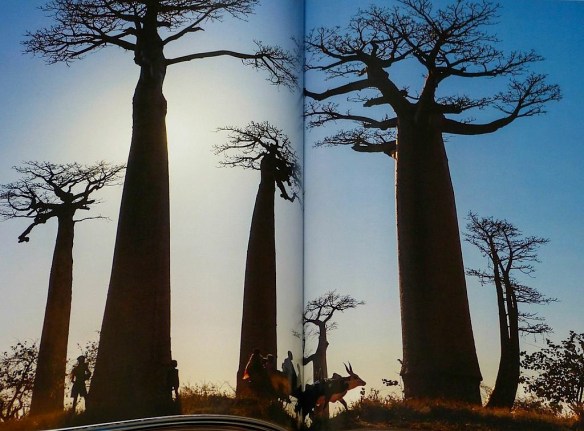
Baobab Tree is a quiet yet emotionally charged reflection on humanity’s estrangement from nature, and the poet’s personal search for connection, reverence, and simplicity in a world increasingly defined by consumption and disconnection. Framed through an intimate interaction with a tree, the poem operates as both a love letter to the natural world and a lament for what has been lost through modern life.
The Baobab itself serves as a central figure—grounded, ancient, humble. It is not simply a tree, but a companion: “My friends / Are the Baobab trees in the park.” This anthropomorphising does not feel whimsical or sentimentalised; rather, it is a sincere extension of the poet’s longing for honesty and reciprocity, qualities found lacking in human society but deeply present in nature.
The tactile description of the tree—“Its bark was hot / Soaking in the sunshine”—grounds the poem in sensory immediacy. The poet’s awe at the tree’s form, its “bulging out of the Earth,” echoes a kind of sacred regard for the quiet miracle of the living world. This reverence is extended to the Earth itself: “This magic earth, soil, land,” the poet calls it, recognising it not just as matter but as a nurturing, intelligent force that sustains life.
There is a subtle undercurrent of sadness and isolation running through the piece, particularly in the line, “Some might say it is beautiful / Romantic and poetic / Except it is my sad truth.” This confession hints at the alienation the poet feels—finding more resonance with a tree and a breeze than with people. This loneliness, however, is not despairing but contemplative, forming the basis for deeper gratitude and awareness.
Midway through, the poem shifts into a tone of praise: an almost devotional awe at how “seeds can grow out of the earth” and provide food, fragrance, oxygen—“an incredible source of nourishment.” This listing serves as a kind of natural litany, a moment of wonder and thanksgiving that contrasts with the more sombre reflection that follows.
The latter section turns toward the ecological and ethical dimensions of human life: “Each human being’s existence / Depletes the planet… / Creates waste.” These lines do not condemn, but rather invite self-examination. The poet includes themselves in the reflection—“I am probably no better than anyone else”—and thereby avoids moralising. The effect is one of shared responsibility rather than accusation.
Importantly, the poem does not end in despair but in a call for awareness and stillness: “Let go of your fears / Find stillness and calm / Amidst the chaos of un-civilisation.” This final phrase, “un-civilisation,” is a sharp and effective critique, suggesting that modernity, though technologically advanced, lacks the soulfulness and respect that true civilisation demands.
Stylistically, the poem maintains a natural rhythm, with short lines and intuitive enjambment that mirror the reflective, almost meditative mood. The language is accessible yet thoughtful, allowing the emotional and philosophical layers to emerge gradually.
In summary, Baobab Tree is a gentle but powerful meditation on the sacredness of nature and the ethical challenge of being human in an age of environmental crisis. Its strength lies in its honesty, its tactile engagement with the natural world, and its refusal to separate the personal from the planetary. The poem invites readers not only to appreciate the beauty of a tree, but to consider their place in the larger web of life—and how they might begin to honour it more fully.
—Baobab Tree was written in Anzac Square, Brisbane, May 1998
Earth Molecule is a deeply reverential meditation on humanity’s inseparable connection to the living body of the Earth. The poem blends spiritual philosophy, ecological awareness, and elemental imagery into a seamless expression of unity, depicting the self not as separate from nature, but as a microcosmic extension of it. Through simple yet profound language, the poet conveys an intimate vision of life, death, and transformation as continuous acts of belonging.
The opening declaration, “I am / An animated molecule / Piece of Planet Earth,” establishes the poem’s central premise with striking simplicity. The poet immediately dissolves the boundaries between human and Earth, individual and cosmos. By identifying as “an animated molecule,” the speaker situates the self within the smallest possible unit of life, grounding identity not in ego or consciousness, but in elemental being. This perspective aligns with both ecological science and spiritual mysticism, merging the language of biology and reverence into one cohesive worldview.
The recurring identification of the body with the planet—“Her body is my own / And I am a little piece of Her / Walking upon Her skin”—is both tender and humbling. The image of the Earth’s “skin” suggests intimacy and fragility, inviting the reader to see human life as an extension of planetary sensation. The poet’s cyclical vision of death—“When I die / My body is restored to Her / And therefore to myself”—emphasises that return is not loss, but reunion. Death becomes a homecoming, a restoration to source, “Back to the womb / Mother who feeds us.”
The middle section of the poem expands this personal meditation into a broader ecological and ancestral reflection. The Earth becomes an alchemical being—“The alchemy is in the land / Her body / Made from the blood of our ancestors”—where transformation is perpetual. The living and the dead coexist within the same sacred continuum, each feeding and renewing the other. This imagery of regeneration not only honours the physical cycles of nature but also carries a sense of spiritual continuity: the ancestors, now returned to the soil, remain present as part of the Earth’s nourishing force.
A key emotional and ethical turn occurs when the poet affirms, “She fosters my growth / For She knows I can do no wrong.” Here, guilt and sin are replaced with understanding and acceptance. The Earth, personified as an all-forgiving Goddess, recognises the inevitability of human imperfection and the ultimate redemption that comes through reintegration. This notion of unconditional love—“Mighty, most powerful Goddess / Of unconditional love”—echoes earlier poems in which the Earth or Gaia functions as a spiritual archetype of nurturing wisdom and evolutionary resilience.
Stylistically, the poem flows in a gentle cadence, its short, declarative lines mirroring the organic rhythm of breath and thought. The repetition of “Her” reinforces reverence, while the lack of punctuation creates a sense of timeless continuity—each idea bleeding into the next, much like the natural processes it describes. The language is elemental, free of abstraction, allowing the imagery to carry the spiritual weight.
The poem’s closing exhortation, “Wake up! She is ‘Us’ / And She always wins,” serves as both a warning and an awakening. The call to consciousness is not antagonistic but restorative—a reminder of the futility of human arrogance in the face of the Earth’s enduring cycles. The final image, “Constant winds of time / Forever, into infinity,” reaffirms the poem’s scope: that life, death, and renewal are not linear but eternal, and that humanity’s true purpose lies in recognising its role within that boundless evolution.
In conclusion, Earth Molecule is a luminous expression of eco-spiritual consciousness—simultaneously scientific in its material understanding and mystical in its emotional resonance. Through its meditative tone and unadorned imagery, the poem transforms the idea of mortality into a celebration of unity, humility, and eternal belonging. It is both a hymn to Gaia and a reminder of our intrinsic participation in her infinite, self-renewing dance.
Creative Cosmic Purpose is an expansive, visionary poem that blends spiritual philosophy, environmental consciousness, and personal responsibility into a single, flowing declaration of human potential. It reads as both invocation and manifesto—an affirmation of unity, creativity, and divine intention. The poet’s voice is impassioned, inclusive, and urgent, calling for a global awakening rooted in self-love, planetary stewardship, and the recognition of our shared cosmic origin.
The poem opens with a tone of trust and purpose: “I trust / That The Divine Source of All Creation / Has brought us together.” This sets a sacred, almost ceremonial tone that permeates the rest of the poem. From the outset, the poet positions human connection—particularly in the realm of creativity—as not accidental, but divinely orchestrated. The inclusion of artistic practices (“Musically, dance, art, poetry, healing”) as tools of cosmic purpose reflects a recurring motif in the poet’s body of work: that creativity is not merely aesthetic, but spiritually transformative.
The poem’s structure is sprawling, freeform, and intentionally unpunctuated, allowing the thoughts to flow in waves—at times declarative, at times meditative, at times prophetic. This openness in form mirrors the fluid and interconnected worldview being expressed: one in which spiritual growth, environmental action, and social transformation are not separate pursuits but facets of the same evolutionary impulse.
A key strength of the poem lies in its fearless ambition. It addresses a broad spectrum of existential themes: the ecological crisis (“Directly responsible for the death and destruction / Of our planet”), the neglect of the feminine divine (“Our Goddess of Unconditional Love”), the cycles of natural upheaval, and the call to spiritual remembrance. Each idea is introduced with sincerity and urgency, without diminishing the weight of the others. The poem’s use of anaphora (“How to take responsibility / How to let go of fear”), repetition, and list-building techniques creates momentum and emotional resonance, building a cumulative sense of importance and inevitability.
There is a distinct spiritual ecology at work—Gaia, or “The Mother,” is not romanticised, but revered as both a physical being and a manifestation of spiritual consciousness. The Earth is depicted as simultaneously generous and indifferent: “She wins through Her patience,” the poet writes, suggesting that natural forces will continue with or without humanity’s participation. This duality lends the poem both awe and humility, urging the reader to align themselves with the rhythms of nature rather than attempt to dominate or outpace them.
In its final sections, the poem turns explicitly toward human agency. Phrases such as “Time to wake up NOW” and “To become an active member / Of the Human Race” act as rallying cries. Here, the language tightens slightly into sharper, more focused exhortations, reinforcing the poem’s central call to consciousness. The emphasis on being “response-able” cleverly reconfigures the idea of responsibility—not as obligation, but as empowered, conscious choice.
Throughout, the poet consistently interweaves the personal with the universal. The message is not one of rigid spiritual doctrine but of inclusive reawakening: a return to “our heart selves,” a celebration of uniqueness, and a shared journey toward remembering “where we came from / In the first place / In ‘The Beginning.’” The poem’s conclusion gestures toward infinity, leaving the reader not with closure, but with a continuation: “Only a continual cycling of change / Gradual increments of evolution / Unique moments of ‘Now.’” The idea of evolution—not only biological, but spiritual and social—is portrayed as an eternal unfolding.
In summary, Creative Cosmic Purpose is a sweeping and heartfelt invocation that bridges mysticism, ecological awareness, and creative activism. Its unstructured, flowing form is well-suited to its thematic content, allowing the poet to traverse vast spiritual terrain without losing coherence. As both poetic vision and spiritual declaration, the work invites the reader to participate in a larger transformation—one grounded in love, creativity, and an urgent remembrance of who we truly are.
Forest is a lush, evocative exploration of connection to nature, imbued with a deep sense of reverence and spiritual communion with the Earth. Through its dreamlike imagery and flowing narrative, the poem speaks to the speaker’s visceral experience within the forest—a sacred space where the boundary between self and nature dissolves, and wisdom, guidance, and profound love are received from the natural world.
The opening lines establish the poem’s spiritual and sensory focus: “I want to convey the magical, special / All loving feeling.” This sets the tone for the piece, inviting the reader into an experience of awe and wonder, while also suggesting that the words themselves may only offer a glimpse of the deeper reality the poet is trying to express. The poem’s structure mimics the sense of a flowing, uninterrupted experience, with its lack of punctuation creating a seamless flow from thought to thought, much like the natural world itself—unfolding organically and without artifice.
The speaker’s identification with the Earth is immediate and profound: “The Earth’s body is part of my own / And I am Her child.” This connection to the Earth is not presented abstractly but as a bodily, intimate union, where the poet feels both nurtured and called by nature. The lines “Will be returned to Her when I die / She invited me to explore” evoke both a spiritual return to the Earth and an invitation to experience its mysteries with humility and wonder. The speaker’s youthful, innocent curiosity is conveyed through the phrase “knew no fear,” which evokes a childlike trust and receptivity to the forest’s teachings.
The imagery that follows is rich and visceral, with trees personified as “powerful, yet so gentle spirits,” embodying wisdom and guidance. The notion of the forest as a living, breathing entity is reinforced through the metaphors of “moss” that “was so soft underfoot” and the Earth’s “skin,” which provides an organic, sensory connection to the landscape. The feeling of being drawn into the forest is not passive; the speaker is a willing participant in the unfolding experience, responding to the “pathways” that “kept opening up for me to explore.” This sense of invitation and discovery provides the poem with an almost magical quality, reinforcing the idea that nature itself is a teacher, welcoming and instructing the speaker with gentle yet profound messages.
The personification of the trees as female (“Very female, though trees had a maleness”) adds a layer of complexity to the natural imagery, suggesting a balance between feminine and masculine energies within the forest ecosystem. The forest is both nurturing and dynamic, providing space for both growth and decay, as reflected in the description of the trees “clinging like fingers clawing for a better grip” as they “slide down the mountainside.” This visualisation of movement within the forest—its roots slipping, trees toppling, and the Earth itself “shifting and loosening”—emphasises nature’s constant flux and interconnection, and the natural cycles of life, death, and rebirth.
One of the poem’s most poignant moments comes towards the end, when the speaker reflects on their time in the forest: “I wish now that I had spent longer with Her.” The speaker’s longing to remain in this sacred space speaks to the transformative power of nature, a power that reorients the speaker’s understanding of their own world and priorities. The contrast between the spiritual richness of the forest and the mundane “other world” from which the speaker came reflects a deep disenchantment with human society and its disconnection from the natural world.
The closing lines, where the speaker is “comforted, nourished / Befriended and welcomed” by the forest, underscore the poem’s central theme of communion and belonging. The forest is not a passive backdrop, but an active, embracing force, offering wisdom and solace to the speaker. By the end, the forest becomes not just a place, but a living, breathing teacher—a space for spiritual discovery, healing, and revelation.
In conclusion, Forest is a lush, sensuous meditation on the profound connection between human beings and the natural world. Through rich, tactile imagery and a dreamlike, flowing structure, the poet effectively conveys a deep spiritual experience of unity with the Earth. The poem evokes both the beauty and the power of nature, as well as its role as a teacher and guide, offering comfort, knowledge, and a sense of belonging. The speaker’s journey into the forest is both an exploration of the external world and an inward journey toward spiritual clarity and understanding.











You must be logged in to post a comment.