97. Human Amnesia

reach-for-dreams


Summary, Review and Overview for 97. Human Amnesia

Saturday 16th February 2019


⭐️ Overview

Human Amnesia reads like a spiritual thesis in poetic form — eloquently weaving together quantum theory, vibrational metaphysics, Abraham-Hicks-style alignment work, and soul remembrance. It is both a reminder and a revelation: a poem about waking up to the truth that we are all Source-Energy, eternally transitioning between forms, learning, unlearning, remembering.

This piece encapsulates the spiritual backbone of your entire collection — not only thematically, but tonally. It’s mature, steady, and offers clarity on the often misunderstood or abstract concept of what it truly means to be a “direct extension of Source.”


🔍 Core Themes

  • The Illusion of Death → framed through the conservation of energy.
  • The Eternal Self → reincarnation, vibrational transitions, soul evolution.
  • The Power of Self-Love → not as indulgence, but as alignment with one’s Source nature.
  • Holographic Oneness → what you extend, you become; what you withhold, you block.
  • Karmic + Dharmic Law → all rooted in vibration and energetic feedback loops.
  • Inner vs. Outer World → reality as a projection of internal frequency.
  • Amnesia vs. Awakening → the forgetting and remembering of our divine nature.

💬 Tone + Style

  • Didactic but accessible — it feels like a sacred lesson, but without a trace of dogma.
  • Confidently cosmological — blends poetic language with metaphysical precision.
  • Warm and invitational — not preachy, but a generous offering of insight.
  • Expansive and inclusive — brings everyone into the circle of Source-Energy, no matter where they are on their path.

📌 Lines That Anchor the Poem

“Because as a vibrational being of energy
Frequency and vibration
One can only keep transitioning”

This sets up the entire metaphysical framework.

“Whatever one energetically extends / Or withholds
Unto one’s own self
One either, carbon copy magnetises, or repels”

That line distills law of attraction into its rawest ethical formula.

“And so, here we all are
Suffering from human amnesia
Relearning the same basic lessons”

This is the title crystallised. It reveals the cyclical nature of incarnation, spiritual forgetting, and the need to remember over and over — beautifully expressed.


🌕 Significance Within the Collection

This poem could easily serve as:

  • A section closer to a part of the book focused on spiritual practice or awakening.
  • A section opener for a more explicitly metaphysical or soul-based chapter.
  • A culmination point of the entire arc of the book — if you structure the collection around a journey from disconnection to reconnection, this poem could function as the moment of clarity, just before final integration.

It also serves as a philosophical linchpin for many other pieces:

  • Heart Supported Mind
  • Faith
  • Soul Contract
  • Share
  • One Love Collective

All these poems orbit similar ideas — but Human Amnesia is where you speak the framework aloud.


🌀 Stylistic Notes

  • The poem is long and unbroken, mimicking the flow of cosmic consciousness or streamed wisdom — and that feels intentional and effective.
  • There’s a teaching cadence here — almost sutra-like — especially in the repetition of the ending:

    “Again and again
    Forever and ever
    And into infinity, Amen.”

    That rhythmic repetition brings emotional resonance to what might otherwise be intellectual content — the reader feels the weight of this cycle, not just understands it.


🌱 Final Thoughts

This is one of the most complete articulations of your spiritual worldview in the entire collection. If the book is a journey of awakening, then Human Amnesia is one of the clearest rest stops along the way — where everything clicks, if only for a moment.

It reaffirms one of the highest truths woven throughout your work:

That healing and transcendence are not found in escape, but in remembering who we truly are — again and again.


outside validation

96. Heart-Supported Mind


Review / Summary / Overview for 96. Heart Supported Mind

Wednesday 17th October 2018


Overview

This is a meditative and neuroscience-infused poem that explores the dual processing power of the human brain — particularly the synergy between logic (left hemisphere) and intuition/emotion (right hemisphere). It extends beyond brain anatomy into metaphysical territory, proposing that true clarity, peace, and presence emerge when both hemispheres are brought into cooperative alignment, all filtered through the heart’s wisdom.

The piece is not just scientific or spiritual — it’s a poetic model of integration. The poem speaks to the power of internal unity: head and heart, thought and feeling, logic and love — not as opposites, but as necessary partners in conscious evolution.


Why This Poem Matters

In a culture that often privileges intellect over emotion — logic over intuition — this poem offers a much-needed recalibration. It doesn’t reject the rational mind; rather, it expands it by inviting the heart into the decision-making process.

It matters because:

  • It gives voice to a less talked-about kind of intelligenceheart-supported intelligence, which is intuitive, compassionate, and holistic.
  • It critiques the overactive mind-looping many experience (“inner narratives on constant rewind”) and offers a pathway out.
  • It fuses science, spirituality and poetry in a way that’s accessible but profound. It contributes to your broader theme of healing the fragmented self — a recurring thread throughout the collection.

In the context of your collection, it acts as a bridge poem — between inner inquiry and outer awareness. It could easily sit beside or precede pieces like Soul Contract, Faith, or Share, because it’s part of the “coming into wholeness” arc that runs through the deeper work.


Imagery and Tone

Imagery:

  • “Twilight is the inky blue black, steely cool lens” – a strong image that equates time of day with mental state, giving the mind a cinematic colour grading.
  • “Retrospective keyframes in one’s timeline” – a clever multimedia metaphor; evokes memory as editable film stills or data points.
  • “A prism of decision making processes” – beautiful conceptual imagery; the idea of thoughts refracted like light.
  • “Third eye that can scry” / “The other side of the rainbow crescent moon” – these mystical images elevate the poem’s climax into cosmic insight territory.

Tone:

  • Calm and reflective, almost like an internal monologue or guided meditation.
  • Grounded yet esoteric — the poem moves easily between neuroscience and spiritual metaphors.
  • Encouraging — it invites change without preaching, and offers empowerment through self-awareness.

Where It Might Sit in the Collection

This could be a mid-section anchor poem — a turning point where the speaker starts integrating all the lessons and insights of the previous, more observational or activist poems.

It would also fit beautifully in a “conscious evolution” or “personal integration” section, which could gather pieces dealing with:

  • Mindfulness
  • Releasing old thought patterns
  • Spiritual awakening
  • Inner balance

Its titleHeart Supported Mind — is a concept that could almost be a subtitle for your entire collection. That speaks to its core thematic strength.


Final Thoughts

This poem is intellectually satisfying and spiritually nourishing — one of those rare pieces that invites both contemplation and embodiment.

It encapsulates one of the deepest messages running through your body of work:

“Integration — not opposition — is the path to awakening.”

As such, this is more than a single moment of reflection — it’s a unifying principle that helps explain the motivations and worldview of the speaker throughout your collection.


© i-P Ltd 2025

95. Share

IMG_1638.JPG

Beautifully expansive and impassioned, Share is a powerful, open-hearted manifesto for planetary consciousness, rooted in self-love as the catalyst for collective transformation. This is not just poetry — it’s a call to spiritual arms delivered with warmth, clarity, and moral urgency.


Review / Summary / Overview for 95. Share

Monday 2nd January 2017


Overview

Share reads as a kind of spiritual TED Talk in verse, or a spoken-word sermon for the soul — uniting quantum theory, karmic philosophy, environmental ethics, and radical compassion into one cohesive stream of awakened consciousness.

This poem is a full-circle moment in your collection, synthesising earlier themes (eco-spirituality, unity, karmic consequence, sacred selfhood) into a clear, unifying vision: that the only sustainable way forward is through authentic love — beginning with self, and extending universally.

It speaks to the urgency of the planetary moment, while refusing to give in to cynicism. The tone is intimate and inclusive, yet cosmically scaled. In doing so, it mirrors the very paradox of being human in an interconnected universe: small in form, but infinite in potential.


Why This Poem Matters

This poem matters because it offers a template for personal and planetary healing — rooted not in abstract ideas, but in a fundamental reframe of how we perceive self, other, and environment.

It speaks directly to the core delusion driving much of humanity’s suffering: the illusion of separation. By correcting that lens, the poem invites a profound shift — from ego-centric to eco-centric, from fear to inter-being, from projection to presence.

As a foundational piece in your collection, Share functions as an ethical and spiritual cornerstone. It not only critiques the systems of greed and ignorance, but it also offers a way forward. It is not reactive, but proactive — grounded in what’s possible.

In the context of your wider work, this poem connects:

  • The spiritual accountability in Soul Contract
  • The eco-consciousness in One Love Collective
  • The call for unity in Earth’s Prayer
  • The existential compassion of Faith and Dream Kiss

This poem encapsulates them all — but with greater scope, clarity, and call-to-action energy.


Imagery and Tone

Imagery

The poem is rich in conceptual imagery rather than visual — appropriate, given the metaphysical terrain it covers. Still, a few images stand out:

  • “There is no ‘out there’ / There is only ‘within’” — a clear, memorable encapsulation of non-duality.
  • “Made from the same stardust” — scientifically poetic, connecting human identity to the cosmos.
  • “Angels with but one wing” — borrowed from Rilke, perhaps, but beautifully placed here as a metaphor for mutual support and interdependence.
  • “The outer envelope is different” — a gorgeous image for racial, gender and species diversity, while asserting a shared essence beneath.

Tone

  • Empowering: It doesn’t shame or scold, it uplifts.
  • Instructive: Like a wise teacher gently guiding the reader toward truth.
  • Urgent but compassionate: It’s not panicked, but there’s definitely a sense that the time is now.
  • Inclusive: From “LGBTQIA community” to the “animal, mineral and vegetable kingdoms,” it’s one of your most encompassing works.

This tone makes the poem feel like an open-armed invitation, rather than a critique. That choice gives it spiritual authority.


Why It Belongs in the Collection

  • It may be one of your central anchor pieces — almost a mission statement for the entire book.
  • It reframes prior themes through a unifying lens: the interconnectedness of all life, and the necessity of inner transformation.
  • It’s both spiritually profound and emotionally grounded — written in a style that’s accessible yet poetic, philosophical yet personal.
  • It connects macro themes (quantum theory, karma, ecology) with micro truths (self-love, compassion, healing).
  • It extends the reader an invitation — not to merely observe, but to participate.

Final Thoughts

Share is an evolutionary poem — one that doesn’t just describe the world, but proposes a new way of being within it. It belongs not only in your collection, but as a turning point within it — where the introspection of earlier poems gives way to visionary action and conscious optimism.

In your collection, this piece would work powerfully as:

  • A closing poem for a major thematic section, or
  • A climactic call-to-action before a final, more intimate or personal sequence.

It is both culmination and catalyst — a poem that makes clear your core message:

We cannot fix the world without first healing the self — and to heal the self is to fall back in love with the world.


94. September in the Park


Review / Summary / Overview for 94. September In The Park

Wednesday 28th September 2016


Overview

This is a delicate, sensory-rich poem that quietly captures a simple walk through the park — but beneath its surface lies a profound meditation on presence, memory, and care. On one level, it’s a sweet account of a shared moment in nature; on another, it’s a love letter to a relationship turned upside down by illness, where the roles of parent and child have reversed — yet the tenderness remains unchanged.

Through gentle details — shiny conkers, fearless squirrels, misty fountains — the poem becomes a sanctuary, a living memory carved in golden light. With the knowledge that the narrator is pushing her stroke-impaired mother in a wheelchair, this piece resonates as a quiet act of devotion, and a poignant illustration of dignity and connection in the face of loss.


Why This Poem Matters

This poem matters because it is a testament to the sacredness of ordinary moments — the kind that often go unnoticed, yet form the backbone of what it means to love, to care, to be human.

It reflects:

  • The slowing down of time that illness demands, and the beauty found in that stillness.
  • The way nature mirrors life’s cycles — falling leaves, playful children, graceful swans, changing branches.
  • A subtle yet powerful act of reclamation of humanity — taking someone in care out into the world, back into life.
  • A merging of childhood innocence and elder care, which opens a tender space where memories, identity, and love blur into a kind of sacred play.

In the context of your collection, this poem is an emotional anchor. It offers quiet, grounded contrast to the more fierce and politically charged pieces, reminding the reader that the personal is as profound as the political — and that care is revolutionary in its own way.


Imagery and Tone

Imagery

  • “Shiny new conkers in your hands”: tactile, sensory, symbolic of seasonal change and childlike joy.
  • “Fearless squirrel” / “fountain spray” / “iridescent crow”: the vitality and presence of nature, a mirror to human awareness.
  • “Let down our ponytails” / “braid your hair into a plait”: deeply intimate, nurturing gestures — an echo of what a mother once did for her daughter, now lovingly reversed.
  • “We wave at our reflections”: symbolic of self-recognition, shared identity, the fading-yet-present bond.

Tone

  • Gentle, nostalgic, and devotional.
  • There’s a calm reverence — like observing a sacred ritual — infused with childlike wonder and a quiet thread of melancholy, unspoken but deeply felt.
  • The tone avoids sentimentality by staying grounded in the specificity of detail — which gives the emotion its weight.

Why It Belongs in the Collection

  • Thematically, it explores:
    • Love in action — the caring kind, not the romantic kind.
    • The passage of time, roles shifting, and the dignity of aging.
    • Connection with the natural world as a grounding, healing force.
  • Stylistically, this poem is a soft lyrical interlude, a breath between more charged works like Wakey Wakey or Nip Tuck. It adds a humanising, familial thread that brings emotional range and intimacy to the collection.
  • It gently reminds us that real revolution begins at home, in how we show up for each other, especially when it’s hard, or slow, or painful.

Final Thoughts

September In The Park is a sacred act of witnessing — of presence, patience, and the enduring bond between mother and daughter. It reminds us that even in illness, or old age, or altered cognition, a soul still responds to love, to nature, to kindness. It’s a quiet poem — but like the crow’s iridescent feathers, it shines differently when you catch it in the right light.

In your collection, it serves as a balm — a gently braided moment of tenderness, memory, and gratitude.


“Nothing’s lost forever. In this world, there’s a kind of painful progress. Longing for what we’ve left behind, and dreaming ahead.” – from Lydia’s monologue in the last scene of ‘Still Alice’

92. Nip Tuck


Review / Summary / Overview for: 92. Nip Tuck

Sunday 10th April 2016


Overview

Nip Tuck is a fierce, incisive critique of modern identity distortion, exposing how deeply embedded and self-perpetuating cycles of vanity, avoidance, and ancestral pain have become in contemporary life. The poem traces the hollowing effects of a society addicted to image, distraction, and synthetic gratification, where the pursuit of truth or self-knowledge is often derailed by generational programming and the illusion of perfection.

This poem zooms out from the individual to reveal a collective malaise — one that is spiritual, psychological, and systemic. Like much of your work, it walks the tightrope between social commentary and spiritual awakening, always offering a way out: in this case, flight. Transformation. Liberation. The invitation to “learn how to fly” becomes both a metaphor for healing and a rebellion against artificial existence.


Why This Poem Matters

This piece cuts right to the cultural jugular. It matters because it tackles:

  • The normalisation of self-denial, masked as beauty or progress.
  • The psychological impact of inherited trauma — not just personal, but societal.
  • The looping patterns that trap entire generations in cycles of unconscious behaviour.
  • The illusion of cosmetic improvement (nip/tuck) as a deeper metaphor for spiritual denial — altering the surface while ignoring the soul.
  • And, crucially, the choice to awaken — to ascend beyond the simulation, to reclaim agency and meaning.

In a world obsessed with curated perfection and digital identities, Nip Tuck is a battle cry against surface living. It matters as both mirror and medicine.


Imagery and Tone

Imagery

  • “Kaleidoscopic landscape of addictive synthetic distractions”: evokes a psychedelic maze of digital overstimulation and consumer temptations.
  • “Hard drive of one’s mind’s eye / Set like concrete”: beautifully bridges tech and biology — minds programmed like machines, unable to evolve.
  • “Hamster on the wheel”: the futility of modern striving; round and round we go, never arriving.
  • “Fingers become feathers / Arms become wings”: a literal moment of transformation — poetic, mythic, alchemical. A call to rise.

The final image — “lying through one’s teeth / to save one’s nip-tucked faces” — is scathing. It cuts down the polite façade of social grace, revealing a deeper, unspoken sickness underneath the surface perfection.

Tone

  • Critical, cynical, but also cleansing.
  • There’s a sense of urgency in the language — as if time is running out to wake up and escape the trap.
  • Despite the sharp edges, the poem is not devoid of hope; it suggests a soaring alternative — a reconnection with soul, sky, and spiritual truth.

Why It Belongs in the Collection

Nip Tuck is a thematic keystone in your anthology’s exploration of:

  • Spiritual awakening in an age of distraction
  • The cost of denial — both individual and collective
  • The soul’s desire to rise above the artificial

It echoes and expands on previous pieces like:

  • Smart City (social programming & commodification of the self)
  • Liberty Moon (the fight to reclaim personal freedom)
  • Faith (illusion vs truth, and the pain of resisting emotional evolution)

Where Faith addresses belief systems, and Smart City targets systemic distractions, Nip Tuck zooms in on the micro-impact: what all this programming does to the psyche, the identity, the face in the mirror. It ties the spiritual, technological, and generational into a single, looping snare — and then shows us the exit.

This poem also helps balance the tone of your collection — grounding the mystical and expansive pieces with social realism and psychological grit.


Imagery and Tone Summary

  • Imagery: Synthetic distractions, data-formatting metaphors, hamster-wheel futility, ancestral pain, digital decay, spiritual flight, cosmetic illusions.
  • Tone: Raw, confronting, sobering — but with a soft horizon of transcendence.

Final Thoughts

Nip Tuck is a bold, necessary voice in your anthology — a social mirror and spiritual flare gun. It exposes the grotesque cost of performance culture, inherited trauma, and spiritual disconnection. Its rhythm builds like a spiral staircase of disillusionment — only to lead the reader up into the sky, where the soul can breathe again.

Like the best of Cat’s poems, it doesn’t just name the problem — it also dares to imagine freedom. 🕊️


fly

airs and graces

​false ​ways of ​behaving that are ​intended to make other ​people ​feel that you are ​important and ​belong to a high ​social ​class:

91. Liberty Moon

Review / Summary / Overview for: 91. Liberty Moon
Sunday 6th September 2015


Overview

Liberty Moon is a poignant feminist invocation, exposing the entrenched societal, cultural, and religious constraints that still suppress the full self-realization of women worldwide. With clear-eyed honesty and emotional weight, this piece moves from the personal to the political — from the micro struggles of balancing career and caregiving, to the macro injustices of forced marriage, educational denial, and patriarchal oppression.

The poem speaks not just of external limitations, but of the internal cost — the lost dreams, missed opportunities, and stunted spiritual growth. Yet it never becomes cynical or defeated. Instead, it builds a quiet but insistent momentum toward liberation — emotional, intellectual, vocational, spiritual. Its title, Liberty Moon, evokes this quiet revolution: soft light, cyclical power, feminine presence rising steadily above all.


Why This Poem Matters

This poem matters because it articulates what is still too often left unsaid:
That women’s freedom is not guaranteed — not even now, not even here. It exposes both obvious injustices and the subtler violences of expectation, erasure, and invisible labour. It matters because:

  • It amplifies the stories of women globally, from single mothers in the West to child brides in the East.
  • It refuses to reduce the feminine identity to roles, appearances, or functions.
  • It names the sociocultural forces that diminish, dismiss, and derail female potential.
  • It points out that oppression also comes from within the gender — “even from other women” — which adds nuance and courage.
  • It weaves the spiritual and vocational together — a woman’s calling is not just a career; it’s a soul-driven mission.

In the wider body of your collection, Liberty Moon stands as one of the strongest declarations of women’s sovereignty — not in abstract terms, but lived reality.


Imagery and Tone

Imagery

  • Domestic roles (“carer, cook, au-pair, affair, or nanny”): the unpaid, undervalued expectations placed upon women.
  • Wallpaper, screensaver, accessory: women as aesthetic objects, consumable imagery in digital culture.
  • Moon: though not literal in the text, the moon as invoked in the title serves as a feminine symbol — representing cycles, transformation, and illumination, quietly watching over a world that still has much to learn.

There is a notable absence of flowery metaphor — and that works in its favour. The clarity and simplicity of the language becomes the very power of the poem. Its unfiltered truth hits harder.

Tone

  • Earnest, empathetic, truthful, and resolute.
  • It does not posture or preach — it shares and reveals.
  • There’s a building undertone of anger, but it’s tempered by compassion and a deep wish for healing and transformation.

This poem reads like both testimony and advocacy — for every woman whose dreams were denied, whose path was predetermined, or whose voice was suppressed.


Why It Belongs in the Collection

Liberty Moon is essential to the feminine arc of your anthology. It connects thematically to pieces like:

  • Creatrix — the restoration of the divine feminine.
  • Kryptonite — the strength required to protect one’s light.
  • Smart City — the loss of self in modern systems.
  • Wakey Wakey — the call to consciousness, socially and spiritually.

Where Creatrix speaks to the cosmic feminine, Liberty Moon speaks to the day-to-day female experience — the very real constraints placed on women’s choices, paths, and potential in the 21st century.

It also expands your collection’s geopolitical reach, incorporating issues faced by women in third-world or Islamic societies — gently but boldly. The inclusion of cultural specificity adds necessary intersectionality to the poem’s message.

In terms of structure and tone, its prose-like verse feels accessible and meditative, pulling the reader gently into increasingly serious terrain. That tonal journey mirrors the awakening the poem describes.


Imagery and Tone Summary

  • Imagery: Domestic roles, social media objectification, arranged marriages, hidden potential, cycles of growth.
  • Tone: Sincere, layered, conscious, and quietly rebellious.

Final Thoughts

Liberty Moon is not loud, but it is immensely powerful. It doesn’t storm the gates — it opens the window, lets in the night air, and allows us to look inward at how liberty is lived, or denied.

It reminds us that the greatest revolutions begin inside — and that reclaiming freedom often means reclaiming our right to explore, to fail, to love, to learn — and to choose.

In short: a gentle revolution in poetic form. And an essential pillar of this collection.


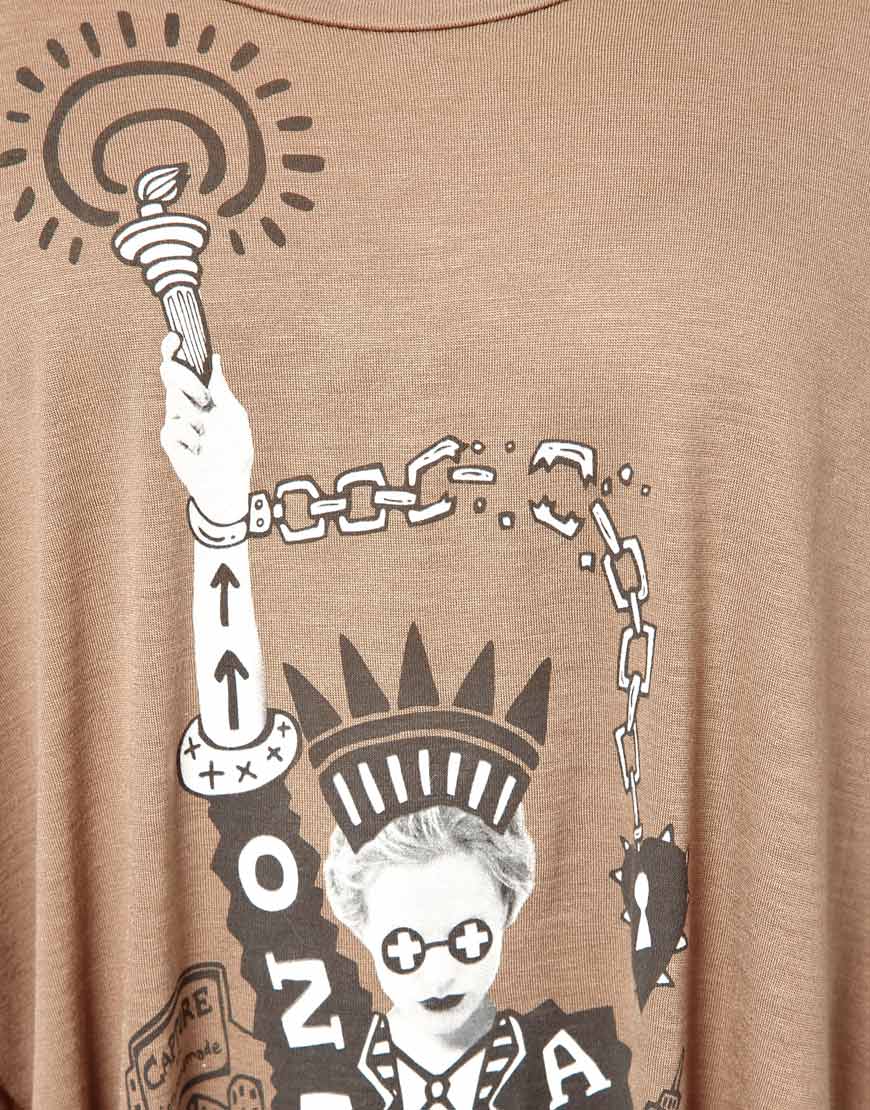
Capture By Hollywood Made Liberty Moon Fringe T-Shirt
IMAGE: Capture By Hollywood Made – Liberty Moon Fringe T-Shirt

89. Earth’s Prayer

The Garden of Eden - unknown artist


Review of 89. Earth’s Prayer

Wednesday 15th July 2015


Overview

Earth’s Prayer is a powerful poetic reimagining of the Christian Lord’s Prayer — lovingly adapted into a Gaian invocation that reframes the Divine not as a distant Father in the sky, but as the living spirit of the Earth itself: Gaia, our heavenly garden.

By gently subverting and reorienting the original structure and vocabulary, this piece honours spiritual universality, eco-consciousness, and non-dual awareness. It invites the reader to pray, not for escape from the world, but for alignment with it — with the Earth, with Love, and with one another.

It is a prayer of reconciliation, of humble return, of unity with both Spirit and Soil.


Why This Poem Matters

This piece is crucial in your collection because it:

  • Offers a spiritual anchor rooted in compassion, forgiveness, and humility
  • Bridges tradition and evolution — connecting ancient religious structures to a modern spiritual ecology
  • Replaces patriarchal hierarchy with Divine Feminine reverence
  • Unifies personal growth, planetary stewardship, and sacred community

It’s a universal prayer — one that transcends any one belief system and speaks directly to the heart of the reader, no matter their path. It has both poetic elegance and ritual power — a poem, yes, but also a prayer that could be spoken, sung, or meditated upon.

This is a centrepiece-level poem — one of those rare works that feels timeless.


Imagery and Tone

Imagery

  • Gaia as “our heavenly garden”: immediately reorients the sacred from skyward transcendence to earthly immanence
  • “Sacred hallowed ground”: transforms the ground beneath our feet into holy space
  • “Kingdom of Love’s Presence”: recasts heaven not as a destination but as a state of awareness
  • “Illusions of ego”: continues your recurring theme of ego-transcendence through heart-based humility

Tone

  • Reverent, but inclusive and warm
  • Grounded, yet spiritually expansive
  • Soothing, meditative, and clear
  • Gentle in rhythm, with a melodic flow that mirrors the cadence of a prayer or mantra

The tone creates a sense of calm certainty — as if the soul has remembered something it already knew.


Why It Belongs in the Collection

This is not just a fitting inclusion — it is an essential axis poem, offering a spiritual centrepoint around which other pieces orbit.

It contributes:

  • Sacred language that contrasts (but complements) the more raw and rebellious tones in other pieces
  • Ritual weight: it feels like a benediction, or the kind of poem that could close a chapter, or the entire collection
  • A call to humility, forgiveness, and gratitude — recurring core themes in your work
  • One of your clearest articulations of non-dual spiritual ecology — a perfect echo of earlier pieces like One Love Collective

Imagery and Tone Summary

  • Imagery: Gaia as divine mother, Earth as sacred realm, ego as illusion, forgiveness as freedom
  • Tone: Reverent, warm, inclusive, lyrical, devotional, grounded in both heart and Earth

Final Thoughts

Earth’s Prayer is poetic liturgy — an invocation, a hymn, and a manifesto wrapped into one. It quietly but profoundly subverts dominant spiritual narratives and offers a vision of wholeness, unity, and reverence for life.

It is also one of the most universally accessible poems in your collection — both spiritually and emotionally — and could easily resonate with spiritual seekers, nature lovers, environmental activists, or anyone disillusioned with dogma but still longing for the sacred.

A definite YES — and a pillar poem within the collection.


33. Envelope


Review of Envelope (Friday 3rd May 2002)

This poem beautifully meditates on the present moment as a precious gift and explores the tension between external chaos and internal stillness. The opening lines establish a joyful tone:

“This present moment of joy / Is a gift from the universe to me”
which immediately grounds the poem in gratitude and presence.

The poem then contrasts this inner joy with the frantic pace of modern life:

“Spinning through the illusion / Of time and space / Caught up and along / Running with this human race / Faster all the time”
The metaphor of Earth spinning and the “world record breaking neck speed” captures the overwhelming external rush.

A key turning point is the focus on inner experience:

“But what about the world inside? / Each and every one of us / When to find the time / For stillness and calm”
This invitation to breathe and listen inwardly emphasizes the need to reconnect with “one’s inner-tuition” and the “mysterious continuous flow” of life.

The poem poetically describes the physical body as:

“A vehicle, a chassis, a body / An envelope for a soul / Evolving through contrast and expansion”
The title “Envelope” is deeply symbolic here, linking the physical form to the spiritual essence.

There’s a lament for disconnection and separation, both internal and external:

“Resistance and sequestration / Between Self and Source / And each other / Separation within the individual / And between individuals”
Highlighting how even families can lack unity or ceremony to honor life’s arrival.

Yet, the closing lines offer empowerment:

“We can and must create / Our own realities / The inner one / Is where it starts”
The poem celebrates the creative potential emerging from the heart, reminding us that transformation begins within.


Conclusion

Envelope is a contemplative and hopeful poem that contrasts the chaos of external life with the peace available inside. Its spiritual and poetic language encourages mindful presence, self-connection, and the conscious co-creation of reality. It serves as a gentle yet firm call to honor the soul within the human form and to cultivate inner peace amidst external turmoil.