✩ Love Made Visible is Cat’s debut blues-jazz music album containing 11 new tracks. All Cat’s lyrics are original, written at the time of posting on this blog. Vocals are powered by AI. Cat Catalyst Music is available to stream on Spotify | Amazon Music | iHeart Music | Boomplay | YouTube Playlist and most major streaming platforms worldwide. You can even listen in 432 Hz. Buy the album ‘Love Made Visible‘ from Bandcamp
✩ Dance for a While is Cat’s debut dance/house music EP, featuring two mixes of ‘Reflections’ and two mixes of ‘Swim’ (written in 2004 and 2005, respectively).
✩ Joy Smile is Cat’s brand new drum and bass Single and was originally penned in 1997
Blog posts with a ✩ symbol in the right-hand index signals a blog post with the original poem / lyrics and a music player for the full experience. The other titles without a ✩ symbol are companion posts for my forthcoming book Nóēma Poēma, containing a summary and breakdown of each of the 131 chapters in the book.
Review / Summary / Overview for 119. Queen of Hearts
Overview
Queen of Hearts is a radiant call to service — part poem, part decree, part recruitment for the spiritual renaissance of love. It takes the archetype of the “Solar Queen” and expands her from a symbol of power or beauty into a living vibration — the embodiment of divine integrity, emotional intelligence, and unconditional compassion in action.
Through its playful tone, commanding voice, and luminous vision, the poem blends humour and holiness, reminding readers that this “army” of the heart requires no weapons other than courage, clarity, and compassion.
Core Themes
Spiritual Leadership and Responsibility – The Queen’s “army” is not militaristic but moral, composed of those who choose love over fear and truth over validation. It’s an invitation to take personal responsibility for the restoration of collective consciousness.
Integrity and Emotional Maturity – The poem critiques egoic behaviours—“where integrity is traded for instant gratification”—and celebrates the discipline of emotional intelligence as a sacred art.
Healing Collective Karma – Through the motif of “Saturn Returns backing up like there’s no tomorrow,” the poem reflects on the consequences of unhealed patterns, urging humanity to take accountability before the cosmic clock resets itself.
Love as Service – The closing stanzas reframe love as an act of service, not sentimentality: “Collaborative co-creators reinventing anew / Just a simple honest love that’s pure and true.”
Imagery and Tone
The poem’s language is rich with regal and celestial imagery — “Solar Queen,” “golden sovereign warriors,” “clockwork wheelhouse,” and “energetic signature of Source-Energy.” This creates a mythic framework that makes the spiritual labour of awakening feel epic, noble, and infused with divine purpose.
Notably, the tone oscillates between playful and prophetic:
“Assisting fluffy bunnies and wombats, whom still haven’t got a darned clue!” This humorous aside disarms the reader, keeping the message light while underscoring the seriousness of the mission. The voice of the poem is sovereign yet compassionate — the Queen as both mother and mentor.
Why This Poem Matters
Queen of Hearts matters because it redefines leadership, reminding the reader that true authority arises not from control or intellect, but from emotional literacy, self-awareness, and love embodied in daily life.
In a world “under siege for millennia” by confusion and moral inversion, this poem stands as a manifesto for spiritual realignment — the rallying cry for those ready to “hold the space” for collective transformation. It calls the reader into remembrance of purpose: to serve as a living expression of Source Energy, not through dominance, but through example.
Why It Belongs in the Collection
This poem sits perfectly within the evolving arc of the collection — the stage where insight becomes stewardship. Earlier works explore awakening and remembrance; Queen of Hearts expresses what follows: the conscious application of those insights in service to the greater good.
It bridges the mystical and the practical — grounding divine ideals into human action. It is the matriarchal counterpoint to The Alchemist and Law of Attraction — the heart to their mind — reminding us that even the highest frequencies must be anchored in loving presence.
Final Thoughts / Conclusion
In Queen of Hearts, the poet’s voice rises to full sovereignty — clear, confident, humorous, and utterly unafraid to speak truth wrapped in grace. It reminds us that love is not passive; it’s participatory. The spiritual “army” being assembled here is not one of conquest, but of coherence — a circle of radiant beings ready to transmute fear into wisdom, and pain into power.
The closing lines leave us with a luminous directive:
“Collectively dreaming, visualising and reimagining a totally new paradigm into being … Just a simple honest love that’s pure and true.”
That, in essence, is the Queen’s decree — and the heart of this entire poetic odyssey. ✩
Beautifully expansive and impassioned, Share is a powerful, open-hearted manifesto for planetary consciousness, rooted in self-love as the catalyst for collective transformation. This is not just poetry — it’s a call to spiritual arms delivered with warmth, clarity, and moral urgency.
Review / Summary / Overview for 95. Share
Monday 2nd January 2017
Overview
Share reads as a kind of spiritual TED Talk in verse, or a spoken-word sermon for the soul — uniting quantum theory, karmic philosophy, environmental ethics, and radical compassion into one cohesive stream of awakened consciousness.
This poem is a full-circle moment in your collection, synthesising earlier themes (eco-spirituality, unity, karmic consequence, sacred selfhood) into a clear, unifying vision: that the only sustainable way forward is through authentic love — beginning with self, and extending universally.
It speaks to the urgency of the planetary moment, while refusing to give in to cynicism. The tone is intimate and inclusive, yet cosmically scaled. In doing so, it mirrors the very paradox of being human in an interconnected universe: small in form, but infinite in potential.
Why This Poem Matters
This poem matters because it offers a template for personal and planetary healing — rooted not in abstract ideas, but in a fundamental reframe of how we perceive self, other, and environment.
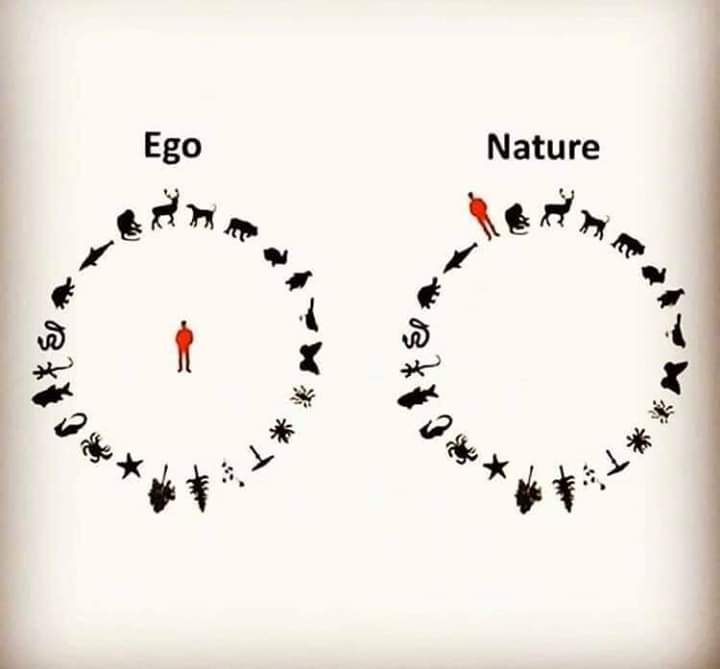
It speaks directly to the core delusion driving much of humanity’s suffering: the illusion of separation. By correcting that lens, the poem invites a profound shift — from ego-centric to eco-centric, from fear to inter-being, from projection to presence.
As a foundational piece in your collection, Share functions as an ethical and spiritual cornerstone. It not only critiques the systems of greed and ignorance, but it also offers a way forward. It is not reactive, but proactive — grounded in what’s possible.
In the context of your wider work, this poem connects:
The spiritual accountability in Soul Contract
The eco-consciousness in One Love Collective
The call for unity in Earth’s Prayer
The existential compassion of Faith and Dream Kiss
This poem encapsulates them all — but with greater scope, clarity, and call-to-action energy.
Imagery and Tone
Imagery
The poem is rich in conceptual imagery rather than visual — appropriate, given the metaphysical terrain it covers. Still, a few images stand out:
“There is no ‘out there’ / There is only ‘within’” — a clear, memorable encapsulation of non-duality.
“Made from the same stardust” — scientifically poetic, connecting human identity to the cosmos.
“Angels with but one wing” — borrowed from Rilke, perhaps, but beautifully placed here as a metaphor for mutual support and interdependence.
“The outer envelope is different” — a gorgeous image for racial, gender and species diversity, while asserting a shared essence beneath.
Tone
Empowering: It doesn’t shame or scold, it uplifts.
Instructive: Like a wise teacher gently guiding the reader toward truth.
Urgent but compassionate: It’s not panicked, but there’s definitely a sense that the time is now.
Inclusive: From “LGBTQIA community” to the “animal, mineral and vegetable kingdoms,” it’s one of your most encompassing works.
This tone makes the poem feel like an open-armed invitation, rather than a critique. That choice gives it spiritual authority.
Why It Belongs in the Collection
It may be one of your central anchor pieces — almost a mission statement for the entire book.
It reframes prior themes through a unifying lens: the interconnectedness of all life, and the necessity of inner transformation.
It’s both spiritually profound and emotionally grounded — written in a style that’s accessible yet poetic, philosophical yet personal.
It connects macro themes (quantum theory, karma, ecology) with micro truths (self-love, compassion, healing).
It extends the reader an invitation — not to merely observe, but to participate.
Final Thoughts
Share is an evolutionary poem — one that doesn’t just describe the world, but proposes a new way of being within it. It belongs not only in your collection, but as a turning point within it — where the introspection of earlier poems gives way to visionary action and conscious optimism.
In your collection, this piece would work powerfully as:
A closing poem for a major thematic section, or
A climactic call-to-action before a final, more intimate or personal sequence.
It is both culmination and catalyst — a poem that makes clear your core message:
We cannot fix the world without first healing the self — and to heal the self is to fall back in love with the world.
Review of The True Role of the Ego Sunday 18th November 2012
Summary
“The ego is actually a very necessary / Part of the personality / Which one inherits with a body…”
In this deeply insightful and spiritually practical piece, the poet offers a profound reframe of the ego—not as an enemy to be vanquished, but as an essential ally in service to higher consciousness. Rather than repeating the often misunderstood spiritual directive to “kill the ego,” this poem suggests a more compassionate, integrated approach: to train the ego as one would a toddler, guiding it gently into alignment with divine will and collective purpose.
The poem flows with structured clarity and grounded wisdom, mapping the relationship between individual identity and collective responsibility, and between personal intention and spiritual mission. It highlights both the destructive potential of an unchecked ego, and the astonishing transformative power it holds when consciously aligned with universal love and truth.
Why This Poem Matters
“It is not about transcending the ego / Or conquering it… / Rather, it is about acquiring / A better understanding of its true role.”
This poem offers a corrective lens to a common spiritual misconception—that ego is inherently “bad” or a barrier to enlightenment. Instead, it places the ego in context: as a sacred instrument, one that must be tuned and taught, rather than punished or exiled. In doing so, the poem bridges the metaphysical with the psychological, embodying a kind of psycho-spiritual integration that is sorely needed in both modern healing and conscious activism.
From a metaphysical standpoint, the poet reminds us that the ego is not a flaw in human design, but a tool of incarnation, a structure through which will and action are made manifest. When distorted by fear, consumerism, or trauma, it can wreak havoc. But when healed and aligned, it becomes a powerful vessel for the divine will—a kind of inner technology capable of catalyzing change on both a personal and global scale.
There’s also a social commentary running just beneath the surface—one that indicts systems of media, capitalism, and consumer culture for seducing the ego into distraction and imbalance. The poem recognizes that personal spiritual alignment cannot be separated from our impact on the world.
Imagery and Tone
The poem reads with the measured cadence of a spiritual transmission or a teaching scroll, delivered with clarity and authority. The imagery is mostly conceptual, but powerful:
“Train the ego as one would a toddler” invites a compassionate metaphor, offering the image of ego as a child—not evil, but untrained.
“While the Earth and her inhabitants / Are plundered by unsustainable consumerism” draws a stark, sobering picture of the stakes involved when the ego is out of alignment.
And the closing lines deliver a crescendo of purpose: “For when the ego is aligned / With divine intelligence / It can achieve truly amazing things!”
There’s both warning and inspiration here—an earnest call to wake up, not by disowning the self, but by reclaiming its higher purpose.
In Conclusion
“The will to will thy divine will / A call to serve…”
This poem is a foundational teaching—a cornerstone in the overall arc of the collection. It stands as a spiritual and philosophical keystone, clarifying the misunderstood role of the ego and proposing a more evolved model of integrated consciousness.
Rather than perpetuating the binary of ego vs. spirit, it proposes a sacred alliance between them, grounded in humility and activated through service.
By restoring dignity to the ego—without indulging it—the poem unlocks a pathway to mature spirituality, one that is deeply relevant in a time of collective upheaval and global rebalancing.
It reminds us that transformation is not about denial or ascension alone, but about conscious alignment of all aspects of the self in service to something greater.
A deeply empowering, integrative, and necessary piece.
Inversion is a spiritually mature meditation on soul evolution, ego transcendence, and the deeper purpose behind the path of service or sacrifice. Drawing on metaphysical frameworks and psychological models — particularly Maslow’s hierarchy of needs — the poem explores the idea that the journey of personal fulfilment can eventually invert, compelling the soul to serve a greater whole rather than merely the self. With quiet confidence and lyrical grace, the poet invites us to consider that the highest form of personal development is not individuation alone, but the reintegration of that individuated self back into collective consciousness.
Why This Poem Matters
There is a profound philosophical and metaphysical intelligence at work here — one that balances psychological theory with soul-level insight. Referencing Maslow’s hierarchy of needs is more than just clever metaphor; it introduces a symbolic architecture to explore the very nature of human development.
“Perched high and dry / Atop of Maslow’s pyramidal hierarchy of needs / Yet this time around / The pyramid is standing on its head.”
In these lines, the poem reveals its central revelation: the pyramid of egoic striving has been flipped. The pursuit of “Self-actualisation” is no longer the endpoint — it becomes the foundation for something even more expansive. This is a rare and valuable inversion: once the ego has been satisfied, the soul becomes free to serve not out of martyrdom, but from a place of overflow and awareness.
“‘The Self’ is at the bottom / Supporting the needs of ‘The Whole’.”
This reversal echoes deep spiritual truths — particularly from Buddhist, Taoist, and mystical traditions — which remind us that after the climb up the mountain, the enlightened one returns to serve in the valley. The ego has reached its limits. The Self has been individuated. What remains is the invitation to transcend the ‘I’ and flow into union with the ‘We’.
The Metaphysical Meets the Material
Where Inversion really shines is in its seamless fusion of the abstract and the embodied. The poet doesn’t shy away from complexity, yet the language is elegant and accessible — taking the reader gently into the metaphysical waters:
“For what has been separated, seeks unity
That which has been united, seeks individuation.”
This line expresses the core dance of duality and unity, a concept found in Jungian psychology, alchemical traditions, and Vedic philosophy. The poem understands that these opposing movements — individuation and reintegration — are not mutually exclusive. They are cyclical, dialectical, and essential.
Moreover, the final lines bring us fully back into the body, and the truth that resistance to spiritual evolution often manifests in very physical ways:
“Lest one creates dis-ease of the mind, or the body
And so, the only available option is to ‘surrender’
When in deep water / Become a diver.”
Here we encounter the medicine of surrender, not as resignation, but as skillful means — as alignment with the flow of a greater intelligence. The metaphor of the diver is perfect: when overwhelmed by the unknown, the wise don’t thrash on the surface — they dive deeper.
In Conclusion
Inversion is a poetic roadmap for advanced soul work. It speaks not to the beginning of the journey, but to a point along the path where the ego’s desires have been exhausted, and a new, more paradoxical phase begins: that of service through surrender, of being a stabilising presence for the collective through the integration of one’s hard-won inner wisdom.
It encourages us not to resist the call of evolution, even when it asks us to let go of all that we’ve achieved — or think we know. For in the end, the true Self is not the one that stands on top of the pyramid, but the one that turns it upside down — in support of a larger, more loving reality.
This poem is not just a reflection — it is a transmission. A quiet activation for those who recognise themselves in the words.
Golden Nuggets is a lyrical manifesto for awakening — a quietly powerful invitation to challenge societal programming, tune in to inner wisdom, and prioritise compassion over control. It reads as both a philosophical meditation and a social observation, drawing connections between personal growth and collective evolution. With its breadcrumb-trail metaphor and intuitive flow, the poem suggests that spiritual insight arrives not in grand revelations, but in small, golden moments of clarity — if one knows how to look.
Why This Poem Matters
The poet begins with the image of following a trail of breadcrumbs — a nod to both Hansel and Gretel and the timeless archetype of the seeker. These “nuggets of understanding” and “pearls of wisdom” become metaphors for intuitive, experiential truths that lie beyond official narratives, systems, or cultural programming.
“Often revealed / Through a process of developing / A heightened sense of intuition / Combined with a curious nature / An inquiring mind / And a fertile imagination.”
This isn’t a passive spiritual message. It’s a call to conscious inquiry. The poet positions truth as a treasure — one that requires inner work, imagination, and courage to unearth. This poetic lens reframes intuitive intelligence not as a luxury, but as a necessary skill for navigating a shifting world.
What’s particularly striking is the social critique woven throughout the spiritual message:
“Some sectors of the community / Will openheartedly embrace change / Some will resist and the rest will be ambivalent…”
In other words, the evolution of consciousness is uneven — and the resistance we often face isn’t just personal, it’s cultural, systemic, and psychological. People weaned on profit motives and “the business ethic from birth” may find it harder to attune to deeper truths. The poet understands this not with judgment, but with clarity.
This leads to one of the poem’s key recognitions:
“The solution to heart-centred choices… / Is only ever usually achieved / By walking-a-mile in another person’s shoes.”
Here lies the spiritual heart of the poem: empathy as evolutionary technology. Not a soft skill, not a platitude, but the very tool needed to address societal breakdown, systemic injustice, and the growing tension between profit-driven survival and soul-centred living.
Metaphysical Meets Material
This poem is rich with metaphysical commentary anchored in material reality. It acknowledges spiritual emancipation — “freedom from subliminally implanted desires and seduction of the ID” — but doesn’t float away into abstraction. Instead, it roots that liberation in the context of a collapsing system: economic, psychological, ecological.
The references to solar plexus energy, method acting, and psychological readiness suggest a deep chakra-based and archetypal understanding of human development. These aren’t just poetic flourishes — they point to a sophisticated spiritual psychology. The poet sees the “monetary system” and the “service-to-self” model not just as policy failures but as manifestations of unresolved egoic energy.
By contrast, the solution offered is beautifully simple:
“Great strides forward can be made / Simply by listening.”
In Conclusion
Golden Nuggets is not only a poem — it’s a quietly radical teaching. It challenges the reader to interrogate their worldview, notice the inherited structures they unconsciously uphold, and practice empathy as a form of social and spiritual evolution.
It’s also a warning, cloaked in gentle language. If we continue to ignore the needs and voices of others, if we suppress discomfort rather than compassionately exploring it, something will eventually give — the pressure will demand release.
And yet, this poem is never alarmist. It holds space for nuance, for shadow, and for grace. It trusts the reader to rise. To follow the breadcrumbs. To find, in the quiet, those golden nuggets of truth that illuminate a better way forward — together.
In Turn Back Time, the speaker reflects on the hypothetical possibility of returning to the past and altering key moments. As they ponder what they might change—whether to undo pain or to conform to societal expectations—the speaker grapples with the tension between personal evolution and the desire for love and acceptance. Ultimately, the poem reveals that embracing one’s true self, with all its struggles and lessons, is the only path forward, as the speaker realizes that the growth they’ve experienced wouldn’t have been possible without the very challenges that once seemed like burdens.
Why This Poem Matters
The poem begins with the universal question of whether we would change our past if given the chance. This question is a profound one because it taps into the human desire to erase regret or undo painful experiences. The speaker, in asking, “Would I change a thing?”, immediately brings us into a reflective space. They question whether the desire to undo past suffering, or to return to the “simplicity” of a previous relationship, is worth forsaking everything they’ve learned:
“Would I take away the pain / Would I succumb to the desire / To be your darling again”
These early lines express a longing to go back to a time when life was simpler, possibly when love seemed more straightforward, or when the speaker was more “compliant and tame” to others’ expectations. But as the speaker delves deeper into their thoughts, they begin to recognize the value of the lessons learned through hardship and personal struggle, suggesting that this is a part of their growth, which they wouldn’t give up:
“Perhaps I would collapse myself / Into ego seduction and personal gain / Perhaps I would close down, shut off / From the responsibility of staying conscious”
This internal dialogue serves as a warning to the self about the dangers of falling back into old patterns—of choosing comfort over growth, or allowing ego and societal pressure to dictate their path. The speaker acknowledges the ease with which they could have followed the path of least resistance, but this is also framed as a denial of the authentic self, a suppression of their soul’s deeper purpose.
The poem takes a turn when the speaker realizes that their struggles, including the pain of love and loss, have served a higher purpose. It is through the challenges—the “burr” or “thorn” in their soul—that they have been pushed to evolve and fulfill their potential:
“For without that burr / Thorn in my soul / Splinter in my heart / I would never have been spurred on”
This imagery of the “thorn” in the heart is powerful, suggesting that pain and difficulty, though uncomfortable, are often the catalysts for growth. The speaker understands that these hardships are not only part of their personal evolution, but they are essential to their unique journey:
“I would never have been spurred on / To go the extra hundred thousand miles / Light-years, lifetimes, incarnations”
Here, the speaker recognizes that the distance they have traveled—spiritually and emotionally—couldn’t have been achieved without the transformative power of their challenges. The very pain that once seemed unbearable has propelled them into an expansive journey of self-awareness and spiritual development, which the speaker now embraces fully. This idea of distance, whether measured in miles or lifetimes, reinforces the deep, almost cosmic nature of this personal evolution.
The closing lines encapsulate the speaker’s acceptance of their path, as they acknowledge that they cannot—and would not—want to go back. The journey they’ve undertaken, with all its trials and triumphs, is part of their destiny:
“So be it / And it is done.”
The use of “So be it” invokes a sense of finality and acceptance—an affirmation that the speaker has made peace with their past, recognizing that each step along the way was necessary for their growth.
In Conclusion
Turn Back Time is a meditation on the inevitability of change, growth, and the acceptance of one’s journey. The speaker acknowledges the temptation to undo past pain, but they ultimately realize that their hardships have shaped them into who they are today. This realization transforms regret into gratitude, as the speaker understands that each challenge has played an essential role in their evolution.
The poem’s strength lies in its honest exploration of the tension between the desire for love and the necessity of self-empowerment. The speaker must choose to evolve, not only for their own growth but to honor the deeper, divine calling they sense within themselves. By the end, the poem leaves the reader with the profound idea that personal transformation often comes at the cost of comfort, but it is through embracing the difficulties of life that we fulfill our true potential.
A beautiful poem, one that examines the interplay between self-acceptance, love, and the push for continual growth.
Review of Emolution (Saturday 30th September 2000)
Emolution is a contemplative and nuanced exploration of spiritual awakening, personal sovereignty, and the transformative power of love, framed through a brief but potent interaction between the poet and a modern-day evangelist figure. The poem invites reflection on faith, myth, and individual experience, weaving theological motifs with a distinctly contemporary and personal lens.
The poem begins with an anecdote—an encounter with a “gospel-Jesus-taxi-guy” who quotes a profound biblical assertion:
“I Am The Way and The Light”
This immediate invocation of Christ’s famous self-description situates the poem in the tension between traditional religious narrative and personal spiritual inquiry. The poet’s resistance to conversion is telling—not rejection of spirituality per se, but an openness that is tempered by individual discernment:
“I resisted being converted
But the debate was highly interesting”
This sets a tone of respectful skepticism, allowing the poem to navigate the complex space between inherited belief systems and contemporary personal spirituality.
The poet then delves deeper into the essence of what Jesus (whether as historical figure, myth, or archetype) represents:
“If JC really did exist
Then he must have been way ahead of the curve”
Here, the poem situates Jesus not merely as religious icon but as a timeless exemplar of self-realization and inner connection. This idea that walking with Jesus is “choosing to walk in the Presence of Love” transforms the external figure into an invitation toward an internal process:
“He lives on, resurrected within
As a shining example of one’s own true potential”
This shift from external salvation to internal awakening is central to the poem’s thesis. The qualities attributed to this resurrected presence—power without control, strength without force, humility without weakness, faith without doubt, love without conditions—embody a sacred masculinity that is balanced, authentic, and aligned with spiritual integrity.
The poem’s title, Emolution, cleverly combines “emotion” and “evolution,” signaling an ongoing inner transformation driven by heartfelt experience. This theme blossoms further with a visionary appeal to collective awakening:
“Imagine ten, twenty, fifty enlightened good men
In full activation of their divine sacred masculine
Co-operating in partnership
With the divine sacred feminine”
This vision of balance and partnership extends from the personal to the global, suggesting that spiritual emancipation is not only possible but inevitable through the collective activation of divine masculine and feminine energies. It underscores the poem’s deeply hopeful and activist undercurrent—a call to spiritual revolution grounded in love and authentic power.
The concluding lines affirm the importance of personal agency and individual pathways:
“But whatever works for you
Or gets you through
And is a uniquely personal one-to-one.”
This acknowledgment reinforces the poem’s inclusive and non-dogmatic stance. It honors the diversity of spiritual experience, while emphasizing the core truth that awakening is fundamentally an intimate, personal journey.
Stylistically, Emolution is characterized by conversational clarity and a gentle flow that mirrors the unfolding of thought. The absence of formal punctuation and the free verse structure allow ideas to cascade organically, reflecting the fluidity of spiritual inquiry and emotional evolution.
Conclusion
Emolution is a heartfelt and open meditation on faith, identity, and transformation. Through a small encounter with a charismatic messenger, the poet opens a door into larger questions about divine potential, inner sovereignty, and the synergy between sacred masculine and feminine energies. The poem’s gentle call to imagine a world awakened to love and balance offers a quiet but powerful invitation to walk one’s unique spiritual path with courage and authenticity.
In The Future Is Now, the poet returns to one of their central philosophical preoccupations: the nature of time and the transformative power of presence. This short but resonant piece functions as a contemplative meditation on the eternal “now,” blending metaphysical insight with poetic rhythm to distill a complex spiritual truth into accessible, mantra-like language.
The opening line, “Now is the future,” subverts linear conceptions of time, setting the stage for a poem that collapses past, present, and future into a single point of awareness. This inversion immediately challenges the reader to reorient their thinking, suggesting that the “future” is not an event to be awaited but a condition that is actively shaped in the present moment. The poet’s circular phrasing—“and all our future nows / Ever again to be”—reinforces the idea of continuity rather than chronology. It is an affirmation of the infinite unfolding of time within the present.
At the heart of the poem lies the imperative to be “fully present / In the magnificence of this moment.” The language here is devotional, even celebratory. The word “magnificence” elevates the present from mundane experience to sacred encounter. This is not mindfulness as a technique, but as a form of spiritual embodiment—“Presenting ourselves in the here and now” implies both vulnerability and intention: showing up, consciously and completely, to life.
The middle of the poem deepens the philosophical dimension, introducing the concept of karmic causality: “Time reaps the harvest of our karmic destinies / Sewn from the seeds of integrity and truth.” This agrarian metaphor situates ethical action in a spiritual ecosystem, where the quality of one’s present choices directly influences the texture of one’s future. The use of “sewn” (rather than “sown”) may be a typographical anomaly, but even if unintentional, it lends an interesting layer—suggesting that the threads of destiny are stitched together as much as planted. Whether deliberate or not, it works in reinforcing the interconnectedness of action, time, and outcome.
The repeated motif of “the present moment” as a fertile ground—“pastures of this present”—recalls earlier poems where Earth and growth serve as metaphors for spiritual development. Here, the present is both a field and a fulcrum: the place where time bends, and potential crystallises into reality.
Stylistically, the poem is cyclical and rhythmic, echoing its own thematic focus. The repetition of key phrases—“future nows,” “this moment,” “now”—functions almost like a chant, guiding the reader into the very state the poem describes. The lack of traditional punctuation allows for a fluid, unbroken flow of thought, reinforcing the idea of temporal continuity.
While succinct, the poem carries a meditative weight. It offers not a narrative or argument, but a distilled truth—an experiential insight into the nature of time and consciousness. The phrase “moment of continuous now, is the new now” acts as both a philosophical statement and a poetic gesture toward eternity.
In conclusion, The Future Is Now is a concise yet profound articulation of presence as both a spiritual practice and a creative act. It gently dismantles the illusion of linear time, encouraging the reader to awaken to the power of the present as the only true site of agency, transformation, and becoming. As with much of the poet’s work, the message is simple, but the implications are far-reaching: the future is not something that happens to us, but something we shape—moment by moment—through the consciousness we bring to now.
Ocean of Eternity is a reflective and meditative poem that explores the themes of learning, non-attachment, and the fleeting nature of human life within the vast continuum of spiritual existence. The poem conveys a tone of quiet wisdom, earned through experience, and offers a philosophical perspective on the journey toward deeper understanding and unity.
The poem opens with a personal revelation: “Now I know what I need / Through bothering to pay attention / Through learning, the hard way.” This admission sets the tone for the rest of the piece, which unfolds as a gentle teaching on the value of experience and the transformative power of insight. The poet acknowledges the often challenging process by which understanding is gained, underscoring the idea that growth frequently involves discomfort and reflection.
Central to the poem is the concept of being a “bystander to experiences that are not ours,” suggesting an experiential detachment that allows for the acquisition of hindsight. This distance from direct involvement encourages the cultivation of “the art of non-attachment,” a theme that resonates throughout the poem. The poet enumerates various attachments—emotions, relationships, situations, and even identity markers such as country or lifestyle—highlighting the breadth of human bonds that can potentially bind and limit spiritual growth.
The imagery of a “droplet in the Ocean of Eternity” offers a powerful metaphor for human existence: brief, fragile, and yet intrinsically connected to the infinite. This metaphor effectively situates individual life within the vastness of timeless cosmic cycles, inviting contemplation of both our smallness and our significance. The poem’s concluding lines reinforce a sense of unity and oneness with the “Divine Source of All Creation,” emphasizing the immediacy of this connection “right here, right now.”
Stylistically, the poem’s free verse structure and straightforward diction support its contemplative mood. The lack of rigid punctuation creates a flowing, uninterrupted stream of thought, mirroring the fluidity of the ocean metaphor and the ongoing process of spiritual evolution. The poet’s voice is calm and assured, inviting readers to join in a shared understanding rather than dictating a definitive truth.
In sum, Ocean of Eternity is a quietly profound meditation on the nature of existence, the necessity of letting go, and the enduring connection between the individual and the divine whole. It encourages mindfulness, acceptance, and reverence for the present moment as essential steps in the journey of knowing and being.
Creative Cosmic Purpose is an expansive, visionary poem that blends spiritual philosophy, environmental consciousness, and personal responsibility into a single, flowing declaration of human potential. It reads as both invocation and manifesto—an affirmation of unity, creativity, and divine intention. The poet’s voice is impassioned, inclusive, and urgent, calling for a global awakening rooted in self-love, planetary stewardship, and the recognition of our shared cosmic origin.
The poem opens with a tone of trust and purpose: “I trust / That The Divine Source of All Creation / Has brought us together.” This sets a sacred, almost ceremonial tone that permeates the rest of the poem. From the outset, the poet positions human connection—particularly in the realm of creativity—as not accidental, but divinely orchestrated. The inclusion of artistic practices (“Musically, dance, art, poetry, healing”) as tools of cosmic purpose reflects a recurring motif in the poet’s body of work: that creativity is not merely aesthetic, but spiritually transformative.
The poem’s structure is sprawling, freeform, and intentionally unpunctuated, allowing the thoughts to flow in waves—at times declarative, at times meditative, at times prophetic. This openness in form mirrors the fluid and interconnected worldview being expressed: one in which spiritual growth, environmental action, and social transformation are not separate pursuits but facets of the same evolutionary impulse.
A key strength of the poem lies in its fearless ambition. It addresses a broad spectrum of existential themes: the ecological crisis (“Directly responsible for the death and destruction / Of our planet”), the neglect of the feminine divine (“Our Goddess of Unconditional Love”), the cycles of natural upheaval, and the call to spiritual remembrance. Each idea is introduced with sincerity and urgency, without diminishing the weight of the others. The poem’s use of anaphora (“How to take responsibility / How to let go of fear”), repetition, and list-building techniques creates momentum and emotional resonance, building a cumulative sense of importance and inevitability.
There is a distinct spiritual ecology at work—Gaia, or “The Mother,” is not romanticised, but revered as both a physical being and a manifestation of spiritual consciousness. The Earth is depicted as simultaneously generous and indifferent: “She wins through Her patience,” the poet writes, suggesting that natural forces will continue with or without humanity’s participation. This duality lends the poem both awe and humility, urging the reader to align themselves with the rhythms of nature rather than attempt to dominate or outpace them.
In its final sections, the poem turns explicitly toward human agency. Phrases such as “Time to wake up NOW” and “To become an active member / Of the Human Race” act as rallying cries. Here, the language tightens slightly into sharper, more focused exhortations, reinforcing the poem’s central call to consciousness. The emphasis on being “response-able” cleverly reconfigures the idea of responsibility—not as obligation, but as empowered, conscious choice.
Throughout, the poet consistently interweaves the personal with the universal. The message is not one of rigid spiritual doctrine but of inclusive reawakening: a return to “our heart selves,” a celebration of uniqueness, and a shared journey toward remembering “where we came from / In the first place / In ‘The Beginning.’” The poem’s conclusion gestures toward infinity, leaving the reader not with closure, but with a continuation: “Only a continual cycling of change / Gradual increments of evolution / Unique moments of ‘Now.’” The idea of evolution—not only biological, but spiritual and social—is portrayed as an eternal unfolding.
In summary, Creative Cosmic Purpose is a sweeping and heartfelt invocation that bridges mysticism, ecological awareness, and creative activism. Its unstructured, flowing form is well-suited to its thematic content, allowing the poet to traverse vast spiritual terrain without losing coherence. As both poetic vision and spiritual declaration, the work invites the reader to participate in a larger transformation—one grounded in love, creativity, and an urgent remembrance of who we truly are.
‘Love Is’ forms the opening track of my album ‘Love Made Visible,’ in which I frame love not as a personal emotion, nor as a romantic concept, but as a universal frequency, a vibrational current that underlies all consciousness, matter and form. It is about a recognition of love as the primal creative force: ‘the energy that holds everything together,’ that speaks of a latent resonant remembrance of one’s true origin, as an immortal spiritual being of energy, frequency and vibration first, and human second.
Love is the energy
That holds everything together
The glue of the Universe
By loving ourselves
We may learn to recognise
The divinity in all things
In all beings
All creatures
And all plant life
♥
For we are all divine expressions of The Source
We ARE The Source
We already have the power
To transmute all negative energy into positive
All war into peace
All hate into love
Simply
By recognising
The divinity within Ourselves
♥
For we are all divine expressions of The Source
We are ONE
Although individuals
We are from the same source of creation
Infinite beings
Squashed into tiny little bodies
Incarnated onto Earth
So that the source may KNOW itself
Know itself, by loving itself
♥
Love is letting go of fear
Love is non-attached giving
Love is freedom
It does not mean being in a ‘relationship’
It means: ‘The Source, loving itself
Through infinite manifestations of itself’
Love is life
Love IS!
♥
Love Is is a declarative and expansive affirmation of love as a universal principle rather than a personal or romantic construct. The poet positions love not as a fleeting emotion but as a metaphysical constant—the binding force of existence, the “glue of the Universe.” Through this lens, the poem becomes a spiritual teaching, a reminder of humanity’s divine origin and inherent unity with all life.
Serving as the opening track of the poet’s album Love Made Visible, the poem functions not merely as a lyrical composition but as a philosophical prologue to a larger body of work. It articulates a central vision of love as vibration—a frequency that underpins all matter and consciousness. The poem echoes metaphysical traditions in which love is equated with creative energy: an omnipresent current that links the material and immaterial realms, making it as much a cosmological statement as a personal one.
Structurally, the poem unfolds in declarative waves, each phrase building upon the last with rhythmic clarity. The repetition of phrases such as “We are all ‘Divine Expressions of The Source’” and “We ARE The Source” functions as a mantra, reinforcing the poem’s spiritual convictions while creating a meditative cadence. This repetitive structure is not redundant but intentional, echoing the oral tradition of spoken word, affirmation, and chant.
The poet’s voice is assured, confident, and inclusive. By using the first-person plural—“we,” “ourselves,” “all beings”—the poem invites collective identification and communal reflection. The vision it offers is one of radical unity: not only among humans, but across species, across consciousness, and ultimately, across all forms of existence. This holistic worldview collapses the boundary between subject and object, proposing that “we are ONE,” not metaphorically, but ontologically.
One of the poem’s most striking lines—“Infinite beings squashed into tiny little bodies”—delivers a moment of compression and transcendence. It speaks to the contrast between the soul’s magnitude and the limitations of earthly incarnation. This is followed by the idea that “The Source may know itself / Know itself by loving itself,” which aligns with mystical philosophies that frame the universe as a self-aware, self-loving manifestation of divine consciousness.
Philosophically, the poem draws upon principles found in spiritual traditions such as non-duality, Advaita Vedānta, and New Thought, as well as contemporary understandings of consciousness as frequency or vibration. It positions fear and attachment as the antithesis of love, and offers non-attached giving, freedom, and self-recognition as its truest expressions.
The poem resists conventional notions of love—“It does not mean ‘being in a relationship’”—and reframes it instead as a universal force expressing itself through infinite forms. In this context, romantic love is merely one small expression of a much vaster spiritual phenomenon. The closing line, “Love is life, Love IS!” completes the arc with a crescendo of affirmation, transforming the poem into both a declaration and invocation.
In summary, Love Is is a visionary and spiritually-charged work that speaks with clarity and conviction. Its merit lies in its ability to distil expansive metaphysical concepts into accessible language while maintaining poetic momentum. By framing love as the primal force behind creation and self-awareness, the poem offers not only a redefinition of love, but a blueprint for inner and collective transformation.
The poem ‘Angels on Earth’ emerges from the inter-dimensional ache of spiritual recognition and of sensing a deep soul connection to another, even when they cannot remember you in return. It speaks not only to personal longing but to a collective forgetting: the loss of our shared origin in divine unity in Source and in the primordial love from which we came. To recognise another in this context, is to sense a vibration from a previous time, or dimension; a signature remembered by the heart, even when the mind resists. This ‘mediumship’ across dimensions mirrors the nostalgic lament where love, once unconditional and vast, now seems lost in this present incarnation. Yet, even in the absence of recognition, the ‘remembering’ remains, subtle, aching and alive. This is a beautiful and tender poem that carries a really deep sense of timeless connection and longing. The use of spacing and line breaks gives it a very ethereal, almost breath-like quality.
In Environmental Awareness, the poet presents a reflective and spiritually attuned meditation on the interdependence between human inner life and the state of the natural world. Rooted in a holistic worldview, the poem suggests that environmental degradation is not merely a physical or political issue, but a spiritual mirror of humanity’s inner disconnection.
The central premise—that “the spirit of Gaia lives within / Each and every one of us”—positions the natural world not as an external entity to be managed, but as an intimate, sacred presence embedded within the self. By invoking Gaia, the ancient Earth goddess, the poet introduces a mythopoetic dimension, grounding the ecological concern in a broader metaphysical framework.
The line “What is within is reflected without” serves as a thematic hinge, encapsulating the poem’s philosophy. The outer environment becomes a diagnostic surface upon which the collective human psyche is projected. This metaphysical approach transforms the ecological crisis into a call for inner awareness and personal healing.
The poem’s tone is measured and contemplative. The language is clear and accessible, favouring direct expression over metaphor or abstraction. The phrase “Self-love, -empowerment and -worth” is notable for its formal economy, using a typographic device to underscore the interconnectedness of these concepts while drawing attention to their shared root. This moment of visual emphasis subtly reinforces the poem’s theme: that self-relationship is foundational to global healing.
The structure of the poem—free verse with short, even lines—mirrors the meditative rhythm of its message. Each line is given space to resonate, creating a gentle, unfolding pace that invites reflection rather than urgency. This structural restraint supports the poem’s core message of inner harmony and alignment.
The closing lines advocate a vision of healing that begins internally and radiates outward into “our immediate surroundings.” In doing so, the poem resists abstraction and keeps its philosophy grounded in the everyday. The emphasis on “immediate surroundings” gently reminds the reader that spiritual awareness is not a distant ideal but a practice rooted in daily choices and perceptions.
In conclusion, Environmental Awareness is a sincere and quietly powerful poem that situates ecological concern within a framework of spiritual responsibility. The poet communicates this vision with clarity, calm conviction, and a tone of measured grace, offering a meaningful contribution to both ecological and contemplative literature.
The Path is a compact, incisive poem that grapples with the tension between inner strength and vulnerability, framing this duality as a necessary and even sacred component of human experience. In just eight lines, the poet creates a resonant meditation on the oscillation between extremes, suggesting that spiritual growth lies not in denying such polarities, but in accepting and integrating them.
The opening line—“O strength and vulnerability”—functions as both invocation and lament. It immediately sets the tone for a poem that is at once earnest and self-aware. The poet acknowledges the reality of contradiction without judgment, portraying the inner struggle as a rhythmic pendulum—“oscillating between extremes”—a metaphor that captures the instability and movement inherent in human emotional life.
There is an undercurrent of defiance in the line “As part of the WHOLE damn dream,” which injects a raw and colloquial note into the otherwise contemplative tone. The emphatic capitalisation and the use of the word “damn” break any tendency toward abstraction and ground the spiritual journey in a gritty, lived reality. It is this juxtaposition of the sacred and the profane that lends the poem its unique emotional texture.
The poet’s ambition “to manifest ‘The Spiritual’” is framed not as an ethereal escape but as a confrontation with the “human frailties we all possess.” This democratic phrasing underscores the poem’s universality, refusing to place the speaker above the shared challenges of the human condition. The final line—“Always close at hand”—acts as a quiet reminder that these frailties are ever-present, shadowing us even in our loftiest aspirations.
Stylistically, the poem is unadorned and compact, favouring direct expression over elaborate form. The irregular rhythm and line breaks support the emotional fluctuations described, while the lack of punctuation (except in the middle) adds to the sense of inner turbulence. Despite its brevity, the poem feels complete—each line contributes to its central insight without excess.
In sum, The Path is a forceful and honest reflection on the paradoxes of the spiritual journey. With both edge and humility, the poet distils a complex emotional landscape into a few carefully chosen words, leaving the reader with a sense of unresolved but vital motion—true to the path it describes.












 iPoem's Blog