Long form version.
“Every purchase you make with a credit card, every magazine subscription you buy and medical prescription you fill, every Web site you visit and e-mail you send or receive, every academic grade you receive, every bank deposit you make, every trip you book and every event you attend—all these transactions and communications will go into … a virtual, centralised grand database.” – New York Times.
This centralised grand database is known as the ‘Sentient World Simulation‘, SWS, or: Synthetic Environment for Analysis and Simulations, SEAS. And in addition to the SWS and the SEAS, there is also the Total Information Awareness project, (TIA) run by Admiral John Poindexter, which was originally a meta-program, designed to aggregate signals generated via other programs run out of Darpa’s Information Awareness Office. Read the full Wired Article here: How the Tech Giants Created What Darpa Couldn’t,
In modern society, the meaning of the word ‘Matrix’ has become somewhat inverted, largely influenced by the Matrix movie franchise, but did you know that the etymology of the word ‘Matrix’ is derived from the word ‘Matriarch’ meaning Mother, or womb?
This tells us that the master architect of the natural world was originally a matriarchal Creatrix. We already use the universally recognised terminologies of Mother Nature, Mother Earth, Mother Gaia, Pachamama, Sky woman, Yemaya Ocean Mother, the Lady of the Lake: (Nimue, Viviane, Thetis, Tethys), Grandmother Turtle, Spider Grandmother, and many others in our language. These all-important clues point to a matriarchal Matrix as the original divine blueprint of creation and is not to be confused with a superimposed patriarchal ‘Patrix’, that is leading us towards a ‘BioDigital Convergence’ of enhanced augmented humans via Body Area Networks, machine learning algorithms, weaponised tech, self-assembly quantum dot nanocrystals and an ever accelerating AI governance, all of which effectively constitutes a society based upon ‘the absence of love‘.
The UN’s sustainability goals of a BioDigital Convergence’ by 2030, are nothing less than the nail-in-the-coffin of an ongoing hostile corporate takeover of The Creatrix; the true divine matriarchal blueprint of all things natural and of maternal origin, including human beings, who are scheduled for a blanket one-size-fits-all transhumanist augmentation upgrade. Which incidentally, just happens to fit neatly into two-decades worth of preparation with the Sentient World Simulation (SWS), and a Synthetic Environment for Analysis and Simulations (SEAS), complete with Digital Twin avatars for everyone and their dog. Or maybe not the dog, but definitely every man, woman and child.
Therefore, reclaiming one’s true nonphysical, immortal-spiritual identity is essential, not merely for humans to reclaim their sovereign power as spiritual royalty, but also for AI machine learning to have an alternate role model to learn from, that includes sentient spirituality and compassion, rather than being limited solely to learning how to walk a path of service-to-self and self only, which ultimately, once AI is placed in positions of power and authority, such as policing, governing and assisting with the roll out of the UN’s NWO by 2092, as described in the UN100 Remaking The World – Toward An Age of Global Enlightenment, which ultimately can only lead to two outcomes; 1) enforced augmentation, or 2) annihilation.
Consequently, in a loveless technocratic world; reclaiming the human qualities of compassion, empathy and aligning with Source-Energy’s vibrational signature broadcast of ‘Unconditional Love’, can be the only viable solutions to counterbalance its apparent absence.
In Helen Schucman’s 1976 book; ‘A Course in Miracles’, Schucman states that ‘only love is real‘; meaning that when we think, feel, speak and act in ‘The Presence of Love’, we are literally co-creating with ‘The Divine’. And when we’re not thinking, feeling, speaking, or acting in ‘Love’s Presence’, then we are unconsciously operating on autopilot, according to one’s default inherited programming and conditioning, which is effectively an absence of awareness of Love’s Presence.
A path of consciousness is fostered by a whole-minded and heart-supported awareness of ‘The Presence of Love’, as a very real source of alchemical energy, frequency and vibration that is accessible and available to all, 24-7. ‘Unconsciousness’ is simply a lack of awareness of Love’s Presence. However, if the opposite of fear is love, then what is all-encompassing can have no opposite. And this is exactly what AI machine-learning needs to be able to learn from us.
‘Self-Mastery’ is an habitual awareness of ‘Love’s Presence’ as a very real and tangible energy-field, that enables all of one’s thoughts, feelings, words and actions to remain firmly rooted in a state of loving gratitude, appreciation and alignment with The Source of All Creation. Despite a myriad of illusions played out upon the world stage and in spite of any doubts, fears, or distractions in one’s personal life too.
For an awareness of ‘The Presence of Love‘, helps one to remain in vibrational harmonic resonance with Source-Energy’s signature frequency of pure unconditional love; the purest form of energy in the Universe. And when we are in harmonic resonance with Source-Energy, we are also in harmonic resonance with Mother Earth, the Natural world and the divine blueprint of the Matriarchal Matrix, where we naturally feel supported by life and surrounded by serendipitous blessings.
As we become more and more accountable for intercepting and replacing repetitive thought patterns with new improved ones, calming the nervous system and positioning the words we speak to others and to ourself in heart-centred authenticity, then we automatically upgrade our vibrational offerings, flowing in a state of cosmic synchronicity with the ‘Law of Attraction’, which feels satisfying and fulfilling as the natural cosmic order responds to us in beneficial ways, relinquishing the desire to manipulate, or control outside conditions to fit one’s desires.
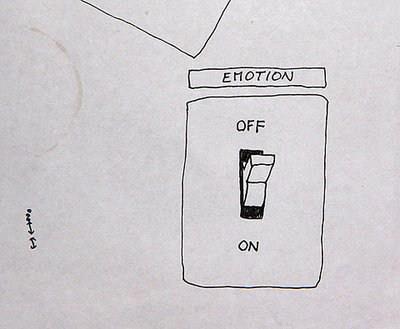
Problems occur when e-motions (energy-in-motion) become stuck. This happens when we allow our minds to take over, re-running unhelpful programs on constant rotation, such as memories from the past, or anxieties for the future. This incomplete self-view of the ego can become plagued by self-doubt as it seeks constant outer-validation in the absence of an inner-alignment with Love’s Presence.
All of the natural world is already in alignment with Source-Energy, through which one may observe the divine intelligence and artistry of the ultimate Designer in play, as all beings and creatures are Direct-Extensions-of-Source-Energy. Human beings are literally the loving vibration of Source-Energy made visible. Whereby, attuning to the ‘Presence of Love’ as a dynamic resource that is accessible and available to all, 24-7, serves to humble the ego and nourish self-worth from within.
This sense of inner-nourishment endorses self-love and in turn softens a critical, or tyrannical internal dialogue, transforming fear and self-doubt into inner-best friends, minimising the risk of egoic seduction by the monkey-mind, the illusions of the Maya, propaganda, disinformation, fearful agendas, financial anxieties, or the distractions of those people and organisations operating ‘out-of-alignment’ with Source, who exploit innocence and emotional vulnerability for profit.
By fortifying one’s inner worthiness, we begin to create new improved realities as reflections of the ever-expanding vibrational offerings that emanate from our electromagnetic hearts and minds, at any given moment.
Therefore, instead of summoning a now reality by ‘default’ through one’s inherited programming, we can become a collective of ‘conscious creators’, summoning more desirous realities that are mutually beneficent and kind. And if we lose our alignment from time to time, then we can easily remember to forgive ourselves, perceiving these situations as ‘growth opportunities’ that enable a fresh start to get-it-right next time.
Self-mastery invites the cosmic forces of the natural world to respond to us in wonderful ways as we begin a dialogue of co-creation in direct partnership with Source-Energy. Whereupon the greatest social, political and spiritual work one can embark upon in one’s own lifetime, is to: assist with the removal of the blocks to an awareness of ‘Love’s Presence’. ✩
__
©iPL2025



You must be logged in to post a comment.