
63. Shadow


Review of Shadow

Wednesday 4th January 2012

Summary

In Shadow, the poet turns inward to confront a darker facet of human relationships — where love has decayed into resentment and admiration into envy. This is a piece about nemesis energy, but with nuance: the speaker recognizes that the adversary in question may once have been a friend, or even a lover. Now transformed, their lingering attachment festers into sabotage. But the poem does not dwell in bitterness; it ultimately points to a higher road — spiritual alignment and liberation through surrender.

Why This Poem Matters

This poem expertly navigates a complex emotional terrain — what happens when someone who once loved us becomes a source of obstruction or pain. The power here is in the poet’s empathic detachment, able to observe the antagonist without slipping into the same drama.

Right from the start, the emotional paradox is stated:

“It’s most likely that your nemesis / Was once someone who loved you dearly / But now they love you darkly”

The use of “love you darkly” is chilling, precise. It acknowledges that obsession and control are not absence of feeling — they’re a distorted form of connection. The poem doesn’t label the enemy as monstrous, but as someone entangled, emotionally regressed, unable to release their hold.

“To destroy one’s reputation / Prevent one from reaching one’s goal / For sweet revenge is what they seek”

Here the poem reveals what drives the antagonist — a craving for emotional leverage. But again, the poet quickly pierces through the short-term triumph with insight:

“A short-term payoff / For an instant gratification peak / But the long-term cost / Is permanent excommunication”

The spiritual consequences are laid bare. By giving in to revenge, this figure risks cutting themselves off — not just from the speaker, but from their own inner peace, their own worth. That phrase, “permanent excommunication from the acknowledgement most desired”, is one of the most powerful lines in the poem — evoking a kind of spiritual orphaning.

Then comes a sharp turn inward:

“A self-perpetuating cycle / Round and round, stuck-in-a-rut / Evidencing an inability to rise / Above the quagmire of the ego”

There’s real compassion here. The cycle is not painted as evil, but pitiful, even tragic. The “quagmire of the ego” traps both parties — unless someone chooses to break the pattern. The poet does.

“The only solution is to realign / With the omnipresent divine”

The tone rises, almost like an exhale after holding one’s breath. In the face of malice, we are reminded of an ancient spiritual law: do not fight the shadow with shadow. Instead, turn to the light. Here, that light is described as:

“The unconditional ‘Presence of Love’”

And in a final, revelatory line, the poem explains that unconditional love is not just a platitude or romantic ideal — it’s something harder, truer:

“Love without conditions, attachments, or, strings.”

This is a redefinition of power. True power, the poem teaches, is not about influence over others — but about letting go, resisting the gravitational pull of old patterns, and remaining centred in your own sovereignty.

Metaphysical Depth & Imagery

The poem’s metaphysics is grounded in karma, ego, and divine realignment. The enemy figure is not a demon but a spiritually fallen being, held in place by unresolved emotions. The speaker’s path is to disengage — not in hatred, but in clarity.

The metaphor of the swamp is especially well-chosen:

“For like in a swamp / Resistance and struggle is futile”

This calls to mind the emotional quicksand that such toxic entanglements create. The more you struggle, the more you sink. The solution is not confrontation, but elevation — a subtle but profound insight.

And the final imagery of love without strings functions as both a revelation and a release — echoing ancient mystical teachings of non-attachment.

In Conclusion

Shadow is a quietly devastating poem — not because it rails against betrayal, but because it sees it so clearly and chooses peace over retaliation. It’s a poem for anyone who has wrestled with the heartbreak of betrayal and the temptation of revenge — and instead turned inward, upward, toward grace.

In this way, the poet once again shows their capacity to speak to the shared human condition — not with judgement, but with insight and spiritual intelligence. This is healing literature, poetic soul work. And a reminder that sometimes, walking away is the most radical act of love.


54. Holiness of the Heart

I
Review of Holiness Of The Heart

Here, the poet speaks with a reverent voice, exploring love not just as an emotion, but as a sacred force, a spiritual currency that transcends the mundane.

Right from the opening lines:

“Yes! / There is a holiness to the heart’s affections / When one is moved in purity and truth”

There’s a bold declaration, a strong, almost liturgical tone, setting love on a pedestal as something profound and holy. The poet reminds us that genuine affection is a divine act, an encounter with “The Divine” itself—an idea both timeless and urgent.

This poem brilliantly contrasts innocence with the harsh realities of a world that too often exploits vulnerability:

“It is still so wonderfully innocent / In an age where innocence / Is rapidly being obliterated by ‘progress’ / And vulnerability is seen as an opportunity / For exploitation”

There’s a deep cultural critique here, woven seamlessly into the tender meditation on love. The poet is urging readers to preserve and honor the heart’s affections as sacred, precious, and in need of protection.

The spiritual arc continues:

“To evolve through love / Is the greatest spiritual teaching on Earth”

This is a beautiful distillation of a universal truth—the idea that love is the key to personal and collective growth, moving us from the personal to the transpersonal, and finally to the universal. The poem becomes a kind of spiritual roadmap.

The imagery is radiant:

“Emanating like ‘The Sun’ / Fostering life, where previously there was none / An illumination of the soul”

Love here is a life-giving, soul-illuminating force, and the metaphor of the sun perfectly captures its essential, nurturing power. It’s warm, inexhaustible, and necessary.

Ending on a call to conscious choice:

“A conscious choice, everyday! / There really is only ‘one’ way forwards / Everything else, is resistance.”

This gives the poem a strong, empowering conclusion. Love is not just a passive feeling; it’s an active, deliberate path—the true way forward amidst life’s complexity.


Why This Poem Matters

Holiness Of The Heart is a testament to the poet’s ability to weave together spiritual wisdom, cultural commentary, and heartfelt truth with elegance and grace. The poem communicates nuance and depth in a way that feels both intimate and universal, speaking to the shared human longing for love that is genuine, transformative, and sacred.

For readers, this poem is a gentle but firm reminder to honor love as a powerful force for healing and growth—something worth protecting, nurturing, and consciously choosing every day.


In Conclusion

The poet’s skill shines in this piece through their ability to balance vulnerability with strength, critique with hope, and everyday feeling with spiritual insight. Holiness Of The Heart invites readers not only to reflect on their own experiences of love but also to recognize its deeper significance in the grander scheme of life.

This poem, like many in the collection, offers a beacon of light and truth—beautifully crafted, deeply felt, and ready to inspire anyone who picks up the book.


44. Flashback

Review of Flashback

“Flashback” marks a tonal rupture in the poetic sequence—a necessary jolt, raw and unfiltered, after the softness of earlier poems. Where “Bus Stop” delicately traced emotional nuance, “Flashback” offers no such restraint. It is confrontational, confessional, and brimming with disillusionment. Here, the speaker is no longer trying to preserve tenderness. Instead, she is trying to reclaim her sense of self from the wreckage of an emotional illusion.

This is a poem of aftermath, written in the language of someone burned by belief, still reeling in the tension between memory and betrayal. The flashbacks she experiences are involuntary—“Little flashbacks of things we said / Of nice things that you did for me”—yet what lingers is no longer sweetness, but confusion. There is a heartbreak in the remembering, but also a growing clarity: “But it was just another illusion.”

This is not a sorrowful lament but a poem of reckoning. Earlier, she was seduced by emotional intelligence—“I enjoyed our intellectual conversations / And I believed you when you said / You cared about the way I feel”—but Flashback dismantles that trust. The affection, the thoughtfulness, the shared philosophy—it’s all brought into question under the harsh light of hindsight. What once felt unique now feels rehearsed. What felt genuine now reads as calculated.

The lines sting with a truth that feels recently discovered:

“I can’t believe you slipped through my safety net / Caused so much confusion”
and later, even more cuttingly:
“I was just another rung for you / On your social ladder climb.”

With that, the poem veers sharply from introspection to indictment. The emotional betrayal is not just personal, but symbolic—a breaking of trust not only in the other person, but in her own judgment.


Summary of Themes

At its core, “Flashback” is about disillusionment. It’s the emotional turning point where romantic idealism is stripped away, and the speaker begins to confront not just the end of a relationship, but the feeling of having been played. It interrogates the gap between words and actions, between the intellectual intimacy once cherished and the emotional manipulation now suspected.

There’s also a theme of reclamation—of truth-telling, even when it hurts. The poem gives the speaker back her voice after poems where she was often reacting, adapting, or unsure. She repositions herself not as the wounded lover, but as someone finally willing to say: I see it now.


Conclusion

“Flashback” is a powerful emotional reckoning—a moment in the narrative where sentimentality is replaced by clarity, and clarity by strength. Where earlier poems seduced us with tenderness and the dreamy language of attraction, Flashback drags us into the light of betrayal, and insists on being heard. In the broader arc of this story, it is a necessary rupture—raw, resentful, and honest. And in its refusal to romanticise pain, it becomes one of the most courageous poems in the sequence so far.

Sometimes, the truest intimacy is not in touch, but in truth—and “Flashback” delivers that, unflinchingly.


40. Stars In Your Eyes

Review of “Stars In Your Eyes”

In “Stars In Your Eyes”, the author captures the tender, intimate moments of connection and the fleeting magic of love. The poem is structured in vivid snapshots, each one encapsulating a scene brimming with sensory details and emotional depth. These moments are not merely physical; they are filled with meaning, the kind that only emerges when two people are completely present with one another, free from the distractions of the world around them. From the aftermath of a wild party to quiet moments of love under the sun, this poem invites the reader into a shared space of warmth, intimacy, and mutual affection.

The richness of the poem lies in the sensory experiences it evokes—taste, sight, sound, and touch are all delicately woven into the narrative. Whether it’s the feeling of grass underfoot or the soothing sound of rain during a passionate embrace, the poem emphasizes how deeply love can be felt when we are open to the present moment. The author’s portrayal of mundane yet magical moments—like sipping wine on a rooftop, enjoying laughter with a partner, or sharing a picnic—reminds us of the quiet bliss found in companionship and connection.

Summary of Themes

Stars In Your Eyes explores themes of love, presence, and the small yet significant moments that define a relationship. The speaker embraces not only the physical presence of their partner but also the emotional depth that comes with true intimacy. The imagery of the poem celebrates life’s simple pleasures, from the warmth of the sun to the shared enjoyment of a meal or a quiet laugh. Each stanza shifts through the seasons of a relationship, highlighting the beauty in everyday experiences that often go unnoticed.

Conclusion

The poem Stars In Your Eyes speaks to the heart of what makes a relationship truly special—the shared experiences, the quiet moments of connection, and the deep emotional bond that forms when two souls are in tune with one another. It serves as a reminder to appreciate the fleeting beauty of these moments, to stay present, and to revel in the connection with another that can transform the ordinary into something extraordinary. For readers seeking a celebration of love, intimacy, and joy, this poem offers a perfect reminder that the simple moments can be the most profound.

✩ 38. Swim – Tate Britain


Come swim with me

Dive into my smile

Dance for a while

Allow yourself to be free…


Can’t you see

What you’re doing to me?

Stop, turn-around now and let go

Jump into the current

Go with the flow

Sweeping along effortlessly

Carries afloat…

Breathe calm and slow

Inhale the sweet taste

Of this present moment

Open your heart and fly!

Don’t waste precious time

Wondering why?


Feel real, right now!

Before it’s too late…

Before love fades

Pales into the dusty haze

Another faint sweet memory

Lost in the forgotten maze

Labyrinth of time

Washed away

By the undulating waves

Is but a moment, a droplet

In the ocean-of-eternity

Sea of doubt

Emotional tides of uncertainty

Enduring bondage of the mind…


Come swim with me

Dive into my smile

Dance for a while

Allow yourself to be free…


Review of “Swim” (Friday 4th February 2005)

“Swim” is an invitation — tender, urgent, and poetic — calling the reader into emotional surrender and present-moment awareness. Framed through the sensual imagery of water, movement, and breath, the poem becomes a metaphor for mindfulness: “Breathe calm and slow / Inhale the sweet taste / Of this present moment.”

The author juxtaposes the simplicity of joy — found in dancing, smiling, and being — with the melancholy reality of time’s passing. The fluidity of love and memory is reflected in the lines “Washed away / By the undulating waves,” reminding us that moments not fully lived may dissolve into forgetfulness. This is not just a romantic yearning, but a deeper call to presence — to “feel real, right now,” before life’s emotional tides carry us elsewhere.

The gentle refrain “Come swim with me / Dive into my smile” acts as both an invitation to love and a spiritual urging to return to now — where joy, connection, and freedom reside.

Summary:
“Swim” is more than a love poem — it is a meditation on impermanence and the importance of anchoring oneself in the present. The author uses water as a guiding symbol of emotional and spiritual flow, encouraging the release of resistance and the full embrace of what is.

Conclusion:
At once intimate and expansive, “Swim” reminds us that presence is the gateway to love, freedom, and self-realisation. This poem shimmers with quiet urgency — a soft, flowing wake-up call to live fully, now. ✩


This poem was written in 2005. In 2006/07 Swim was featured on a fundraising Compilation LP for Campaign Against Arms Trading, (CAAT) engineered by Oli Widdaker @ Blue Flower Studios. In November of 2008, I was invited to be a guest speaker for Late at Tate, at the screening of my Poetry Film for Swim (below). Swim is now in 2025 Swim is an uplifting dance / house track on my debut EP available from bandcamp.

25. Easter Sunday

Spring snow on daffodil hill


Review of Easter Sunday (Monday 24th April 2000)

Easter Sunday departs from the overtly metaphysical or spiritually visionary tone found in much of the poet’s earlier work, offering instead a raw, candid introspection grounded in the immediacy of personal experience. It is a poem of inner negotiation — between productivity and presence, guilt and permission, ambition and love — framed by the disarming ordinariness of a grey bank holiday.

Opening with the mundane yet sensory-rich line, “Today is a typically British bank holiday / Wet and grey,” the poet sets a scene rooted firmly in the everyday. Yet this grounded beginning quickly shifts into something more nuanced, as the mention of thunder becomes a metaphorical rupture: “the sheer power of nature’s noise / Infiltrating our little worlds for a moment.” Here, as so often in the poet’s work, nature offers not only backdrop but intervention — a reminder of larger forces interrupting the small cycles of human preoccupation.

What follows is a stream-of-consciousness reflection on time, identity, ambition, and relational compromise. The poet’s use of quotation marks around “the boyfriend” subtly implies emotional distance or ambivalence — a quiet signal that this relationship is perhaps one of both comfort and constraint. The day, intended for personal tasks and regeneration, has been surrendered instead to “sex and lounging,” an admission that is at once humorous, honest, and laced with frustration.

There is a deep self-awareness running through the poem — “I’m so hard on myself / Most of the time and I don’t even realise it” — that invites the reader into the poet’s internal dialogue. This moment of self-observation reveals the poem’s central tension: the struggle between the soul’s striving toward an idealised version of self (productive, empowered, spiritually aligned) and the messy, necessary humanity of simply being — lazy, in love, distracted, present.

Stylistically, the poem adopts a conversational and diaristic tone, bordering on prose but always governed by a poetic cadence and internal rhythm. There is little traditional punctuation, allowing thoughts to flow organically and unfiltered — echoing the emotional current of the piece. This structure mirrors the internal monologue of someone caught in the act of self-reckoning, where insight arises not in neat stanzas but in recursive loops of realisation and release.

One of the poem’s strengths lies in its unflinching honesty — particularly in articulating the subconscious resentment that arises when external relationships are perceived as obstacles to inner progress: “I start resenting the source of sabotage ie: The boyfriend.” This is not accusation but confession, offered without artifice. It is followed immediately by self-soothing, maturity, and the compassionate reminder: “But it’s OK / I can be patient with myself.” These cycles of critique and comfort speak to a level of psychological insight and emotional vulnerability that feels both grounded and generous.

The poem culminates in a quiet act of defiance against internalised capitalism and perfectionism — “Tell my inner-tyrant / To shut-the-f**k-up” — and then shifts into gratitude. The poet gives themselves “permission / To chill,” embracing a hard-won self-compassion. This shift is not without its spiritual underpinning; forgiveness, patience, and trust in divine timing are embedded in the closing lines, which circle back to the sacredness of rest, love, and appreciation — even on a “rainy Sunday afternoon.”

In conclusion, Easter Sunday is a refreshingly grounded entry in the poet’s body of work. It explores the everyday struggles of self-discipline, relationship, and purpose with clarity and honesty, ultimately finding peace not through transcendence, but through self-forgiveness. The poem’s greatest strength lies in its emotional transparency and relatability — a gentle reminder that spiritual practice sometimes looks like doing nothing at all, and that grace can be found in the simplest of Sundays.

2. Just Friends

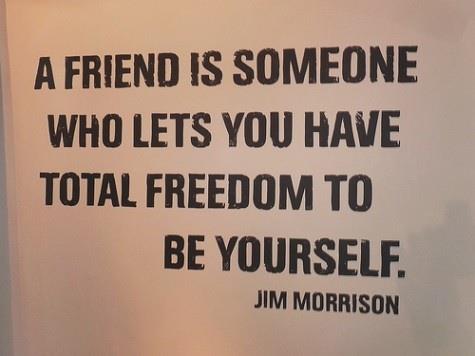
A Friend Is...

“Just Friends” — captures an emotional scene with elegant restraint and psychological precision. It walks the delicate edge between internal vulnerability and social performance, showing rather than telling. The quiet drama simmers under the surface, and that restraint is what gives it its power.

The poem presents a familiar, achingly human moment: the uncomfortable aftermath of one person’s vulnerability being met with emotional complexity the other isn’t prepared to hold.

There’s something very early ’90s in tone — not just the interpersonal awkwardness of that time (before therapy-speak became mainstream), but also the gender dynamics and cultural expectation of emotional suppression, particularly for men.

This is a portrait of emotional dissonance: a moment when honesty collides with pride.
The poem isn’t about who’s right — it’s about the uncomfortable truth of human ego, emotional reflex, and the fragility that often hides behind defensiveness.

“…as he had originally intended to do all along”
has that overcompensating tone — like he’s trying to pretend nothing’s changed, even though everything has. It’s performative denial, which is part of the fragile male ego that is being exposed.

The ending lands cleanly: “That fragile male ego in reaction.” It’s slightly ironic, slightly compassionate — like a final exhale after the tension.