
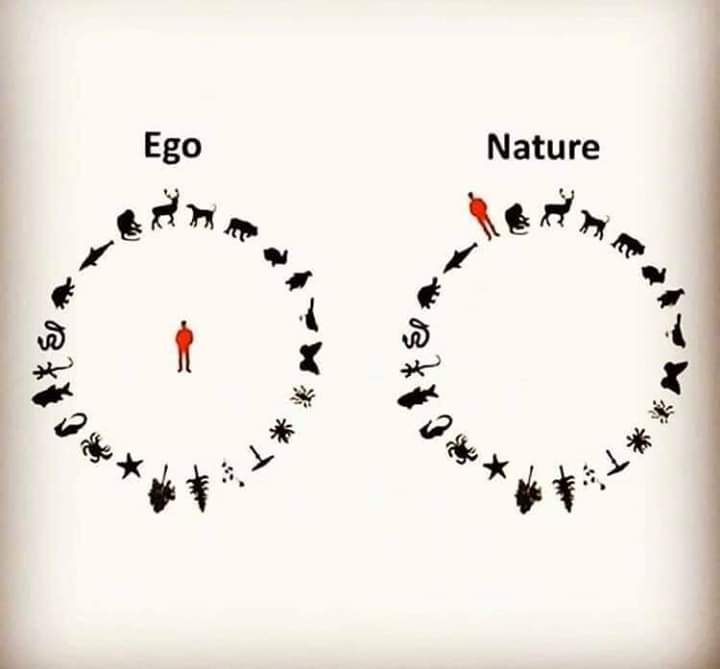
72. The True Role of the Ego


Review of The True Role of the Ego
Sunday 18th November 2012


Summary

“The ego is actually a very necessary / Part of the personality / Which one inherits with a body…”

In this deeply insightful and spiritually practical piece, the poet offers a profound reframe of the ego—not as an enemy to be vanquished, but as an essential ally in service to higher consciousness. Rather than repeating the often misunderstood spiritual directive to “kill the ego,” this poem suggests a more compassionate, integrated approach: to train the ego as one would a toddler, guiding it gently into alignment with divine will and collective purpose.

The poem flows with structured clarity and grounded wisdom, mapping the relationship between individual identity and collective responsibility, and between personal intention and spiritual mission. It highlights both the destructive potential of an unchecked ego, and the astonishing transformative power it holds when consciously aligned with universal love and truth.


Why This Poem Matters

“It is not about transcending the ego / Or conquering it… / Rather, it is about acquiring / A better understanding of its true role.”

This poem offers a corrective lens to a common spiritual misconception—that ego is inherently “bad” or a barrier to enlightenment. Instead, it places the ego in context: as a sacred instrument, one that must be tuned and taught, rather than punished or exiled. In doing so, the poem bridges the metaphysical with the psychological, embodying a kind of psycho-spiritual integration that is sorely needed in both modern healing and conscious activism.

From a metaphysical standpoint, the poet reminds us that the ego is not a flaw in human design, but a tool of incarnation, a structure through which will and action are made manifest. When distorted by fear, consumerism, or trauma, it can wreak havoc. But when healed and aligned, it becomes a powerful vessel for the divine will—a kind of inner technology capable of catalyzing change on both a personal and global scale.

There’s also a social commentary running just beneath the surface—one that indicts systems of media, capitalism, and consumer culture for seducing the ego into distraction and imbalance. The poem recognizes that personal spiritual alignment cannot be separated from our impact on the world.


Imagery and Tone

The poem reads with the measured cadence of a spiritual transmission or a teaching scroll, delivered with clarity and authority. The imagery is mostly conceptual, but powerful:

  • “Train the ego as one would a toddler” invites a compassionate metaphor, offering the image of ego as a child—not evil, but untrained.
  • “While the Earth and her inhabitants / Are plundered by unsustainable consumerism” draws a stark, sobering picture of the stakes involved when the ego is out of alignment.
  • And the closing lines deliver a crescendo of purpose: “For when the ego is aligned / With divine intelligence / It can achieve truly amazing things!”

There’s both warning and inspiration here—an earnest call to wake up, not by disowning the self, but by reclaiming its higher purpose.


In Conclusion

“The will to will thy divine will / A call to serve…”

This poem is a foundational teaching—a cornerstone in the overall arc of the collection. It stands as a spiritual and philosophical keystone, clarifying the misunderstood role of the ego and proposing a more evolved model of integrated consciousness.

Rather than perpetuating the binary of ego vs. spirit, it proposes a sacred alliance between them, grounded in humility and activated through service.

By restoring dignity to the ego—without indulging it—the poem unlocks a pathway to mature spirituality, one that is deeply relevant in a time of collective upheaval and global rebalancing.

It reminds us that transformation is not about denial or ascension alone, but about conscious alignment of all aspects of the self in service to something greater.

A deeply empowering, integrative, and necessary piece.

59. The Second Coming


Review of The Second Coming

Summary

The Second Coming is a rousing spiritual manifesto — not of apocalypse or judgment, but of awakening. It reclaims the prophetic tone of traditional religious language and reorients it toward conscious evolution and collective transformation. Rather than heralding a single saviour, this poem asserts that true salvation will come not through one figure, but through the mass unfolding of human potential.

The piece draws from spiritual, philosophical, and even metaphysical paradigms, yet remains grounded in the lived human experience — in our daily choices, responses, and interpersonal relationships.

Why This Poem Matters

In a time where global crises push us toward fear or disconnection, The Second Coming offers a hopeful alternative: that change is not only possible, but inevitable — and we each have a role to play.

The poet begins with a clear challenge to religious literalism:

“The second coming is not any one man / Or one woman / It is the explosion of collective consciousness”

This reframing is central to the poem’s power. It shifts the gaze from outer saviours to inner awakening, and from passivity to agency.

Key phrases like:

“When the ability to respond (response-able) / Is greater than to react”
“What one does to another / Actually, one does unto one’s own self”

…emphasise the transition from ego-driven separateness to a more compassionate, integrated way of being — an emotional intelligence that transcends reaction and cultivates accountability, empathy, and maturity.

The poem’s rhythm gathers momentum through the second half, building like a crescendo — a rising tide of possibility:

“Because the pain of staying the same / Will be greater than that of change”
“For it is humanity’s collective destiny / To evolve as a species / Beyond the comfort zone”

Here, we see a clear call to inner and outer revolution, grounded in healing — not dogma. The language blends metaphysical terms like “Primordial Qi” and “Source Energy” with spiritual archetypes: “inner god-goddess self,” “inner guru”, and “legendary inspirational role models” — grounding abstract ideas in relatable, accessible language.

The poet also names emotional evolution as core to the journey:

“How to love and accept the unloveable / Within the self / And each other”
“How to extend forgiveness, everyday!”

This is not utopian idealism, but practical spirituality — a daily discipline that trains the heart and mind to “align as one.” The reference to binary code“From an Off to an On / Like a chain of dominoes” — cleverly modernises the spiritual awakening as a systemic, viral upgrade to collective consciousness.

In Conclusion

The Second Coming is a poem of clarity, courage, and commitment. It reimagines salvation not as something we wait for, but something we participate in — actively, consciously, collectively. In this vision, everyone matters. No one is left behind.

With its grounded wisdom and visionary sweep, this poem encapsulates the underlying message of the collection: that personal healing and global transformation are not separate paths, but part of the same spiral of becoming.

This is poetry not just as art, but as invitation — to rise, awaken, and evolve.


✩ 55. Elixir of Love – published in five separate anthologies

Strawberry Heart

My fears are not

That I may cease to be

Rooted steadfast embodied

In a world of physicality

And without fears too

For the deserted drying

Of heartfelt words or inspiration

Forever drawn to all my time Spent in dedication

For no greater pleasure do I feel, may’st I apply

Whilst chained, imprisoned in this dimension

My only freedom, flight of soul, needs must express

Such a deep felt love, for all humanity

A curious quest, I cannot explain

Impression’d on high from an invisible plane

So sublime, that poetic craft

Is not required for meter, or to rhyme

Unless such craft imply, inject, ripened hearts

With the jewel of ‘inner meaning’

Inner-truth infused with love

All-pervading and genuine

Connecting precious principals beyond mere words

Which seek to make whole, thus human kind

In complete align

So that intelligent insights into our complex Universe

May penetrate, not only the heart but also the skin and the mind

Whereupon tinsel-gilded illusions

May fall away into nothingness

Instead replaced by a delicacy, and a gentleness

A refinement of the senses

Through an indiscriminate understanding

That the elixir of love

Is wisdom plus integrity

And connects us all

To every single living being, or entity.

___

Lyrics by Cat Catalyst

‘Elixir of Love’ (above) was written in response to the sonnet: ‘When I have Fears’ by John Keats. Keats sent his sonnet in a letter to his friend John Hamilton Reynolds in January 1818.

‘When I have fears that I may cease to be
Before my pen has glean’d my teeming brain,
Before high piled books, in charact’ry,
Hold like rich garners the full-ripen’d grain;
When I behold, upon the night’s starr’d face,
Huge cloudy symbols of a high romance,
And think that I may never live to trace
Their shadows, with the magic hand of chance;
And when I feel, fair creature of an hour,
That I shall never look upon thee more,
Never have relish in the faery power
Of unreflecting love!—then on the shore
Of the wide world I stand alone, and think
Till Love and Fame to Nothingness do sink.’

Another Keats quote: ‘I am certain of nothing but of the holiness of the Heart’s affections and the truth of Imagination‘ that he wrote in a letter to his friend Bailey (Full letter here) had the same effect upon me and inspired Holiness of the Heart.

‘Elixir of Love’ has been published in the following anthologies:
Forward Poetry: Love is in the Air – Vol 1 (2015)
Poets for World Healing (2012)
Poets for World Peace (2012)
A Poetically Spoken Anthology (2011)
Reach Poetry (2010)
Love Made Visible LP (2025)


Review of Elixir Of Love

Summary

Elixir Of Love is a soulful meditation on love as a transcendent force that binds all humanity together. The poem rejects superficial artifice in favor of heartfelt expression, describing love as an “elixir” that blends wisdom with integrity to connect every living being. Through rich imagery and thoughtful reflections, it captures love’s power to inspire, heal, and illuminate the human experience.

Why This Poem Matters

This poem stands out because of its profound insight into the nature of love—not just as feeling, but as an essential, transformative wisdom. The poet’s choice to move beyond conventional poetic form highlights a purity of message over mechanics, making the poem feel intimate and sincere.

Lines such as:

“My only freedom, flight of soul / Needs must express / Such a deep felt love for all humanity”

reveal the writer’s deep dedication to conveying universal compassion and connection. The poem’s reflection on poetic craft as a vessel for “inner meaning / Inner truth infused with love” emphasizes love’s power to penetrate beyond words.

Moreover, the poem’s articulation of love as:

“Wisdom plus Integrity / And connects us all / To every single living being, or entity.”

offers readers a fresh lens to understand love’s role in healing and unity. It speaks directly to the shared human condition, inviting readers to embrace love not only emotionally but intellectually and spiritually.

In Conclusion

Elixir Of Love is a beautiful example of the poet’s ability to blend heartfelt emotion with spiritual truth. Its gentle yet powerful voice encourages reflection on what it truly means to love and be loved. For readers drawn to poetry that explores the deeper, sacred aspects of human connection, this poem is a compelling and enriching piece, perfectly aligned with the themes woven throughout the entire collection.