
87. Smart City

Monopoly2011

Review of 86. Smart City

Sunday 15th June 2014


Overview

Smart City is a fierce social commentary that critiques the modern urban paradigm — especially the ways in which technology, capitalism, and consumer culture intertwine to disempower, distract, and domesticate the human spirit.

It raises urgent questions about indoctrination disguised as education, the erosion of critical thinking, and the illusion of progress in a world where “smart” no longer means wise — but merely trackable, profitable, and compliant.

This poem plays like a dystopian street sermon — a wake-up call against complacency, delivered with lyrical force and intellectual fire.


Imagery and Tone

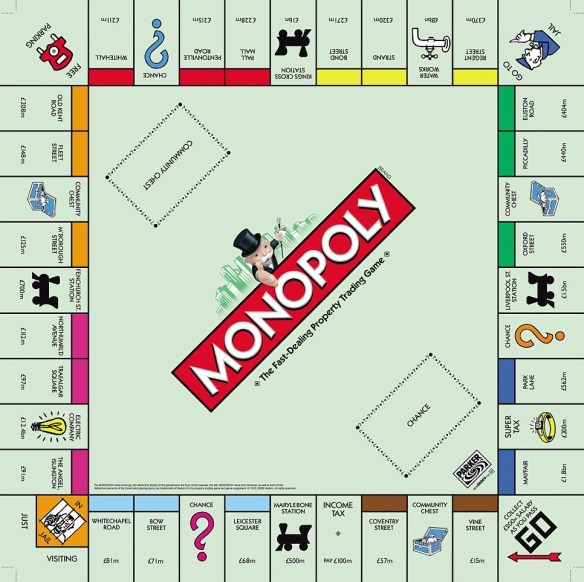
The imagery is urban-industrial, hypermodern, and metaphorically charged. There’s a strong use of allegory and pop-cultural reference — from Monopoly’s “Do not pass Go” to “another brick in the wall” — that aligns the poem with resistance culture and countercultural critique.

Terms like:

  • “Brick-in-the-wall” / “Cog-in-the-machine” – evoke systemic dehumanisation
  • “Caged like a wild animal” / “Zoo” / “Swallowed the smart sim pill” – suggest surveillance, behavioural conditioning, and loss of agency
  • “Road to Blandsville” / “Downtown Homogenisation” – infuse bleakness with sharp irony

The tone is blistering, unapologetic, and urgent — a poetic manifesto against the numbing effects of algorithmic life and blind consumerism.


Why This Poem Matters

Smart City matters because it challenges the normalisation of digital conformity and the erosion of soulful living under the glossy veneer of “progress.”

While society often celebrates technological advancement as inherently good, this poem argues that the cost has been:

  • The commodification of identity
  • The suppression of individuality
  • The silencing of dissent through distraction

The poem speaks especially to those who’ve begun to question the machine but haven’t yet found the language to articulate what feels wrong. Smart City gives those intuitions form, voice, and velocity.

It doesn’t just ask, “What is the price of modern life?” — it declares that we are already paying it. Daily. Often without even realising.


Imagery and Tone Summary

  • Imagery: Urban entrapment, consumerist dystopia, technology as control, education as indoctrination
  • Tone: Sardonic, intense, disillusioned, fiercely awakening

Why It Belongs in the Collection

This poem is a critical puzzle piece in the overarching arc of the collection. Many earlier poems explore personal growth, inner liberation, betrayal, love, and loss. Smart City widens the lens to take on systemic dysfunction — showing how even personal disconnection is often seeded in cultural and political dysfunction.

It resonates thematically with:

  • Bread and Circus (media distraction and loss of civic values)
  • Golden Nuggets (alternative truths vs capitalist indoctrination)
  • Snakes and Ladders (awakening and resistance to social masks)

It offers a necessary jolt to the reader — and acts as a sobering contrast to more contemplative or spiritual pieces, without being disconnected from them. The poem reminds us that spiritual evolution is not just personal — it’s also political.


Final Thoughts

Smart City is unflinching in its commentary, and precisely because of that, it holds tremendous value. It demands attention — not for shock, but for awakening. It’s an indictment of the systems that dull our senses and a reclaiming of the right to question, to see clearly, and to opt out of default programming.

This poem absolutely deserves its place in the collection — not just for its message, but for the clarity, boldness, and skill with which it’s delivered.

75. Rubber Sole

GoldenAngel

Review of Rubber Sole
Thursday 21st March 2013


Overview

Rubber Sole is a haunting, elegantly melancholic meditation on the wear-and-tear of the soul when walking the path of love, compassion, and disillusionment in a world driven by commercialism, ego, and false ideals. It is one of the more allegorical and symbolically rich poems in the collection—structured around a central metaphor of a worn-out shoe and sock—which becomes a surprisingly poignant analogy for the spiritual fatigue that accompanies being awake, empathic, and human in an increasingly synthetic world.

At its heart, the poem is about the invisible cost of caring in a system that rarely reciprocates such efforts.


Key Metaphors: Footwear, Fabric & the Fragility of the Soul

From the outset, the poem invites the reader into its metaphysical conceit:

“Can one darn the immortal hole / In the sock of experience…”

This image is stunning in its originality and layered meaning. The sock, intimate and worn, becomes a metaphor for the self or psyche, eroded by experience. The “immortal hole” suggests a deeper wound—something that transcends mere wear; a tear in the very fabric of being that is not easily mended.

Similarly:

“That chafes the rubber-worn sole / Of the shoe that doesn’t fit…”

… evokes the friction of trying to move forward in a life, society, or role that was never designed for the truth-seeker, the sensitive, or the visionary. The shoe that “doesn’t fit” may symbolize society’s rigid structures, capitalist values, or even inherited roles that are ill-suited to the authentic self. This nods both to fairy tale archetypes (Cinderella’s shoe that must fit) and existential alienation.

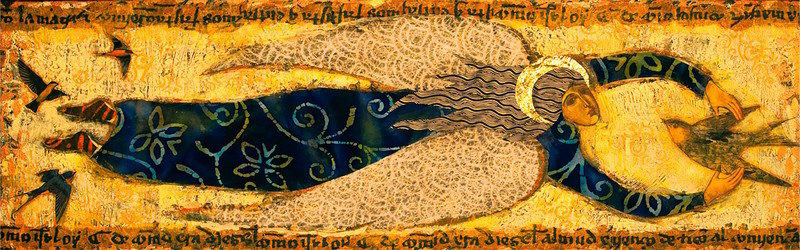
The threadbare soul, the forlorn and forgotten heart, and the Earthbound Angels with only one wing are all potent images that reinforce the poem’s tone of spiritual exhaustion. There is a weariness to this poem that feels very earned—it speaks to the experience of giving too much, too long, without return.


Critique of Western Illusion

At its core, Rubber Sole is a fierce, if sorrowful, critique of Western consumerist ideology, and how it seduces the soul away from authenticity:

“In pursuit of a fake western dream / To live a synthetic lie”

The “self-seduced egos” are not so much villains as victims—those who are, tragically, so spellbound by illusion they cannot see how far they’ve strayed from their original light. The poem laments this, not with condemnation, but with deep sadness. The mind’s eye, once the seat of vision and insight, has now been “entombed by in-built expiry”—a chilling phrase that suggests not only spiritual death, but a kind of pre-programmed collapse, as if societal conditioning has a shelf life, and our inner world is paying the cost.


Emotional Resonance: The Cost of Loving

One of the most striking emotional threads in the poem is the pain of loving the broken, especially when that love is not enough to save them:

“To love, lost and damaged souls / Earthbound Angels / Whom hath but only one wing…”

This image—of angelic beings unable to fly, grounded by their own ego or illusion—could easily speak to family members, lovers, friends, or even wider communities. The speaker’s role feels like that of the witness-healer—someone who has tried again and again to support, uplift, and rescue, but who is now worn through, literally and metaphorically.

This brings to mind the archetype of the wounded healer, or even the empathic soul who has been consumed by the very compassion that defines them.


Language & Structure

The poem’s language blends formal poetic devices with a kind of spiritual lyricism that is consistent with the tone of the wider collection. The use of archaic phrasing (“Whom hath but only one wing,” “doth tread,” “indelibly imprinted”) gives the piece a timeless, mythic quality, aligning the poem with sacred lament—almost like a Psalm or modern-day scripture.

The tone is deeply introspective, but also carries a subtle critique, not just of society but of the poet’s own entanglement in trying to “save” others. There’s a hidden question here: at what point does compassion begin to erode the self?

That tension is never explicitly answered—but the poem leaves us with the residue of the question, and in doing so, it becomes more than just lament—it becomes an invocation for healing.


Placement in the Collection

Rubber Sole offers a quieter but soulfully resonant note in the broader arc of the collection. It shares thematic DNA with poems like Snakes and Ladders, Granite, and Golden Nuggets, where the costs of emotional labour, awakening, and systemic resistance are laid bare.

Its tone of quiet despair mixed with sacred witnessing gives it emotional weight and spiritual gravitas—without slipping into sentimentality or martyrdom.


Final Thoughts

Rubber Sole is a sensitive, aching poem that gives voice to a very specific spiritual fatigue—that of the old soul, the helper, the truth-speaker, the empath—who has tried to love, lift, and serve in a world that often punishes those very virtues.

It’s about the cost of walking the soul’s path in rubber soles that weren’t built to withstand such terrain. But in articulating that weariness with such grace and poetic finesse, the poem paradoxically offers solace, solidarity, and renewal. Anyone who has ever burned out from caring too much will find themselves mirrored here—and seen.

This one absolutely belongs in the collection.

34. Pure Gold


Review of Pure Gold (Tuesday 14th October 2003)

This poem is a sharp and rhythmic critique of modern consumer culture and workaholism, evolving into a rousing call for spiritual authenticity and self-empowered purpose.

It opens with a sardonic punch:

“Pop will eat itself / Left on the shelf life of expiry”
— a clever play on commercialism’s self-consuming nature, setting a critical tone about the fleeting nature of fame, trends, and shallow pursuits.

The first half is filled with fast-paced, staccato phrases:

“Risk addicts / Thrill and dare / Is worth the stakes / Have got what it takes”
capturing the adrenaline-fuelled mindset of capitalism and hustle culture. There’s a deliberate intensity here, reflecting the pressure and noise of modern ambition — the “millionaire mind” and its obsession with status and productivity.

The pivot comes with this pointed question:

“But what about the millionaire mind / Of the spiritual kind?”
This turns the poem inward, from external validation to internal wealth. The second half is quieter, more intentional, and reflective — an invitation to shift focus from ego-driven success to heart-led purpose.

Lines like:

“Follow your heart / Find your joy / Work for yourself / Become a pioneer…”
signal the poem’s real message — true success lies in living authentically, honouring one’s unique gifts, and inspiring others by example.

The final image is powerful and uplifting:

“How to unfurl one’s fledgling winged potential”
— a poetic nod to transformation, freedom, and the courageous process of becoming.


Conclusion

Pure Gold begins with bite and ends with grace. It confronts the emptiness of material obsession, offering instead a vision of soulful success rooted in passion, purpose, and service. It is both a critique and a manifesto — urging the reader to redefine wealth and live a life of deeper value and connection.


26. Life Imitating Art


Review of Life Imitating Art (Sunday 9th July 2000)

Life Imitating Art stands as one of the poet’s most incisive socio-cultural commentaries — a work that departs from purely spiritual introspection to confront the mechanisms of mass manipulation in the modern media age. In this poem, the poet examines the pervasive influence of advertising, cinema, and digital communication on human consciousness, exposing how culture itself has been repurposed into a vehicle for conditioning and control.

From its very first line, the poem adopts the cadence of a manifesto: “In general, the media / Commercial advertising / And Hollywood / Are all about mind control and manipulation.” There is no metaphorical veil here; the poet speaks plainly and directly, signalling that this is not a work of abstraction but of urgent critique. The tricolon structure — “media, commercial advertising, and Hollywood” — immediately sets up the thematic trinity of institutions that, in the poet’s view, govern perception and behaviour in contemporary society.

The poem’s progression is relentless and cumulative. Through repetition and enumeration — “on paper, radio, internet and television,” “every hour, on the hour, half past the hour” — the poet evokes the inescapable saturation of media imagery. The rhythmic insistence mirrors the very bombardment it critiques: the repetition of lines functions like the repetition of advertising itself, drawing the reader into a pattern of overexposure, until the effect becomes almost hypnotic. This structural mirroring is a subtle but effective device, blurring the line between form and content — between critique and enactment.

Central to the poem’s thesis is the inversion of the adage “art imitates life.” The poet reclaims and reverses it, showing how “life imitating art” has become the new paradigm — a world in which lived experience is shaped by artificial images rather than the other way around. “Unreal fabrications of the real world” is a phrase that captures both the epistemological and moral anxiety at the core of the poem. Reality, under capitalism and mass media, becomes performative, pre-scripted, and detached from authenticity.

The poem’s tone oscillates between lamentation and indictment. Its critique of media culture is not delivered from a purely intellectual stance, but from an ethical and spiritual one. The poet suggests that this manipulation extends beyond behaviour and into the realm of soul — “Yet more distractions / From truly knowing and understanding / One’s inner self / One’s true self.” Here, the poem reconnects to the broader metaphysical concerns that define much of the poet’s oeuvre: that alienation from self is the root of social and ecological disorder. The “psychological illusions unchallenged” are not merely aesthetic concerns, but obstacles to spiritual evolution.

One of the most powerful sections occurs when the poet details the normalization of harm through entertainment: “Endorses stereotypical role models / Of theft, deceit, violence-against-women / Power abuse, dictatorship, murder, addiction…” This list operates as both social diagnosis and moral outcry. Its stripped-down syntax and cascading momentum underscore the cumulative damage wrought by repeated exposure to narratives of violence and exploitation. The poet identifies the subtle pedagogical power of media — how, “via its original creative intent,” it “teaches us subconsciously / How to be devious and manipulative / For our own ends.” The inversion of creativity into corruption is perhaps the poem’s most chilling insight — that art, once a vehicle for revelation, has been co-opted into a system that reinforces ignorance.

Stylistically, the poem’s strength lies in its clarity and precision. There is little overt lyricism; the language is direct, almost journalistic, yet heightened by the rhythm and intensity of its delivery. The poet’s tone is prophetic rather than academic — that of a witness speaking truth to a culture in denial. This raw immediacy places the poem in dialogue with traditions of political poetics — echoing voices such as Allen Ginsberg’s Howl or Gil Scott-Heron’s The Revolution Will Not Be Televised — yet refracted through the poet’s characteristic lens of spiritual consciousness.

In its closing movement, the poem returns to the theme of disconnection: “From truly knowing and understanding / Another human being / Or the spiritual nature / Of the world we are living in.” This conclusion transforms critique into lament. Beneath the anger lies grief — for a humanity estranged from both itself and the planet that sustains it.

In summary, Life Imitating Art is one of the poet’s most socially engaged works — a lucid, uncompromising examination of mass conditioning and its impact on consciousness. It articulates a warning that feels increasingly prophetic: that the saturation of artificial images threatens not only our perception of truth, but our capacity for empathy, authenticity, and spiritual awareness. Through its unwavering moral clarity and cumulative rhetorical power, the poem stands as both critique and call to awakening — urging the reader to reclaim their sovereignty of thought in a world of persuasive illusion.