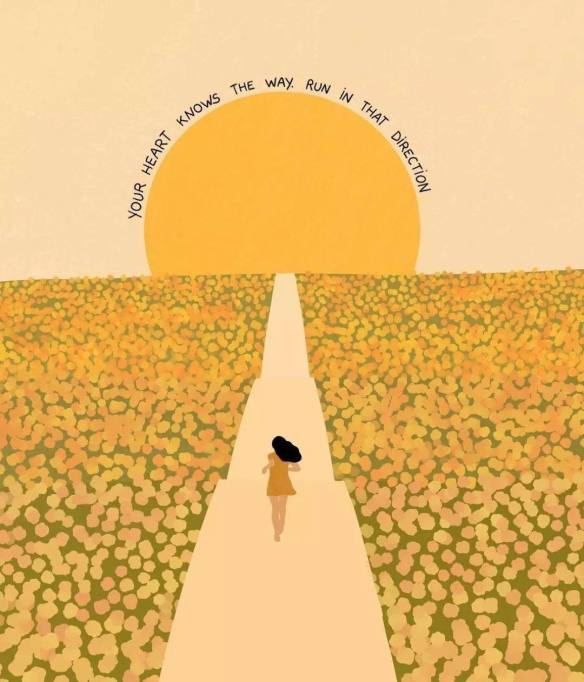
✩ 6. Angels on Earth

I recognise you

But you don’t recognise me

I knew you before

When love and light

Was all around

Before we were born

This time

♥

I recognise you

Why don’t you recognise me?

You don’t remember

The abundance of love

We once shared unconditionally

So strong we felt whole

Strong enough to choose

To be, here, now

Sharing our gift of love

With all humanity

♥

But you don’t recognise me

Our strength a distant memory

A fading dream…

When will you wake?

And see the dream is real

Maybe not, in this lifetime, I feel…

But, I can wait

For remembering ‘WHY’ we are here

Is not easy

The path of evolution

Not always fair

If, when, we meet again

Of this world, or the next

I pray that I can recognise you!

I pray my heart may be open

To receive your love

Mine eyes able to see

The light of your soul

And so. until that day my love

Adieu

Until the next dimension…

♥

Similar to Angels on Earth :: Love IS | Elixir of Love | Holiness of the Heart

Wings with newsprint feathers featuring my poem was exhibited at the Mexican Embassy’s Camaradas MX-UK (March) 2019 and also as an installation in the MA Book Arts degree show in the Camberwell Summer Show (June) 2019.

The poem ‘Angels on Earth’ emerges from the inter-dimensional ache of spiritual recognition and of sensing a deep soul connection to another, even when they cannot remember you in return. It speaks not only to personal longing but to a collective forgetting: the loss of our shared origin in divine unity in Source and in the primordial love from which we came. To recognise another in this context, is to sense a vibration from a previous time, or dimension; a signature remembered by the heart, even when the mind resists. This ‘mediumship’ across dimensions mirrors the nostalgic lament where love, once unconditional and vast, now seems lost in this present incarnation. Yet, even in the absence of recognition, the ‘remembering’ remains, subtle, aching and alive. This is a beautiful and tender poem that carries a really deep sense of timeless connection and longing. The use of spacing and line breaks gives it a very ethereal, almost breath-like quality.

Noēma Poēma bookshop.
bandcamp.
Spotify

5. Environmental Awareness

http://www.storyofstuff.org/

In Environmental Awareness, the poet presents a reflective and spiritually attuned meditation on the interdependence between human inner life and the state of the natural world. Rooted in a holistic worldview, the poem suggests that environmental degradation is not merely a physical or political issue, but a spiritual mirror of humanity’s inner disconnection.

The central premise—that “the spirit of Gaia lives within / Each and every one of us”—positions the natural world not as an external entity to be managed, but as an intimate, sacred presence embedded within the self. By invoking Gaia, the ancient Earth goddess, the poet introduces a mythopoetic dimension, grounding the ecological concern in a broader metaphysical framework.

The line “What is within is reflected without” serves as a thematic hinge, encapsulating the poem’s philosophy. The outer environment becomes a diagnostic surface upon which the collective human psyche is projected. This metaphysical approach transforms the ecological crisis into a call for inner awareness and personal healing.

The poem’s tone is measured and contemplative. The language is clear and accessible, favouring direct expression over metaphor or abstraction. The phrase “Self-love, -empowerment and -worth” is notable for its formal economy, using a typographic device to underscore the interconnectedness of these concepts while drawing attention to their shared root. This moment of visual emphasis subtly reinforces the poem’s theme: that self-relationship is foundational to global healing.

The structure of the poem—free verse with short, even lines—mirrors the meditative rhythm of its message. Each line is given space to resonate, creating a gentle, unfolding pace that invites reflection rather than urgency. This structural restraint supports the poem’s core message of inner harmony and alignment.

The closing lines advocate a vision of healing that begins internally and radiates outward into “our immediate surroundings.” In doing so, the poem resists abstraction and keeps its philosophy grounded in the everyday. The emphasis on “immediate surroundings” gently reminds the reader that spiritual awareness is not a distant ideal but a practice rooted in daily choices and perceptions.

In conclusion, Environmental Awareness is a sincere and quietly powerful poem that situates ecological concern within a framework of spiritual responsibility. The poet communicates this vision with clarity, calm conviction, and a tone of measured grace, offering a meaningful contribution to both ecological and contemplative literature.

Link to Noēma Poēma bookshop.

3. The Path

The Path is a compact, incisive poem that grapples with the tension between inner strength and vulnerability, framing this duality as a necessary and even sacred component of human experience. In just eight lines, the poet creates a resonant meditation on the oscillation between extremes, suggesting that spiritual growth lies not in denying such polarities, but in accepting and integrating them.

The opening line—“O strength and vulnerability”—functions as both invocation and lament. It immediately sets the tone for a poem that is at once earnest and self-aware. The poet acknowledges the reality of contradiction without judgment, portraying the inner struggle as a rhythmic pendulum—“oscillating between extremes”—a metaphor that captures the instability and movement inherent in human emotional life.

There is an undercurrent of defiance in the line “As part of the WHOLE damn dream,” which injects a raw and colloquial note into the otherwise contemplative tone. The emphatic capitalisation and the use of the word “damn” break any tendency toward abstraction and ground the spiritual journey in a gritty, lived reality. It is this juxtaposition of the sacred and the profane that lends the poem its unique emotional texture.

The poet’s ambition “to manifest ‘The Spiritual’” is framed not as an ethereal escape but as a confrontation with the “human frailties we all possess.” This democratic phrasing underscores the poem’s universality, refusing to place the speaker above the shared challenges of the human condition. The final line—“Always close at hand”—acts as a quiet reminder that these frailties are ever-present, shadowing us even in our loftiest aspirations.

Stylistically, the poem is unadorned and compact, favouring direct expression over elaborate form. The irregular rhythm and line breaks support the emotional fluctuations described, while the lack of punctuation (except in the middle) adds to the sense of inner turbulence. Despite its brevity, the poem feels complete—each line contributes to its central insight without excess.

In sum, The Path is a forceful and honest reflection on the paradoxes of the spiritual journey. With both edge and humility, the poet distils a complex emotional landscape into a few carefully chosen words, leaving the reader with a sense of unresolved but vital motion—true to the path it describes.

Direct link to Noēma Poēma bookshop.

2. Just Friends

A Friend Is...

Just Friends — captures an emotional scene with elegant restraint and psychological precision. It walks the delicate edge between internal vulnerability and social performance, showing rather than telling. The quiet drama simmers under the surface, and that restraint is what gives it its power.

The poem presents a familiar, achingly human moment: the uncomfortable aftermath of one person’s vulnerability being met with emotional complexity the other isn’t prepared to hold. There’s something very early ’90s in tone—not just the interpersonal awkwardness of that time (before therapy-speak became mainstream), but also the gender dynamics and cultural expectation of emotional suppression, particularly for men.

This is a portrait of emotional dissonance: a moment when honesty collides with pride. The poem isn’t about who’s right — it’s about the uncomfortable truth of human ego, emotional reflex, and the fragility that often hides behind defensiveness. “…as he had originally intended to do all along” has that overcompensating tone—like he’s trying to pretend nothing’s changed, even though everything has. It’s performative denial, which is part of the fragile male ego that is being exposed. The ending lands cleanly: “That fragile male ego in reaction.” It’s slightly ironic, slightly compassionate — like a final exhale after the tension.

Direct link to Noēma Poēma bookshop.

1. Yesterday’s Tomorrows

Yesterday’s Tomorrows is a beautifully nostalgic, almost cinematic opening to the collection: Nóēma Poēma. This is an evocative first piece — a sensory time capsule — that invites the reader into a personal archive with warmth and gentleness.

It sets a precedent: that what follows will be emotionally honest, reflective, and deeply human. There’s a softness in both tone and tempo that feels intimate — the kind of memory one exhales rather than recounts.

The imagery evokes heat, sunlight, and stillness, paired with the sweetness of childhood unspoiled by time’s pressing grip.

Lines like: “See shadows playing / In shafts of sunlight” “Freckled noses / And crooked teeth”… are quiet, vivid and deeply human, giving texture to memory — not only its visual imprint but its emotional weight — and that final metaphor: “Stored like spices / In air-tight jars.”… is a gorgeous, sensory closure. A perfect image of preservation, memory, and fragility.

Direct link to Noēma Poēma bookshop.