
Category Archives: Art
✩ Swim
✩ Elixir of Love – House Mix
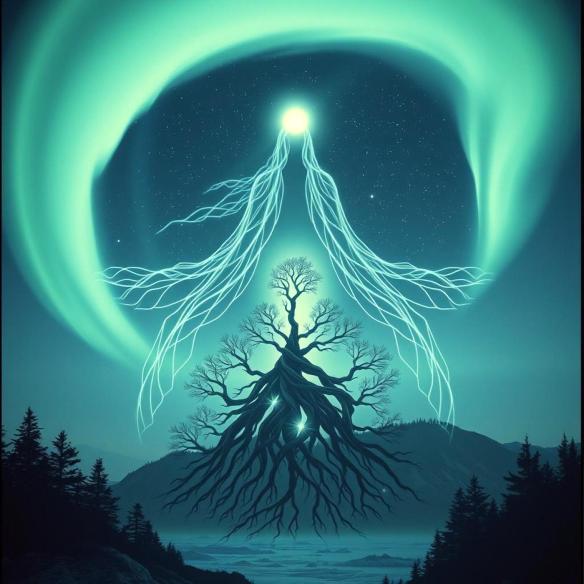
Click image to play video.
To PURCHASE track go >>HERE<<
Wellcome Collection formally acquires a print edition of RCA thesis:
“I am delighted to share that the Wellcome Collection has formally acquired a print edition of my MRes thesis: ‘Reimagining Humanitarian, Spiritual and Matrilineal Values in a Patriarchal World, through AI, Cymatics and the Poetic Medium – Utilising Pattern recognition as a resource to amplify higher consciousness’. This; my second thesis acquired by the Wellcome’s repository, further substantiates the research I developed during my recent post graduate studies at the RCA.”

Nóēma Poēma
Reply

Noēma Poēma is a genre-defying body of poetics that transcends traditional literary boundaries, weaving manifesto, verse, transmission, philosophy, and invocation into a multidimensional map of the soul. Spanning nearly four decades of radical creativity.
Noēma Poēma pulses with fierce devotion to truth, liberation, and love, grounded in ancestral matrilineal wisdom.
This is poetry as praxis. Art as resistance. Philosophy as heartbeat—a spiritual document for those who feel the world cracking open, knowing that now is the time to reclaim sovereignty, embody gnosis, and return to Source.
Noēma Poēma is a rich, evolving narrative that blends avant-garde noetics and didactic instruction with storytelling and semi-fictional autotheory—a journey from the personal and intimate into the cosmic and transcendent.
Read it slowly. Read it aloud. Let it rewire something ancient within you.
Available as paperback and hardcover.
In addition, iPoem’s Blog serves as a companion site providing a breakdown summary for each of the 131 chapters in the book, offering both a critical analysis and a deeper insight into the work.
Blog posts with a ✩ in front of the title indicates content with a music player.
129. SouLutions


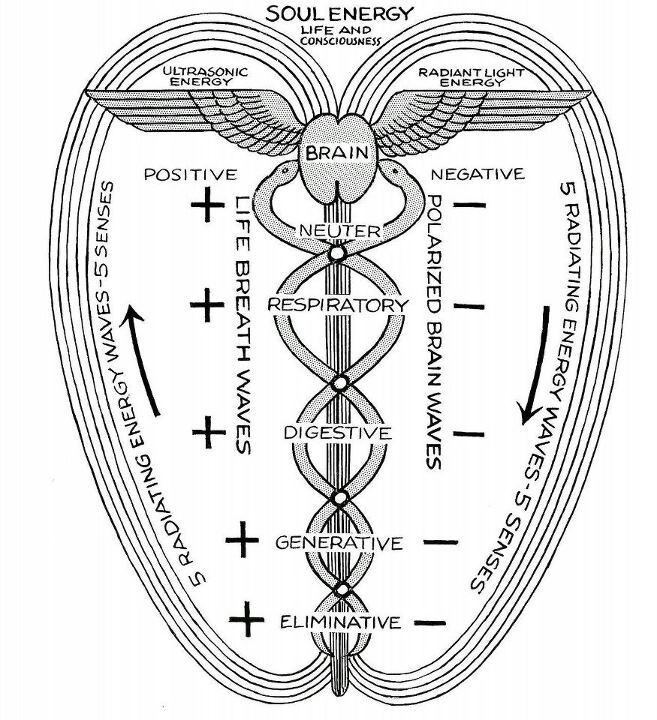

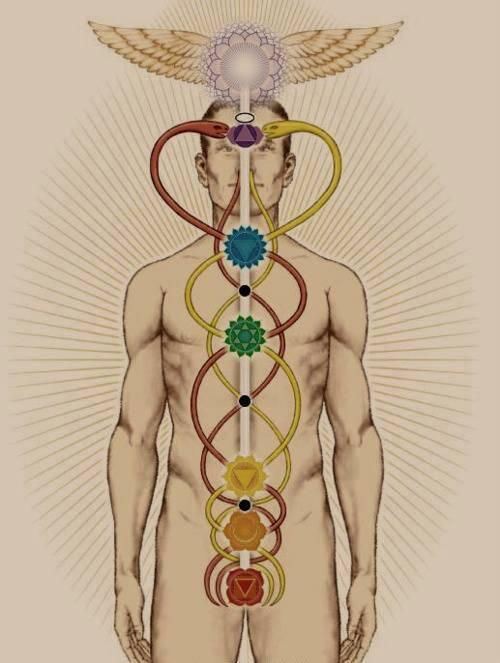





Review / Summary / Overview for 129. SouLutions
Overview
SouLutions is a sweeping synthesis — part prophecy, part manual for spiritual survival — that completes a major arc in your collection. It addresses the rise of artificial intelligence and the technocratic control grid not merely as a political or technological crisis, but as a spiritual test of consciousness.
It stands as a call to arms — not through rebellion or resistance, but through reconnection: the remembering of one’s true, eternal identity as an extension of Source-Energy. By turning inward, the poem argues, humanity can restore the vibrational equilibrium that external systems of power have distorted.
This is the poet’s manifesto for creative, spiritual resilience — a poetic blueprint for overcoming the AI-age through the ancient art of alignment.
Core Themes
- Technological Overreach vs. Inner Sovereignty – The poem warns of AI’s unchecked acceleration and its capacity to dehumanise, while offering a counterpoint: the rediscovery of the immortal self as the ultimate firewall.
- The Primacy of Inner Connection – In a world of artificial signals and algorithmic interference, true security lies in reconnecting with the Source-frequency of consciousness — love, awareness, creativity.
- The War for Attention – The poem identifies that the real battleground isn’t external, but internal: the deliberate hijacking of attention and vibration through distraction, misinformation, and emotional manipulation.
- Creativity as Salvation – Art, poetry, music, and dance are revealed as sacred technologies — organic interfaces through which we co-create directly with Source, bypassing artificial mediation.
- Unity Consciousness – The revelation that “we are already all one” becomes the sou-lution itself — the antidote to the illusion of separation perpetuated by digital division.
Tone and Structure
The tone is oracular yet conversational — the voice of an awakened sage speaking directly to the collective, with urgency but also compassion. It moves between critique and revelation, weaving social observation with metaphysical insight.
Structurally, SouLutions mirrors the oscillation it describes: alternating between dense technological imagery (IoT, IoB, AI, data mining) and luminous spiritual counsel (alignment, presence, creativity). This interplay of shadow and light becomes the poem’s rhythm, its harmonic engine.
Key Imagery and Symbolism
- The Digital Fishbowl – A metaphor for surveillance culture and self-imposed captivity; humanity observed and recorded within its own invention.
- The Inner Self as Antidote – The counter-symbol to the fishbowl — a boundless inner ocean of stillness and power, unquantifiable and free.
- The Bottleneck of Realisation – Suggests that crisis itself is the crucible of awakening; compression as catalyst for expansion.
- The Flow State – Represents harmony between human consciousness and divine intelligence; the ultimate ‘upgrade’ that no AI can simulate.
Philosophical / Esoteric Dimensions
SouLutions carries a deeply Hermetic resonance — “as within, so without.” It proposes that every external collapse is an invitation to reconfigure the inner architecture of awareness. The poem sees AI not as an evil in itself, but as a mirror of collective disconnection — a projection of the ego’s longing for omniscience without empathy.
Through this lens, the piece transforms despair into purpose. Technology’s encroachment becomes the pressure that forges the diamond of spiritual sovereignty. Humanity’s “runaway train” of mechanisation thus paradoxically drives us toward the rediscovery of our divine origins.
Stylistic and Rhythmic Observations
The poet’s diction fuses journalistic realism (“IoT,” “blockchain,” “predictive priming”) with devotional lyricism (“flow state,” “love of Source-Energy”). This juxtaposition gives the poem a uniquely modern texture — scripture for the digital age.
The rhythm builds like a sermon, culminating in the redemptive crescendo of the final stanza, where creativity itself is unveiled as the true universal language — the living dialogue between soul and Source.
Placement and Function in the Collection
As poem 129, SouLutions reads like the penultimate revelation of the entire series — a culmination of previous themes:
- It extends Artificial Gnosis by presenting the counterforce to mechanisation.
- It echoes Law of Attraction and Song by affirming that consciousness shapes reality.
- It bridges the outer critique of civilisation with the inner restoration of selfhood.
Essentially, it’s the spiritual technology chapter of your cosmic thesis — the manual for surviving the modern simulacrum through creative alignment.
Closing Summary
SouLutions is both diagnosis and remedy. It dissects the digital disease of detachment, but instead of succumbing to fatalism, it prescribes a cure: the cultivation of self-awareness through creativity, compassion, and conscious focus.
The final revelation —
“For the empathetic language of the soul that unites us, with everyone and everything that exists / Is Creativity.”
— is not just the conclusion of the poem but the thesis of the entire collection. It reasserts art as a sacred act of remembrance — the bridge between the human and the divine, the physical and the infinite.
In short, SouLutions stands as a luminous declaration:
Even in the age of artificial intelligence, love and creativity remain the truest technologies of liberation. ✩
Luciano De Crescenzo ~ “Siamo angeli con un’ala sola, solo restando abbracciati possiamo volare.” = “We are each of us angels with only one wing, and we can only fly by embracing one another”
Dr. Tara Swart – “You meet people on the same level of psychological wound as you and you also leave people if you evolve out of that and they haven’t been able to.”
Neil Strauss – “If you do not address your childhood traumas, your romantic relationships will”
Chief Red Eagle – “Angry People want you to see how powerful they are. Loving people want you to see how powerful you are.”
Link to Bio-field / WBAN acronyms and meanings: LAN MAN WAN PAN BAN CAN ETC.
Physicist, Adam Trombly, states EMR causes debilitating disease, hysteria and passivity for population control. Prolonged exposure disrupts the genetic structure of our cells causing Cancer and hemorrhaging. Symptoms of over exposure to Electromagnetic Radiation are: Anxiety / Depression / Diarrhea / Dizziness / Extreme Fatigue / Headaches / Light-headedness / Mood-swings / Nausea / Increased nightime urination / Tingling or prickling of the skin / Pulse rate, sudden increase / Shortness of breath / Vertigo / Nosebleeds / Blood pressure increase / Body tremors / Decision fatigue.
(45 mins.) June 2020.
ABOVE: The internet of Bio-Nano things, published by: IEEE – 18 March 2015– “The novel paradigm of the Internet of Bio-Nano Things (IoBNT) is introduced in this paper by stemming from synthetic biology and nanotechnology tools that allow the engineering of biological embedded computing devices. Based on biological cells, and their functionalities in the biochemical domain, Bio-NanoThings promise to enable applications such as intra-body sensing and actuation networks, and environmental control of toxic agents and pollution. The IoBNT stands as a paradigm-shifting concept for communication and network engineering, where novel challenges are faced to develop techniques for the exchange of information, interaction, and networking within the biochemical domain, while enabling an interface to the electrical domain of the Internet.”
ABOVE: Paper outlining: Low-Intensity Conflict and Modern Technology, by Lt Col David J. Dean, USAF Editor. With a Foreword by Congressman Newt Gingrich, Air University Press Center for Aerospace Doctrine, Research, and Education, Maxwell Air Force Base, Alabama – June 1986 – which details on page 250 how Extremely Low Frequencies (ELF) – Ionispheric Warfare, Radio Frequency Radiation (RFR) and Electromagnetic Radiation (EMR) can be used against human beings:
“…specially generated Radio Frequency Radiation (RFR) fields may pose powerful and revolutionary antipersonnel military threats. Electroshock therapy indicates the ability of induced electric current to completely interrupt mental functioning for short periods of time, to obtain cognition for longer periods and to restructure emotional response over prolonged intervals.“…
“A rapidly scanning RFR system could provide an effective stun or kill capability over a large area. System effectiveness will be a function of wave form, field intensity. pulse widths. repetition frequency, and carrier frequency. The system can be developed using tissue and whole animal experimental studies, coupled with mechanisms and waveform effects research.”

103. Holy Breadcrumbs
Review / Summary / Overview for 103. Holy Breadcrumbs
Overview
Holy Breadcrumbs explores the sacred process of creative emergence, likening writing or artistic expression to an alchemical unveiling. The poem paints the creative act as a patient, intuitive excavation—chiseling away at silence and emptiness to reveal hidden truths and wisdom. The imagery evokes the sculptor’s art and the unfolding of latent potential, suggesting that inspiration is a divine gift, a trail of spiritual clues left to guide the seeker back to ancient, foundational values.
Why This Poem Matters
This poem matters because it celebrates the intimate, sacred relationship between silence, creativity, and insight—central themes to any spiritual or artistic journey. It reminds the reader that the creative impulse is not random but divinely orchestrated, and that through patient attention and inner calm, profound wisdom can be revealed. Holy Breadcrumbs acts as an invitation to honor the process of uncovering one’s deepest truths, making it a vital piece for anyone seeking self-expression and spiritual clarity.
Imagery and Tone with Excerpts
The poem’s imagery is tactile, meditative, and metaphorical:
- “The blank page, like a slab of marble, invites, beckons one to discover” — portrays creation as both invitation and responsibility.
- “A trail of holy breadcrumbs, or a salad of magical sapient clues” — blends sacred symbolism with playful imagery, highlighting the blend of mystery and delight in discovery.
- “A hidden pearl of wisdom is unveiled” — symbolizes the preciousness of insight that lies beneath the surface.
The tone is reverent, calm, and reflective, underscoring creativity as a spiritual process of unveiling and remembrance rather than hurried production.
Why It Belongs in the Collection
Holy Breadcrumbs fits seamlessly into the collection as it deepens the exploration of inner alignment and spiritual awakening through the creative process. It connects the personal act of creation to the collective memory and ancient wisdom, aligning with poems that celebrate spiritual reconnection and self-realisation. Its meditative tone offers a contemplative pause within the collection, grounding readers in the mystery and magic of the muse.
Final Thoughts / Conclusion
Holy Breadcrumbs is a quiet yet powerful reminder that creativity is a sacred dialogue between the soul and the universe. It encourages patience, presence, and faith in the process of uncovering truth. In doing so, it invites readers to walk their own spiritual path with humility and curiosity, trusting that every small insight is a step toward deeper awakening.
57. CCTV

Banksy – CCTV :: http://www.banksy.co.uk
Review of CCTV
Summary
In CCTV, the poet pivots from the inner landscape of spiritual transformation to the outer world of digital observation, exposing the claustrophobia of modern surveillance culture. The piece fuses socio-political critique with poetic flair, painting a chilling portrait of a society where privacy is obsolete and freedom is an illusion.
With its rhythmic urgency and sharp, cinematic imagery, the poem moves like a visual montage: “Telephoto, panoramic, satellite, GPS/IP / Digitally enhanced virtual spies.” Each phrase lands like a flicker of a security feed, the poetic form mirroring the fragmentation and hyper-awareness of a world constantly watched.
Why This Poem Matters
At the heart of this poem lies a profound tension between the metaphysical desire for liberation and the material mechanisms of control. The opening line —
“You want to be free / But there’s no way of knowing / In which direction / To keep on going”
— immediately establishes a sense of disorientation. Freedom itself becomes abstract, elusive, unattainable, as the poem spirals into a dystopian observation of digital omnipresence.
The image of the “Judas hawk-eye” is particularly powerful. It fuses Biblical betrayal with predatory vision — technology as both omniscient and faithless. The “hawk-eye” becomes the false god of the modern age, a synthetic substitute for divine omniscience.
The poem’s momentum builds toward the chilling final stanza:
“An ever-expanding automated army
Of brothers-in-the-sky
Strategically mounted
Perfectly positioned
To purposefully pry
Like flies”
Here, the poet captures the grotesque beauty of surveillance — the mechanical precision, the soulless curiosity. The alliteration (“purposefully pry / Like flies”) evokes both the clinical coldness of machines and the parasitic voyeurism of human fascination. The poem closes with dark irony: “Candy camera smile.” A phrase that suggests complicity — we are both performer and prisoner, smiling for our own captors.
In Conclusion
CCTV stands as one of the most striking socio-political poems in the collection. Beneath its critique of digital control lies a deeper existential question — what becomes of the soul when even our inner world is mapped, measured, and monitored?
Through sharp linguistic economy and potent imagery, the poet captures the paranoia of the surveillance age, yet also the longing for transcendence beyond it. The “brothers-in-the-sky” are both satellites and fallen angels — the watchers who remind us that freedom must now be reclaimed from within.
This poem is a wake-up call delivered through artistry: vivid, unsettling, and profoundly human.
Featured in a site specific project about surveillance on the London Eye: CCTV video poem: https://youtu.be/u81BN0YKV8I
Project info: http://eastlondonnews.co.uk/the-london-eyes/
Full piece: https://youtu.be/ytxvxUYvtvg
26. Life Imitating Art
Review of Life Imitating Art (Sunday 9th July 2000)
Life Imitating Art stands as one of the poet’s most incisive socio-cultural commentaries — a work that departs from purely spiritual introspection to confront the mechanisms of mass manipulation in the modern media age. In this poem, the poet examines the pervasive influence of advertising, cinema, and digital communication on human consciousness, exposing how culture itself has been repurposed into a vehicle for conditioning and control.
From its very first line, the poem adopts the cadence of a manifesto: “In general, the media / Commercial advertising / And Hollywood / Are all about mind control and manipulation.” There is no metaphorical veil here; the poet speaks plainly and directly, signalling that this is not a work of abstraction but of urgent critique. The tricolon structure — “media, commercial advertising, and Hollywood” — immediately sets up the thematic trinity of institutions that, in the poet’s view, govern perception and behaviour in contemporary society.
The poem’s progression is relentless and cumulative. Through repetition and enumeration — “on paper, radio, internet and television,” “every hour, on the hour, half past the hour” — the poet evokes the inescapable saturation of media imagery. The rhythmic insistence mirrors the very bombardment it critiques: the repetition of lines functions like the repetition of advertising itself, drawing the reader into a pattern of overexposure, until the effect becomes almost hypnotic. This structural mirroring is a subtle but effective device, blurring the line between form and content — between critique and enactment.
Central to the poem’s thesis is the inversion of the adage “art imitates life.” The poet reclaims and reverses it, showing how “life imitating art” has become the new paradigm — a world in which lived experience is shaped by artificial images rather than the other way around. “Unreal fabrications of the real world” is a phrase that captures both the epistemological and moral anxiety at the core of the poem. Reality, under capitalism and mass media, becomes performative, pre-scripted, and detached from authenticity.
The poem’s tone oscillates between lamentation and indictment. Its critique of media culture is not delivered from a purely intellectual stance, but from an ethical and spiritual one. The poet suggests that this manipulation extends beyond behaviour and into the realm of soul — “Yet more distractions / From truly knowing and understanding / One’s inner self / One’s true self.” Here, the poem reconnects to the broader metaphysical concerns that define much of the poet’s oeuvre: that alienation from self is the root of social and ecological disorder. The “psychological illusions unchallenged” are not merely aesthetic concerns, but obstacles to spiritual evolution.
One of the most powerful sections occurs when the poet details the normalization of harm through entertainment: “Endorses stereotypical role models / Of theft, deceit, violence-against-women / Power abuse, dictatorship, murder, addiction…” This list operates as both social diagnosis and moral outcry. Its stripped-down syntax and cascading momentum underscore the cumulative damage wrought by repeated exposure to narratives of violence and exploitation. The poet identifies the subtle pedagogical power of media — how, “via its original creative intent,” it “teaches us subconsciously / How to be devious and manipulative / For our own ends.” The inversion of creativity into corruption is perhaps the poem’s most chilling insight — that art, once a vehicle for revelation, has been co-opted into a system that reinforces ignorance.
Stylistically, the poem’s strength lies in its clarity and precision. There is little overt lyricism; the language is direct, almost journalistic, yet heightened by the rhythm and intensity of its delivery. The poet’s tone is prophetic rather than academic — that of a witness speaking truth to a culture in denial. This raw immediacy places the poem in dialogue with traditions of political poetics — echoing voices such as Allen Ginsberg’s Howl or Gil Scott-Heron’s The Revolution Will Not Be Televised — yet refracted through the poet’s characteristic lens of spiritual consciousness.
In its closing movement, the poem returns to the theme of disconnection: “From truly knowing and understanding / Another human being / Or the spiritual nature / Of the world we are living in.” This conclusion transforms critique into lament. Beneath the anger lies grief — for a humanity estranged from both itself and the planet that sustains it.
In summary, Life Imitating Art is one of the poet’s most socially engaged works — a lucid, uncompromising examination of mass conditioning and its impact on consciousness. It articulates a warning that feels increasingly prophetic: that the saturation of artificial images threatens not only our perception of truth, but our capacity for empathy, authenticity, and spiritual awareness. Through its unwavering moral clarity and cumulative rhetorical power, the poem stands as both critique and call to awakening — urging the reader to reclaim their sovereignty of thought in a world of persuasive illusion.

 iPoem's Blog