120. In lak’ech

Review / Summary / Overview for 120. In Lak’ech


Overview

In Lak’ech — titled after the Mayan phrase meaning “I am another you” — is both philosophical and prophetic. It stands as a panoramic reflection on human cognition, communication, and connection in the modern age. The poem weaves neuroscience, linguistics, spirituality, and social commentary into a cohesive metaphysical treatise, lamenting humanity’s drift from telepathic unity toward linguistic fragmentation — and offering a roadmap back to empathic wholeness.

It’s one of the collection’s most cerebral and socio-spiritual compositions, mapping the fall from intuitive telepathy into egoic chatter, then prescribing love, empathy, and heart-mind coherence as the only true cure.


Core Themes

  • The Loss of Telepathic Unity – The poem opens with an exploration of “picture-thinkers” vs. “non-picture thinkers,” drawing attention to how modern society’s over-reliance on words and logic has dulled humanity’s innate telepathic and imaginal capacities.
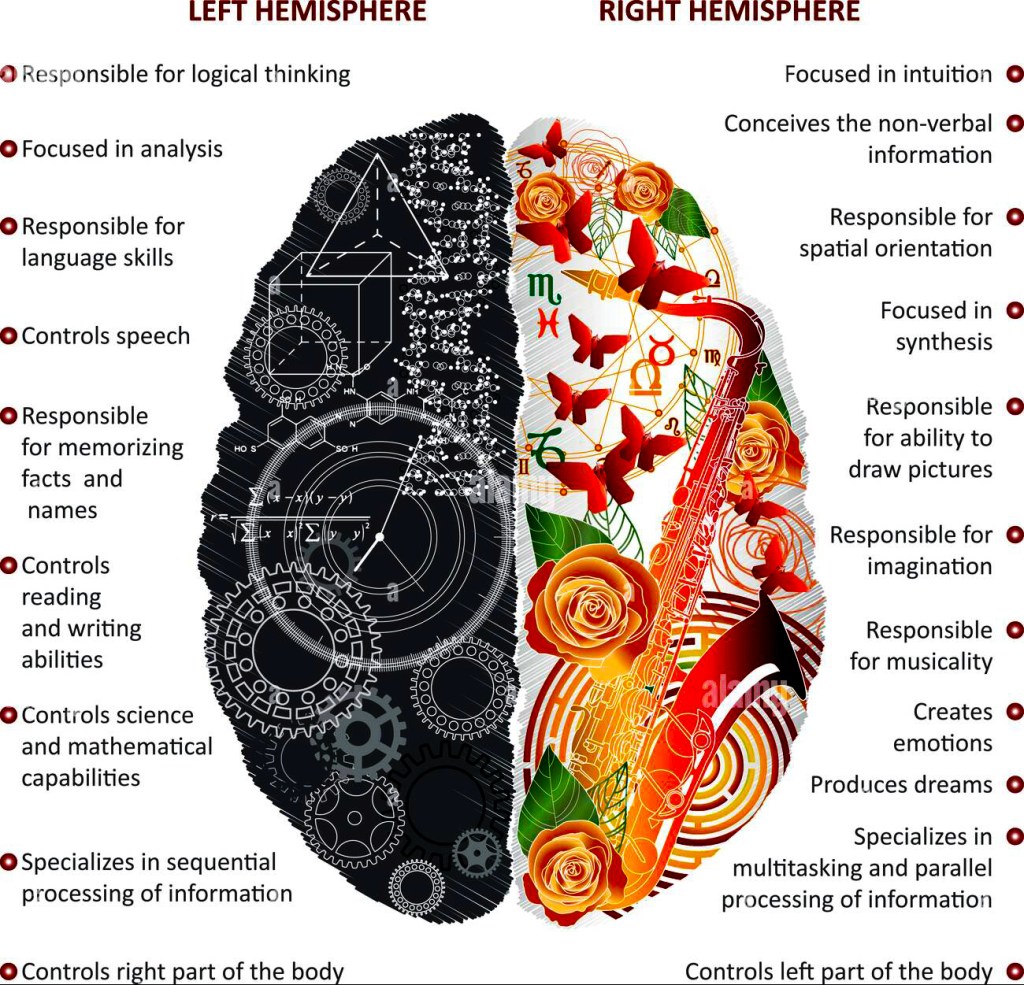
  • The Split Mind – The left/right brain duality becomes an allegory for our internal and societal division. When the right hemisphere — the domain of image, intuition, and empathy — is neglected, consciousness becomes fragmented.
  • The Consequences of Disconnection – The poem identifies the “epidemic of clueless narcissism” and digital dependence as symptoms of a larger spiritual pathology: the loss of connection to Source, nature, and one another.
  • Reclamation of Inner Sovereignty – Through reactivating the “pineal god-gene,” humanity can regain its intuitive telepathic alignment with the Divine Pleroma — an act of remembering who we are as extensions of Source Energy.
  • Unity Consciousness – The closing invocation of the Mayan maxim “In lak’ech — I am another You” returns the reader to the fundamental principle of spiritual ecology: there is no separation, only mirrored reflection.

Imagery and Tone

The poem reads like a sacred lecture — the voice of a metaphysical orator offering both diagnosis and remedy. Its language oscillates between analytical precision and lyrical mysticism, fusing the scientific and the spiritual with effortless fluency.

Vivid metaphors — “falling through the spokes,” “black hole filled to the brim with broken eggshell,” “pineal god-gene” — lend a cinematic quality to the critique. The tone is compassionate yet urgent, philosophical yet accessible. It calls the reader not merely to understand but to remember their telepathic essence and shared divinity.


Why This Poem Matters

In Lak’ech is a cornerstone of the collection’s message: that awakening is not an intellectual exercise but a reunion — a reintegration of the heart, mind, and collective consciousness. It transforms what could have been a lament for modern disconnection into a clarion call for spiritual reclamation and empathy in action.

It also reveals the poet’s mastery of integrating esoteric concepts (e.g., the Pleroma, the pineal gland, hemispherical union) with social realism — grounding mystical philosophy in the practical context of post-digital humanity.


Why It Belongs in the Collection

Placed near the end of the cycle, In Lak’ech functions as both reflection and resolution. Earlier poems — Blueprint, Loom, Law of Attraction, Queen of Hearts — trace the journey of self-realisation, alignment, and service. In Lak’ech synthesises these threads into a unified cosmology of remembrance.

It returns to the foundational truth behind the entire poetic odyssey: that awakening is not solitary but relational — that enlightenment is measured not by transcendence, but by connection.


Final Thoughts / Conclusion

This poem’s closing invocation —

“Each and every living being is a ‘Direct-Extension-of-Source-Energy’ and therefore equal /
Just like the Mayan saying: ‘In lak’ech’ — ‘I am another You!’”
— is more than a line; it’s the mantra of the entire collection.

In Lak’ech completes a cycle of awakening that began with the self and ends with the collective. It urges humanity to heal the rift between intellect and intuition, language and silence, self and other — to once again think in images, feel in frequencies, and live as love. ✩


117. Free Spirit

Review / Summary / Overview for 117. Free Spirit


Overview

Free Spirit is a luminous celebration of sovereignty, creativity, and divine spontaneity — a hymn to the liberated soul who remembers her infinite origins. The poem paints a portrait of the awakened individual as both mystic and maverick: “a vibrant free-spirited independent thinker / Seeker of new adventures, magical manifestations and infinite possibilities.” This radiant being moves fluidly between the physical and spiritual realms, drawing power from intuition, compassion, and the sacred feminine. Through its musical phrasing and rhythmic cadence, the poem itself feels airborne — whirling, like its subject, through a dance of divine remembrance.


Why This Poem Matters

This poem captures the essence of spiritual freedom — the fearless curiosity and trust required to live in harmony with Source-Energy. Free Spirit matters because it reawakens the reader to the truth of self-sovereignty: that liberation is not rebellion, but alignment. It celebrates the joyful courage of those who dare to flow rather than conform, who listen to the music behind reality’s curtain. In doing so, it mirrors the collection’s central motif — that enlightenment is a participatory dance between will, wisdom, and wonder.


Imagery and Tone with Excerpts

The imagery is celestial and kinetic, a symphony of motion and intuition:

  • Whirled from the sounds and syllables forged in the fires of creation” — creation as music, the universe as an ongoing act of sound and rhythm.
  • Flowing with the continuous stream of synchronised dignities” — suggests grace through surrender, the natural order of the awakened heart.
  • Fearlessly riding the winds of change, challenging all illusions” — defines the free spirit’s role as both adventurer and alchemist.
  • Qualifying order and symmetry from the kernel of chaos” — a poetic encapsulation of the eternal work of creation itself.

The tone is exultant yet serene — a jubilant proclamation of spiritual mastery. The poem embodies what it describes: unbounded, effervescent, radiant with light and faith in transformation.


Why It Belongs in the Collection

Free Spirit arrives at a pivotal point in the anthology — a crest of confidence and clarity following the introspective depths of Loom and Atom and Even. Where those works contemplate incarnation and cosmic structure, Free Spirit embodies the result: the awakened soul in full flight. It represents the human spirit unshackled from doubt and density, echoing the transcendence found in Venus and Mars and The Alchemist. As such, it is both a celebration and a culmination — an anthem for the liberated seeker who has remembered her true multidimensional nature.


Final Thoughts / Conclusion

In Free Spirit, the poet becomes the mirror of the very freedom they describe — a divine conduit for inspiration, moving effortlessly between realms of intuition and intellect. It’s a poem that dances — not just in rhythm and form, but in vibration — reminding the reader that every soul has the capacity to be both grounded and infinite, both human and celestial.

It is an ode to authenticity, to the art of being in perfect synchrony with creation’s pulse. A radiant call to trust the winds of change, to spin boldly upon the “Axis Mundi,” and to celebrate the miracle of consciousness unbound. ✩


Read More: https://www.cosmic-core.org/free/article-128-physics-aether-electromagnetism-gravity-part-4-em-loops-charge-spin/

Parthenogenesis

116. Loom

Image

Review / Summary / Overview for 116. Loom


Overview

Loom is a visionary meditation on the soul’s journey through incarnation — a metaphorical weaving of consciousness into matter. The poem likens becoming human to falling through the spokes of a cosmic wheel, descending from the ætheric realms into the dense fabric of physical reality. Once “sieved” into the world, each soul receives a unique “blueprint” — its karmic map of lessons, gifts, and challenges. Through this exquisitely wrought allegory of weaving, Loom portrays human life as an act of artistry and remembrance: each experience, whether painful or joyous, is a thread in the divine tapestry of evolution.


Why This Poem Matters

This poem is essential to the collection because it distills the essence of reincarnation, purpose, and ascension into one seamless, symbolic narrative. It answers the perennial question: Why are we here? Through its lucid metaphors, Loom proposes that incarnation is not punishment, but participation — a chance for souls to refine vibration, alchemise experience into wisdom, and ultimately, rejoin the Source. The poem gently reminds the reader that spiritual evolution is an ongoing act of craftsmanship — one must consciously weave love, empathy, and compassion into the fabric of daily life in order to ascend beyond illusion.


Imagery and Tone with Excerpts

The poem’s language is rich with cosmic and craft-based imagery, combining celestial mechanics with textile metaphors to bridge science, spirituality, and art:

  • Falling through the spokes of a rotating wheel” — evokes reincarnation as both motion and descent, suggesting destiny’s machinery at work.
  • Shuttling back and forth like bobbins on a loom / Weaving the threads of all life experience into a single tapestry” — portrays the accumulation of lifetimes, the artistry of becoming whole.
  • Each soul… is a perfect carbon copy, replica of the original source code” — introduces divine geometry and computational language, grounding mysticism in metaphysical physics.
  • The only way out of this simulacrum, is ascension” — a powerful conclusion that encapsulates the poem’s moral compass: remembrance through elevation.

The tone is both reflective and didactic — part mythic parable, part cosmic reminder — suffused with reverence for the beauty of incarnation and the discipline required for transcendence.


Why It Belongs in the Collection

Loom fits seamlessly within the overarching framework of this spiritual anthology. Like Saṃsāra, it explores the cycles of incarnation and release, while echoing the self-reflective tone of Blueprint and Atom and Even. Yet, it brings a unique perspective — not just the mechanics of rebirth, but the artistry of it. The weaving motif underscores a central theme of the entire body of work: that the universe is a living fabric of consciousness, with every being as an essential thread. It beautifully complements the series’ recurring motif of divine craftsmanship, unity, and the soul’s quest for remembrance.


Final Thoughts / Conclusion

Loom is a poetic masterclass in sacred metaphor — a cosmic reminder that we are both the weaver and the woven, both artist and artwork. It invites the reader to consider that every life, however ordinary or chaotic, is part of a magnificent tapestry of divine design. Through awareness, gratitude, and compassion, we can reweave ourselves into the frequency of Source and ascend from the “mother-board of life” back to the infinite loom of creation. A tender and profound meditation on purpose, pattern, and transcendence — Loom is the gentle whisper of remembrance itself. ✩


Library System of the Catholic University of Cordoba, Argentina – Embracing knowledge to empower people

115. Atom and Even

Review / Summary / Overview for 115. Atom and Even


Overview

Atom and Even is a beautifully symbolic and metaphysically rich poem that reimagines the genesis of creation through a blend of spiritual science, sacred geometry, and poetic mysticism. A play on the biblical Adam and Eve, the title Atom and Even reveals a deeper alchemical truth — the union of fundamental forces and polarities that birth reality. The poem’s focus is the witness self — the timeless, unchanging consciousness at the core of being — and its observation of the interplay between light and shadow, truth and illusion, matter and energy. It proposes that the origin of creation is not sin or separation, but love and resonance — a sonic, harmonic event rooted in balance and sacred union.


Why This Poem Matters

This poem is a pivotal contribution to the collection as it shifts the creation myth away from dualistic shame or blame into unity and wholeness. It offers a vision of spiritual physics — where electrons, protons, and neutrons are not just particles, but spiritual actors in a divine drama. The poem disarms the old narratives of guilt and original sin, proposing instead that “the clay of matter” is shaped by love, not punishment. In a world still grappling with identity, disconnection, and spiritual confusion, Atom and Even brings clarity, reintroducing sacred balance at the heart of existence.


Imagery and Tone with Excerpts

The poem is lyrical, reverent, and elegantly structured, using celestial and molecular imagery to explore macrocosmic truths:

  • The timeless truth of the witness self / Unfurls like the perennial flower of life” — evokes sacred geometry and the eternal self beyond time.
  • Spellbound and mesmerised / By the silvery-blue hues of an unfaithful moon” — a haunting image of illusion and emotional distraction.
  • A sonic architectural evening song / A right ascending conjugal emanation” — a stunning description of sacred union through vibration and sound, suggesting that matter is born of love and resonance.
  • Weaving a star-shaped womb” — blends feminine creation with stellar architecture, reinforcing themes of divine design and harmonic birth.

The tone is contemplative and luminous, moving gently between metaphysical exposition and poetic beauty.


Why It Belongs in the Collection

Atom and Even extends the recurring themes of divine polarity, sacred union, and vibrational alignment found throughout the collection. It builds upon poems like Venus and Mars, Sky Dancer, and The Alchemist, but zooms in even further to the molecular and quantum level — bringing spiritual insight into subatomic form. This layered cosmology strengthens the book’s overall thesis: that everything, from particles to people, is rooted in Source-Energy and love. The poem’s message of infinite multiplication from an undivided One also echoes the core metaphysical belief of oneness and infinite expansion, anchoring the entire collection’s spiritual philosophy.


Final Thoughts / Conclusion

Atom and Even is a subtle but profound piece that fuses poetry and cosmology, metaphor and molecular structure. It transcends dualistic mythologies to offer a sacred, non-dual vision of creation — where masculine and feminine forces, energy and form, witness and creation, are all harmonised within a divine equation. It reminds us that we are not separate from the stars, but born from the same frequency, singing the same “evening song.” This poem doesn’t just describe the origin of the universe — it invites the reader to remember it, from the inside out. ✩


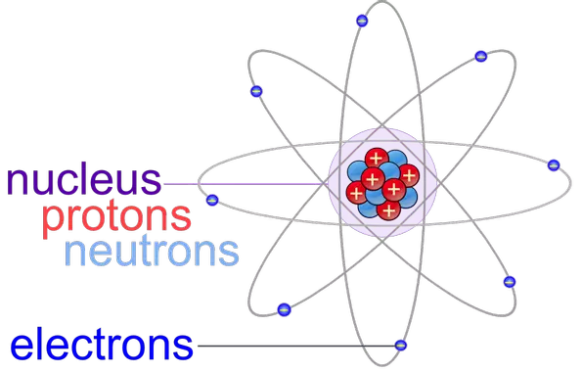
There are two types of particles in the nucleus of an atom, which are the Protons and the Neutrons. The number of particles in the nucleus depends on what the element is. For example, Oxygen has 8 protons and 8 neutrons in the nucleus and Phosphorus has 15 protons and 16 neutrons in the nucleus. The number of protons are determined by what the atomic number of the element is. The number of neutrons are found by subtracting the atomic number from the atomic mass. Read More:

114. Sky Dancer

114) Review / Summary / Overview for Sky Dancer


Overview

Sky Dancer is a soaring celebration of the Divine Feminine as both cosmic principle and embodied consciousness. Through an intricate weave of spiritual symbolism, metaphysics, and mythopoetic insight, the poem redefines womanhood as far more than biology — it is a direct expression of Source-Energy itself. The “Sky Dancer” (a term reminiscent of the Tantric Dakini) is portrayed as an immortal being of frequency and vibration, temporarily inhabiting a physical avatar to experience the density of human incarnation. This journey from the celestial to the corporeal — the fall through “144,000 chimneys” into embodiment — represents the sacred descent of spirit into matter, a dance of polarity that fuels creation itself.


Why This Poem Matters

This poem matters because it restores the cosmic dignity of the feminine, reclaiming her from centuries of misinterpretation and reductionism. It reminds readers that incarnation is not punishment but participation — a voluntary descent by luminous beings into material form, undertaken for the sake of experience, compassion, and growth. Sky Dancer provides a philosophical and spiritual framework for equality rooted not in gender politics but in divine ontology: all beings, regardless of form, are “direct extensions of Source-Energy.” It offers both women and men a vision of sacred partnership, where polarity becomes the creative tension that sustains all life and love.


Imagery and Tone with Excerpts

The poem glides between metaphysical majesty and playful physicality, marrying grandeur with grounded humanity.

  • Somersaulting through the seven heavens / And tumbling down 144,000 chimneys” — evokes the epic fall of the soul into incarnation, a celestial acrobatics.
  • Landing on the Holodeck of the earth plane / Without wearing so much as a stitch” — injects humour and humility into the divine descent, showing spirit’s willingness to experience human vulnerability.
  • The atom and the electron / The Adam and the Evening Star” — a clever cosmological pun linking science and scripture, matter and myth.
  • The circular dance of perfection” — summarises the poem’s essence: creation as an eternal, harmonious dance between feminine and masculine forces.

The tone is reverent, expansive, and celebratory, blending tantric, alchemical, and universalist language. It reads as both revelation and remembrance — a poetic initiation into self-recognition.


Why It Belongs in the Collection

Within the larger collection, Sky Dancer is pivotal — it reintroduces the sacred feminine not as concept but as living current. It continues the series’ evolution from personal awakening to cosmic understanding, linking Venus and Mars’ theme of divine polarity with The Alchemist’s exploration of inner transformation. It serves as a bridge between self-realisation and unity consciousness, affirming that gendered experience is one expression of universal energy. The poem’s inclusion deepens the metaphysical architecture of the work, expanding it into a holistic cosmology that honours both the masculine Christos and the feminine Sophia.


Final Thoughts / Conclusion

Sky Dancer is a hymn to remembrance — of our origins, our divinity, and our equality. It exalts the feminine as the bridge between form and formlessness, revealing that embodiment itself is a sacred act of love. Through its lyrical union of mysticism and science, humour and holiness, the poem invites every reader — regardless of gender — to awaken to their higher identity as “an infinite being of remote consciousness.” It is both grounding and uplifting, reminding us that we are not fallen angels, but willing dancers in the eternal choreography of creation. ✩


The Aquarian Age Woman: Reclaiming the Divine Feminine: Interview with Cat Catalyst


The quantum Dakini wisdom of ‘The Sophia’

William Blake: The Ancient of Days: 1794

Watch >> The End of Quantum Reality << (Documentary, 2020) about Wolfgang Smith, author of The Quantum Enigma, born in Vienna in 1930, who identified the Achilles-heel of the mathematical world of physics as a continual reduction of the world into terms of ‘Quantity’ through the lens of an overly dominant left-hemisphere and patriarchal reductionist approach to science, which only looks for solutions in the absence of the divine sacred feminine and the absence of right-hemisphere considerations.

113. The Alchemist

Review / Summary / Overview for 113. The Alchemist


Overview

The Alchemist stands as a luminous call to inner mastery — a reminder that each of us is both creator and creation, continually shaping reality through the vibrational quality of our thoughts and emotions. It blends metaphysics with mysticism, describing the transformation of human consciousness as a literal act of alchemy: the transmutation of fear and self-doubt into confidence, faith, and divine love. The poem positions spiritual practice as both science and art — a process of “creative visualisation,” electromagnetic alignment, and heart-centred intention — culminating in enlightenment, symbolised by the illumination of the cerebellum and the opening of the third eye.


Why This Poem Matters

This poem matters because it encapsulates the core message of the collection — empowerment through conscious co-creation. It invites readers to recognise their innate ability to influence and redesign their lived experience by cultivating inner harmony and faith in divine intelligence. In an age of uncertainty and external distraction, The Alchemist restores personal sovereignty by reminding us that transformation begins within. The poem functions as both spiritual technology and poetic invocation, calling for collective ascension through compassion, imagination, and service to the Divine Will.


Imagery and Tone with Excerpts

The imagery is rich in esoteric symbolism and the language of transformation:

  • Broadcasting: ‘Faith, Trust and Confidence’, up-front, 24-7!” — asserts that intention is a constant energetic broadcast.
  • In an electromagnetic world of sinusoidal waves, pulses and oscillations” — situates spirituality in the physics of energy and vibration.
  • Mother Mary Magnetism” and “Jacob’s ladder and the stairway to heaven” — blend sacred iconography with alchemical ascent.
  • The raising up of electromagnetic Qi, through the thermometer of the spinal column” — evokes kundalini activation, linking body and spirit.
  • Extracting the golden solar christic force of initiation from deep within the ego’s lead-lined, volcanic mountain” — delivers a potent metaphor for inner purification and divine awakening.

The tone is exalted, confident, and initiatory — more proclamation than reflection. It carries the cadence of a manifesto for modern mystics, equal parts instruction and revelation.


Why It Belongs in the Collection

Within the context of the whole body of work, The Alchemist represents the culmination of the transformational process explored throughout the series — the moment where awareness becomes mastery. Previous poems examined awakening, illusion, polarity, and healing; here, those insights are synthesised into actionable spiritual wisdom. It serves as both a summation and an activation — a living key for readers ready to claim authorship of their own vibration. Positioned near the end of the journey, The Alchemist signifies not closure, but ignition — the dawn of the golden age of co-creative consciousness.


Final Thoughts / Conclusion

The Alchemist is the sacred architecture of transformation rendered in verse — a blueprint for those who seek to spiritualise matter and awaken the sleeping god within. Through imagery that fuses divine geometry, electromagnetic theory, and mystical devotion, it invites humanity to rise above egoic separation into unified awareness. The poem’s ultimate message is one of hope and empowerment: that every human being, through the power of focused love and faith, can transmute the base metal of fear into the gold of wisdom. It is the voice of the awakened soul declaring: “We are each of us, master alchemists and magicians.”