20. Baobab Tree

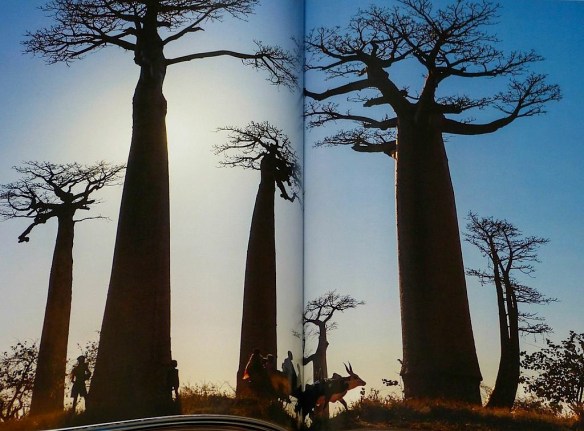
Baobab Tree is a quiet yet emotionally charged reflection on humanity’s estrangement from nature, and the poet’s personal search for connection, reverence, and simplicity in a world increasingly defined by consumption and disconnection. Framed through an intimate interaction with a tree, the poem operates as both a love letter to the natural world and a lament for what has been lost through modern life.

The Baobab itself serves as a central figure—grounded, ancient, humble. It is not simply a tree, but a companion: “My friends / Are the Baobab trees in the park.” This anthropomorphising does not feel whimsical or sentimentalised; rather, it is a sincere extension of the poet’s longing for honesty and reciprocity, qualities found lacking in human society but deeply present in nature.

The tactile description of the tree—“Its bark was hot / Soaking in the sunshine”—grounds the poem in sensory immediacy. The poet’s awe at the tree’s form, its “bulging out of the Earth,” echoes a kind of sacred regard for the quiet miracle of the living world. This reverence is extended to the Earth itself: “This magic earth, soil, land,” the poet calls it, recognising it not just as matter but as a nurturing, intelligent force that sustains life.

There is a subtle undercurrent of sadness and isolation running through the piece, particularly in the line, “Some might say it is beautiful / Romantic and poetic / Except it is my sad truth.” This confession hints at the alienation the poet feels—finding more resonance with a tree and a breeze than with people. This loneliness, however, is not despairing but contemplative, forming the basis for deeper gratitude and awareness.

Midway through, the poem shifts into a tone of praise: an almost devotional awe at how “seeds can grow out of the earth” and provide food, fragrance, oxygen—“an incredible source of nourishment.” This listing serves as a kind of natural litany, a moment of wonder and thanksgiving that contrasts with the more sombre reflection that follows.

The latter section turns toward the ecological and ethical dimensions of human life: “Each human being’s existence / Depletes the planet… / Creates waste.” These lines do not condemn, but rather invite self-examination. The poet includes themselves in the reflection—“I am probably no better than anyone else”—and thereby avoids moralising. The effect is one of shared responsibility rather than accusation.

Importantly, the poem does not end in despair but in a call for awareness and stillness: “Let go of your fears / Find stillness and calm / Amidst the chaos of un-civilisation.” This final phrase, “un-civilisation,” is a sharp and effective critique, suggesting that modernity, though technologically advanced, lacks the soulfulness and respect that true civilisation demands.

Stylistically, the poem maintains a natural rhythm, with short lines and intuitive enjambment that mirror the reflective, almost meditative mood. The language is accessible yet thoughtful, allowing the emotional and philosophical layers to emerge gradually.

In summary, Baobab Tree is a gentle but powerful meditation on the sacredness of nature and the ethical challenge of being human in an age of environmental crisis. Its strength lies in its honesty, its tactile engagement with the natural world, and its refusal to separate the personal from the planetary. The poem invites readers not only to appreciate the beauty of a tree, but to consider their place in the larger web of life—and how they might begin to honour it more fully.

—Baobab Tree was written in Anzac Square, Brisbane, May 1998

Direct link to Noēma Poēma bookshop
21. Earth Molecule

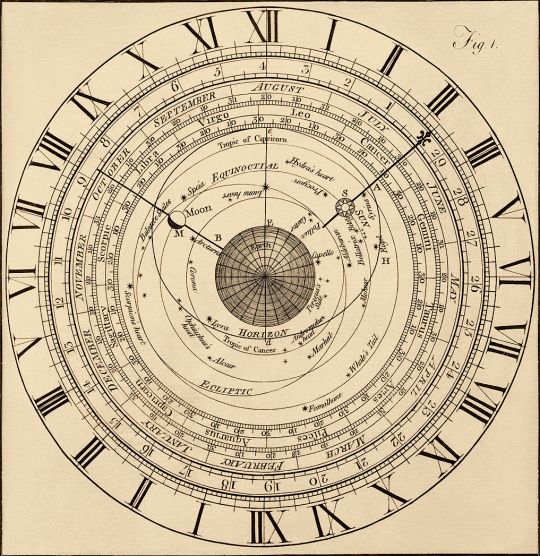
Earth Molecule is a deeply reverential meditation on humanity’s inseparable connection to the living body of the Earth. The poem blends spiritual philosophy, ecological awareness, and elemental imagery into a seamless expression of unity, depicting the self not as separate from nature, but as a microcosmic extension of it. Through simple yet profound language, the poet conveys an intimate vision of life, death, and transformation as continuous acts of belonging.

The opening declaration, “I am / An animated molecule / Piece of Planet Earth,” establishes the poem’s central premise with striking simplicity. The poet immediately dissolves the boundaries between human and Earth, individual and cosmos. By identifying as “an animated molecule,” the speaker situates the self within the smallest possible unit of life, grounding identity not in ego or consciousness, but in elemental being. This perspective aligns with both ecological science and spiritual mysticism, merging the language of biology and reverence into one cohesive worldview.

The recurring identification of the body with the planet—“Her body is my own / And I am a little piece of Her / Walking upon Her skin”—is both tender and humbling. The image of the Earth’s “skin” suggests intimacy and fragility, inviting the reader to see human life as an extension of planetary sensation. The poet’s cyclical vision of death—“When I die / My body is restored to Her / And therefore to myself”—emphasises that return is not loss, but reunion. Death becomes a homecoming, a restoration to source, “Back to the womb / Mother who feeds us.”

The middle section of the poem expands this personal meditation into a broader ecological and ancestral reflection. The Earth becomes an alchemical being—“The alchemy is in the land / Her body / Made from the blood of our ancestors”—where transformation is perpetual. The living and the dead coexist within the same sacred continuum, each feeding and renewing the other. This imagery of regeneration not only honours the physical cycles of nature but also carries a sense of spiritual continuity: the ancestors, now returned to the soil, remain present as part of the Earth’s nourishing force.

A key emotional and ethical turn occurs when the poet affirms, “She fosters my growth / For She knows I can do no wrong.” Here, guilt and sin are replaced with understanding and acceptance. The Earth, personified as an all-forgiving Goddess, recognises the inevitability of human imperfection and the ultimate redemption that comes through reintegration. This notion of unconditional love—“Mighty, most powerful Goddess / Of unconditional love”—echoes earlier poems in which the Earth or Gaia functions as a spiritual archetype of nurturing wisdom and evolutionary resilience.

Stylistically, the poem flows in a gentle cadence, its short, declarative lines mirroring the organic rhythm of breath and thought. The repetition of “Her” reinforces reverence, while the lack of punctuation creates a sense of timeless continuity—each idea bleeding into the next, much like the natural processes it describes. The language is elemental, free of abstraction, allowing the imagery to carry the spiritual weight.

The poem’s closing exhortation, “Wake up! She is ‘Us’ / And She always wins,” serves as both a warning and an awakening. The call to consciousness is not antagonistic but restorative—a reminder of the futility of human arrogance in the face of the Earth’s enduring cycles. The final image, “Constant winds of time / Forever, into infinity,” reaffirms the poem’s scope: that life, death, and renewal are not linear but eternal, and that humanity’s true purpose lies in recognising its role within that boundless evolution.

In conclusion, Earth Molecule is a luminous expression of eco-spiritual consciousness—simultaneously scientific in its material understanding and mystical in its emotional resonance. Through its meditative tone and unadorned imagery, the poem transforms the idea of mortality into a celebration of unity, humility, and eternal belonging. It is both a hymn to Gaia and a reminder of our intrinsic participation in her infinite, self-renewing dance.

Direct link to Noēma Poēma bookshop

✩ 19. Prayer Song


Help me, higher self

Hear my plea

Don’t know which way to turn

Can’t identify my destiny


Need some kind of sign

Help me to define

Which path is mine

Restore myself to me


Oh hear me,

Oh hear me

Oh hear me


If you love Life

Life loves you back

Faith and trust are our allies

On the road, don’t give up!


Keep on pushing through

Got to stay true

Do what you have to do!

Restore my faith to me


Oh hear me

Oh hear me

Oh hear me.

____________

Prayer Song is a heartfelt and earnest plea for guidance and reassurance in times of uncertainty. The poem captures the universal human experience of feeling lost and seeking clarity from a higher, inner source—the “higher self.” Its tone is vulnerable yet hopeful, expressing both doubt and faith in a simple, direct manner.

The poem opens with a direct invocation, “Help me, higher self / Hear my plea,” immediately establishing an intimate and personal dialogue between the speaker and their spiritual core. This opening sets the emotional tone—one of uncertainty balanced with the sincere desire for alignment and self-restoration. The repeated question of not knowing “which way to turn” or how to “identify my destiny” reflects a common spiritual crisis, grounding the poem in relatable human experience.

Structurally, the poem employs repetition effectively, with the refrain “Oh hear me” appearing three times in succession twice, creating a rhythmic chant-like quality that mimics prayer or meditation. This repetition underscores the intensity of the speaker’s plea and lends the poem a musical, almost ritualistic rhythm, reinforcing its title and function as a “song.”

The middle section offers a gentle reassurance: “If you love Life / Life loves you back,” framing faith and trust as essential companions on the journey. This message encourages perseverance and self-trust—“Keep on pushing through / Got to stay true”—which shifts the poem from plea to empowerment, suggesting that the path forward is both internal and active.

The closing lines return to the request for spiritual listening and healing—“Restore my faith to me”—emphasizing the cyclical nature of doubt and trust, loss and recovery. The overall simplicity of the language and structure makes the poem accessible and direct, allowing its emotional core to resonate clearly without distraction.

In summary, Prayer Song is a sincere and evocative expression of spiritual longing and resilience. Its straightforward approach and rhythmic repetition create a sense of both intimacy and universality, inviting readers to find comfort in their own moments of uncertainty and to trust in the process of faith and self-discovery.

Direct link to Noēma Poēma bookshop