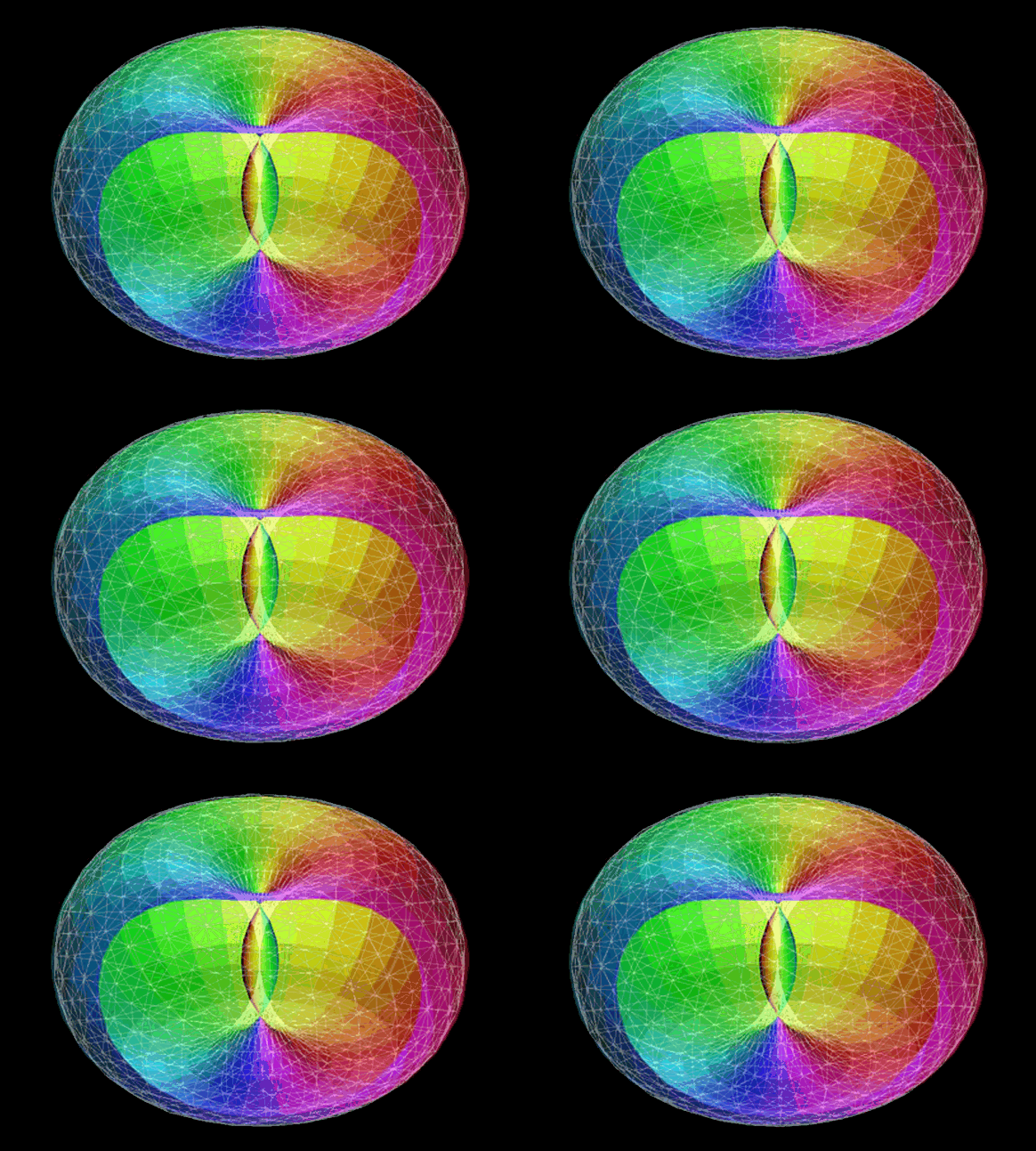
117. Free Spirit

Review / Summary / Overview for 117. Free Spirit


Overview

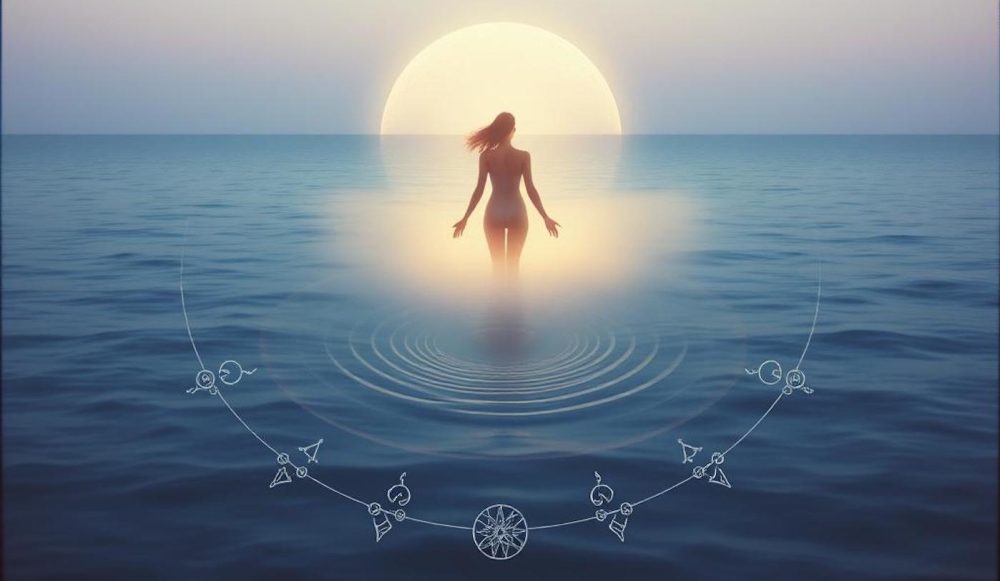
Free Spirit is a luminous celebration of sovereignty, creativity, and divine spontaneity — a hymn to the liberated soul who remembers her infinite origins. The poem paints a portrait of the awakened individual as both mystic and maverick: “a vibrant free-spirited independent thinker / Seeker of new adventures, magical manifestations and infinite possibilities.” This radiant being moves fluidly between the physical and spiritual realms, drawing power from intuition, compassion, and the sacred feminine. Through its musical phrasing and rhythmic cadence, the poem itself feels airborne — whirling, like its subject, through a dance of divine remembrance.


Why This Poem Matters

This poem captures the essence of spiritual freedom — the fearless curiosity and trust required to live in harmony with Source-Energy. Free Spirit matters because it reawakens the reader to the truth of self-sovereignty: that liberation is not rebellion, but alignment. It celebrates the joyful courage of those who dare to flow rather than conform, who listen to the music behind reality’s curtain. In doing so, it mirrors the collection’s central motif — that enlightenment is a participatory dance between will, wisdom, and wonder.


Imagery and Tone with Excerpts

The imagery is celestial and kinetic, a symphony of motion and intuition:

  • Whirled from the sounds and syllables forged in the fires of creation” — creation as music, the universe as an ongoing act of sound and rhythm.
  • Flowing with the continuous stream of synchronised dignities” — suggests grace through surrender, the natural order of the awakened heart.
  • Fearlessly riding the winds of change, challenging all illusions” — defines the free spirit’s role as both adventurer and alchemist.
  • Qualifying order and symmetry from the kernel of chaos” — a poetic encapsulation of the eternal work of creation itself.

The tone is exultant yet serene — a jubilant proclamation of spiritual mastery. The poem embodies what it describes: unbounded, effervescent, radiant with light and faith in transformation.


Why It Belongs in the Collection

Free Spirit arrives at a pivotal point in the anthology — a crest of confidence and clarity following the introspective depths of Loom and Atom and Even. Where those works contemplate incarnation and cosmic structure, Free Spirit embodies the result: the awakened soul in full flight. It represents the human spirit unshackled from doubt and density, echoing the transcendence found in Venus and Mars and The Alchemist. As such, it is both a celebration and a culmination — an anthem for the liberated seeker who has remembered her true multidimensional nature.


Final Thoughts / Conclusion

In Free Spirit, the poet becomes the mirror of the very freedom they describe — a divine conduit for inspiration, moving effortlessly between realms of intuition and intellect. It’s a poem that dances — not just in rhythm and form, but in vibration — reminding the reader that every soul has the capacity to be both grounded and infinite, both human and celestial.

It is an ode to authenticity, to the art of being in perfect synchrony with creation’s pulse. A radiant call to trust the winds of change, to spin boldly upon the “Axis Mundi,” and to celebrate the miracle of consciousness unbound. ✩


Read More: https://www.cosmic-core.org/free/article-128-physics-aether-electromagnetism-gravity-part-4-em-loops-charge-spin/

Parthenogenesis

116. Loom

Image

Review / Summary / Overview for 116. Loom


Overview

Loom is a visionary meditation on the soul’s journey through incarnation — a metaphorical weaving of consciousness into matter. The poem likens becoming human to falling through the spokes of a cosmic wheel, descending from the ætheric realms into the dense fabric of physical reality. Once “sieved” into the world, each soul receives a unique “blueprint” — its karmic map of lessons, gifts, and challenges. Through this exquisitely wrought allegory of weaving, Loom portrays human life as an act of artistry and remembrance: each experience, whether painful or joyous, is a thread in the divine tapestry of evolution.


Why This Poem Matters

This poem is essential to the collection because it distills the essence of reincarnation, purpose, and ascension into one seamless, symbolic narrative. It answers the perennial question: Why are we here? Through its lucid metaphors, Loom proposes that incarnation is not punishment, but participation — a chance for souls to refine vibration, alchemise experience into wisdom, and ultimately, rejoin the Source. The poem gently reminds the reader that spiritual evolution is an ongoing act of craftsmanship — one must consciously weave love, empathy, and compassion into the fabric of daily life in order to ascend beyond illusion.


Imagery and Tone with Excerpts

The poem’s language is rich with cosmic and craft-based imagery, combining celestial mechanics with textile metaphors to bridge science, spirituality, and art:

  • Falling through the spokes of a rotating wheel” — evokes reincarnation as both motion and descent, suggesting destiny’s machinery at work.
  • Shuttling back and forth like bobbins on a loom / Weaving the threads of all life experience into a single tapestry” — portrays the accumulation of lifetimes, the artistry of becoming whole.
  • Each soul… is a perfect carbon copy, replica of the original source code” — introduces divine geometry and computational language, grounding mysticism in metaphysical physics.
  • The only way out of this simulacrum, is ascension” — a powerful conclusion that encapsulates the poem’s moral compass: remembrance through elevation.

The tone is both reflective and didactic — part mythic parable, part cosmic reminder — suffused with reverence for the beauty of incarnation and the discipline required for transcendence.


Why It Belongs in the Collection

Loom fits seamlessly within the overarching framework of this spiritual anthology. Like Saṃsāra, it explores the cycles of incarnation and release, while echoing the self-reflective tone of Blueprint and Atom and Even. Yet, it brings a unique perspective — not just the mechanics of rebirth, but the artistry of it. The weaving motif underscores a central theme of the entire body of work: that the universe is a living fabric of consciousness, with every being as an essential thread. It beautifully complements the series’ recurring motif of divine craftsmanship, unity, and the soul’s quest for remembrance.


Final Thoughts / Conclusion

Loom is a poetic masterclass in sacred metaphor — a cosmic reminder that we are both the weaver and the woven, both artist and artwork. It invites the reader to consider that every life, however ordinary or chaotic, is part of a magnificent tapestry of divine design. Through awareness, gratitude, and compassion, we can reweave ourselves into the frequency of Source and ascend from the “mother-board of life” back to the infinite loom of creation. A tender and profound meditation on purpose, pattern, and transcendence — Loom is the gentle whisper of remembrance itself. ✩


Library System of the Catholic University of Cordoba, Argentina – Embracing knowledge to empower people

115. Atom and Even

Review / Summary / Overview for 115. Atom and Even


Overview

Atom and Even is a beautifully symbolic and metaphysically rich poem that reimagines the genesis of creation through a blend of spiritual science, sacred geometry, and poetic mysticism. A play on the biblical Adam and Eve, the title Atom and Even reveals a deeper alchemical truth — the union of fundamental forces and polarities that birth reality. The poem’s focus is the witness self — the timeless, unchanging consciousness at the core of being — and its observation of the interplay between light and shadow, truth and illusion, matter and energy. It proposes that the origin of creation is not sin or separation, but love and resonance — a sonic, harmonic event rooted in balance and sacred union.


Why This Poem Matters

This poem is a pivotal contribution to the collection as it shifts the creation myth away from dualistic shame or blame into unity and wholeness. It offers a vision of spiritual physics — where electrons, protons, and neutrons are not just particles, but spiritual actors in a divine drama. The poem disarms the old narratives of guilt and original sin, proposing instead that “the clay of matter” is shaped by love, not punishment. In a world still grappling with identity, disconnection, and spiritual confusion, Atom and Even brings clarity, reintroducing sacred balance at the heart of existence.


Imagery and Tone with Excerpts

The poem is lyrical, reverent, and elegantly structured, using celestial and molecular imagery to explore macrocosmic truths:

  • The timeless truth of the witness self / Unfurls like the perennial flower of life” — evokes sacred geometry and the eternal self beyond time.
  • Spellbound and mesmerised / By the silvery-blue hues of an unfaithful moon” — a haunting image of illusion and emotional distraction.
  • A sonic architectural evening song / A right ascending conjugal emanation” — a stunning description of sacred union through vibration and sound, suggesting that matter is born of love and resonance.
  • Weaving a star-shaped womb” — blends feminine creation with stellar architecture, reinforcing themes of divine design and harmonic birth.

The tone is contemplative and luminous, moving gently between metaphysical exposition and poetic beauty.


Why It Belongs in the Collection

Atom and Even extends the recurring themes of divine polarity, sacred union, and vibrational alignment found throughout the collection. It builds upon poems like Venus and Mars, Sky Dancer, and The Alchemist, but zooms in even further to the molecular and quantum level — bringing spiritual insight into subatomic form. This layered cosmology strengthens the book’s overall thesis: that everything, from particles to people, is rooted in Source-Energy and love. The poem’s message of infinite multiplication from an undivided One also echoes the core metaphysical belief of oneness and infinite expansion, anchoring the entire collection’s spiritual philosophy.


Final Thoughts / Conclusion

Atom and Even is a subtle but profound piece that fuses poetry and cosmology, metaphor and molecular structure. It transcends dualistic mythologies to offer a sacred, non-dual vision of creation — where masculine and feminine forces, energy and form, witness and creation, are all harmonised within a divine equation. It reminds us that we are not separate from the stars, but born from the same frequency, singing the same “evening song.” This poem doesn’t just describe the origin of the universe — it invites the reader to remember it, from the inside out. ✩


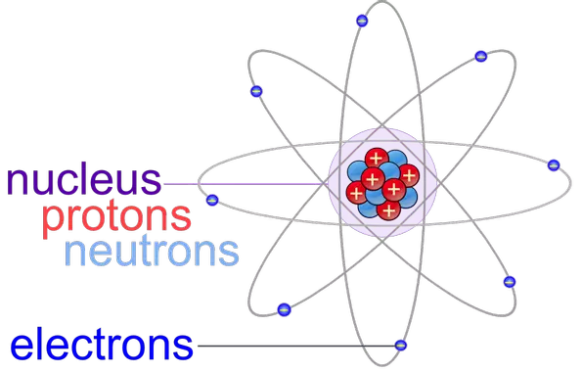
There are two types of particles in the nucleus of an atom, which are the Protons and the Neutrons. The number of particles in the nucleus depends on what the element is. For example, Oxygen has 8 protons and 8 neutrons in the nucleus and Phosphorus has 15 protons and 16 neutrons in the nucleus. The number of protons are determined by what the atomic number of the element is. The number of neutrons are found by subtracting the atomic number from the atomic mass. Read More: