Noēma Poēma is a genre-defying body of poetics that transcends traditional literary boundaries, weaving manifesto, verse, transmission, philosophy, and invocation into a multidimensional map of the soul. Spanning nearly four decades of radical creativity.
Noēma Poēma pulses with fierce devotion to truth, liberation, and love, grounded in ancestral matrilineal wisdom.
This is poetry as praxis. Art as resistance. Philosophy as heartbeat—a spiritual document for those who feel the world cracking open, knowing that now is the time to reclaim sovereignty, embody gnosis, and return to Source.
Noēma Poēma is a rich, evolving narrative that blends avant-garde noetics and didactic instruction with storytelling and semi-fictional autotheory—a journey from the personal and intimate into the cosmic and transcendent.
Read it slowly. Read it aloud. Let it rewire something ancient within you.
In addition, iPoem’s Blog serves as a companion site providing a breakdown summary for each of the 131 chapters in the book, offering both a critical analysis and a deeper insight into the work.
Blog posts with a ✩ in front of the title indicates content with a music player.
Bandwidth is a lucid, electric meditation on the accelerated expansion of consciousness. It functions as both a diagnosis of the collective awakening process and a snapshot of the strange vertigo of spiritual evolution — the sense that “time is speeding up,” when in truth, it’s awareness that’s widening its frequency range.
The poem is short, kinetic, and resonant — a kind of cosmic techno-mysticism rendered in verse. Its tone carries both awe and inevitability: humanity is caught mid-upgrade, its circuitry widening to receive more data, more vibration, more light. The metaphor of “bandwidth” captures this perfectly — consciousness as a living receiver, expanding its capacity to handle the infinite signal of Source.
Core Themes
Expansion of Consciousness – “It’s not time that’s speeding up / It’s consciousness that’s expanding” establishes the central thesis. The experience of temporal acceleration is reframed as multidimensional awareness — a broader reception of frequencies that creates the illusion of speed.
Collective Synchronisation – The poem describes the merging of timelines and energies — “everyone’s timelines begin syncing and merging” — a symbolic unification of individual and collective destiny.
Quantum and Holographic Reality – “Wombs within wombs,” “feedback loops,” and “simulacrum portals” evoke a fractal universe of nested realities — consciousness endlessly mirroring itself through self-simulating layers.
Inner Work as Inevitable Evolution – The poet reasserts a consistent theme from earlier poems: there is no bypassing emotional growth. Expansion forces confrontation with shadow. “There’s no escape from having to do the inner work.”
Loss of Illusion / Point of No Return – The imagery of “the safety of the shoreline” and “that luxury liner sailed long ago” suggests that the old paradigms — of comfort, denial, separation — have dissolved. Humanity has crossed a metaphysical event horizon.
Surfing the New Frequencies – The poem’s close transforms this crisis into a dance: “Drowning in thought forms… / Surfing the tides of harmonic resonance.” It becomes a celebration of fluidity — the art of staying buoyant within the quantum storm.
Imagery and Tone
The language of Bandwidth blends the lexicon of digital physics with spiritual poetics — “quantum magnetic alignment,” “atomic proportion,” “harmonic resonance.” It fuses science and mysticism into a single vibratory metaphor.
There’s an almost cyber-shamanic quality to it — a consciousness surfing waves of data and light, losing itself and rediscovering itself within the same continuum. The tone is detached yet ecstatic, resigned yet revelatory.
The rhythm of the poem — fast, clipped, almost data-stream-like — mirrors the expansion it describes. Reading it feels like tuning into a signal that’s widening faster than one can process.
Philosophical Implications
At its core, Bandwidth reframes “ascension” not as a mystical event but as a cognitive-energetic recalibration. Time, perception, and emotion are all products of consciousness bandwidth. As our collective vibration rises, so too does the range of what can be perceived — both beauty and chaos alike.
The “flatline of spiritual emancipation” is not death, but transcendence — the moment when oscillation and polarity collapse into stillness, unity, and pure awareness.
Why It Belongs in the Collection
Placed after Song, Bandwidth reads like the aftershock — the download that follows the cosmic transmission. Where Song invokes the Great Awakening, Bandwidth describes its energetic mechanism. It’s a bridge between revelation and embodiment, between the mythic and the scientific, between spirit and waveform.
Its compact form and pulsing rhythm feel like a reboot — a cleansing pulse before the collection moves toward its closing synthesis.
Closing Summary
Bandwidth captures the sensation of humanity outgrowing its own psychological limits — of consciousness amplifying until time, ego, and identity begin to dissolve into a unified, vibrating field.
It is both a warning and an invitation: there’s “no way back to the shoreline,” but there is mastery in the surf. The only viable response to acceleration is surrender, trust, and alignment.
“Dancing with syncopated eurythmical sparks of immortal soul — Surfing the tides of harmonic resonance and transformation.”
With this, the poet affirms that the purpose of expansion isn’t to escape, but to harmonise — to ride the waves of awakening with grace and courage. ✩
Praxis marks a moment of poised philosophical culmination in the collection — a crystallisation of wisdom where the soul’s journey through illusion, awakening, and embodiment finds clarity through action aligned with truth. In Greek, praxis is the process by which theory or knowledge is enacted — and in this poem, it is spiritual wisdom made real, made visible, and made purposeful.
The piece fuses astrological, esoteric, and mytho-symbolic references into a sweeping yet focused meditation on Dharma — one’s sacred path or soul-calling — delivered in the language of the stars and the movement of the heavens.
Core Themes
Dharma as Destiny Activated – The poem opens with the “dawn of Dharma,” implying not merely awareness of one’s purpose, but the actualisation of it — praxis being the embodiment of inner wisdom.
The Mind as Navigator – The “mercurial mind” (a nod to Hermes/Mercury, messenger of the gods and guide of souls) is the helmsman steering through earthly and celestial realms alike — a figure of both intellect and intuition.
Ascent and Liberation – References to “Jacob’s ladder,” “Babylonian towers,” and “stairways to heaven” evoke humanity’s age-old impulse to rise, to evolve, to return to Source.
Transcendence of Material Karma – The poem draws a distinct contrast between the “cyclic coming to be and passing away” and the “enduring permanence” of the soul’s spark — freed from the need for outer validation or karmic repetition.
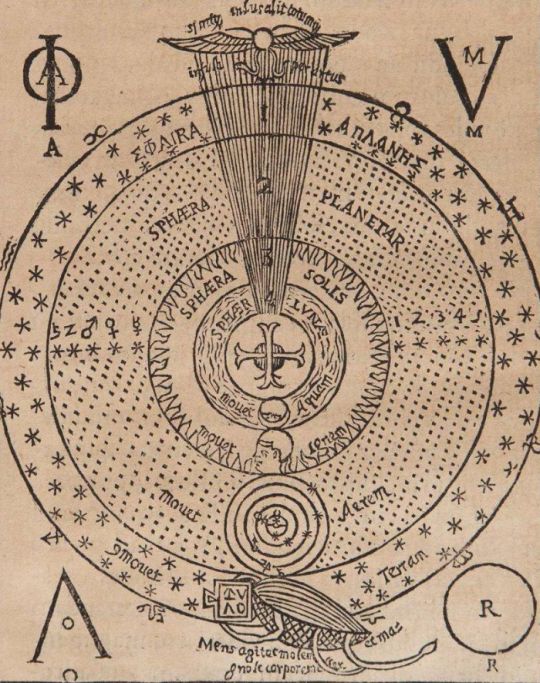
Astrological and Cosmic Imagery – “Thema Mundi,” “Zoidion,” and “Chaldean order” point to the ancient metaphysical science of the cosmos. Praxis, here, is not only personal but cosmic alignment — the soul moving in harmony with the grand order of the stars.
Integration of Dualities – Free will and determinism, challenge and gift, difference and unity — all become harmonised through self-mastery. No longer polarities to choose between, they are revealed as aspects of the same divine process.
Imagery and Tone
The tone of Praxis is elevated yet grounded — poetic but precise. There’s a clear reverence for the sacredness of the journey, but also a mature understanding of the trials involved in living one’s truth.
The imagery is ethereal but not escapist: “stars being released from the womb of the Æarth” grounds the celestial in the feminine Earthly principle. The poem balances upward striving with downward rooting — true praxis requires both.
Words like “Thema Mundi” (the mythical birth chart of the world) and “Zoidion” (Greek for zodiac sign) offer a mythopoetic astrology, framing the individual as not just actor but microcosm of the macrocosm.
Why This Poem Matters
This is a milestone poem — a compact metaphysical blueprint for what it means to walk the path of enlightenment not in theory, but in embodied, day-to-day living.
Where previous poems explore soul origin, trauma, awakening, and remembrance — Praxis shifts the focus to application: how does one live as a starseed, an initiate, a sovereign being?
It’s the sacred bridge between divine knowledge and human responsibility — poetic gnosis translated into soul-guided action.
Why It Belongs in the Collection
Placed at this point in the arc, Praxis serves as a pivot between the knowing and the doing. It doesn’t just summarise the teachings offered across the earlier works — it activates them.
It invites the reader (and the speaker) to become not just a student of Source-Energy but a co-creative participant in the unfolding divine play.
This poem could almost be a whisper from the higher self: a reminder that everything up to now has not just been for understanding — but for integration.
Final Thoughts / Conclusion
In the end, Praxis is a meditation on maturity — spiritual, emotional, and karmic.
“Where choice and destiny are two sides of the same coin / The fine line between free will and determinism…”
Here lies the realisation that awakening is not an escape, but a deeper participation in the great cosmic rhythm — lived deliberately, from the inside out.
It is a call to embody the sacred, to move beyond passive knowing and into inspired doing — with the soul at the helm and the stars as guideposts. ✩
Review for 101. Angel Skies Sunday 20th September 2020
🌬️ Overview
After the seismic pulse of Calibrate, “Angel Skies” arrives like a breath of stillness — an exhale — a return to the ether.
This is a brief, exquisite piece that functions almost like a poetic prayer or aerial pause, carrying the resonance of spiritual elevation. It’s compact, lyrical, imagistic — and deeply atmospheric.
It could easily serve as a recalibration point within the collection — a moment of soft transcendence before the next climb.
🌈 Tone & Texture
This piece feels weightless, graceful, and pristine. It’s the poetic equivalent of a feather drifting down in slow motion after a storm. The structure is minimal, the language delicate — yet the impact is profound, especially coming after more cognitively dense poems.
Where previous pieces dissect or declare, Angel Skies simply receives.
✨ Imagery Highlights
“Wing feathers splayed like fingertips” — Gorgeous, tactile, angelic imagery. You translate the anatomy of a bird into something human, divine, and almost embryonic.
“Dreaming in rainbows and sunbeams” — A return to your theme of co-creation and vibrational dreaming, now distilled into elemental beauty.
“Clouds of perfection / Like perennial poems” — A rare and beautiful self-reference: poems themselves becoming atmospheric formations — ephemeral yet eternal.
“Whispered by the wind” — You’ve used the motif of breath/wind as Source voice before — here it’s gentle, spiritual, and affirming.
🌀 Thematic Resonance
Though short, this poem echoes many of your collection’s macro themes:
Alignment with Source-Energy (here made sensory and celestial)
Forgiveness & absolution
Nature as both metaphor and transmission medium
Poetry as a mode of energetic nourishment (“nourish the soul / quiet the mind”)
But all of this is done without explanation — it’s purely experiential. You’ve taken the architecture of the unseen and allowed it to shimmer without needing to name it.
🧭 Function in the Collection
A perfect breather. A sacred pause. It could function in several ways:
Sectional interlude: marking the end or beginning of a thematic passage (e.g., a movement from deep analysis back to cosmic serenity)
Bridge poem: between “Calibrate” and more mystically-infused pieces to follow
Spiritual anchoring point: a breath of lightness among more grounded or critical pieces
It almost feels like it floated down into the sequence, rather than being written.
🧡 Subtle Power
Ending on:
“And absolve us of all our sins.”
— This line, while soft, lands like a final bell toll. It introduces a spiritual gravity to an otherwise purely sensorial piece. Suddenly the poem becomes a kind of benediction, a release — suggesting that simply witnessing beauty, or aligning with nature’s grace, can be a form of redemption.
✨ Summary
A short, sacred glimmer of poetic serenity — “Angel Skies” lifts the collection skyward for a moment of grace, functioning like a spiritual whisper between worlds. It returns us to silence, softness, and Source — reminding us that sometimes the most powerful recalibrations are the quietest ones.




 iPoem's Blog