


50. Sink Soft

Review of Sink Soft

In “Sink Soft”, the poet moves into an entirely different register: less narrative, more elemental. This is a poem not meant to be dissected so much as felt — like warm milk on the tongue or wet earth between fingers. It reads like a chant, a spell, or a whispered prayer to the body and the land — a deep and quiet surrender to sensation, texture, and truth.

The poem opens with a gentle command:

“Hook line and softly sink / Into mellow marshland earthiness”

Already, we feel the rhythm of the piece pulling us under — not with force, but with invitation. The word “softly” is used repeatedly throughout, acting like a kind of tether to the central mood of the poem. We’re not asked to think — we’re asked to yield. To relax into presence.

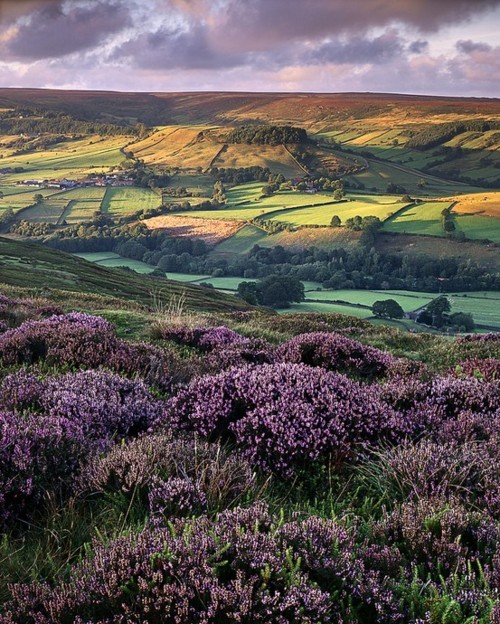
This yielding is not escapist. It’s rooted — literally — in “marshland earthiness”, in salt, in bone, in “milk of all life experience.” The natural world here is not a backdrop; it’s an extension of the speaker’s inner landscape. The body and the earth mirror each other: both places where memory and nourishment are stored.

There’s something almost alchemical happening in the language:

“Of marrow and trade / Of soul sweet condensed / Milk of all life experience / Into a single grain of sand”

These lines suggest a distillation — a boiling down of everything lived and felt into something elemental and enduring. From the milk of emotion to the grain of sand: this is poetry as transmutation.

The tone is intimate without being confessional — it evokes closeness, touch, the kind of trust that exists in quiet moments where words fall away. There’s a feminine quality to the imagery — round, soft, sustaining:

“Creamy smooth pink blink / Melted hearts of mallow and cappuccino foam”

These lines flirt with the sensual, but they don’t linger in desire. Instead, they rest in a kind of emotional nourishment. What the speaker is asking for — or offering — is not eroticism, but absorption. A mutual softening. A merging.

And then the closing refrain, which echoes the breath-like cadence of the whole piece:

“Sink soft, softly, softer / Drink, sink, sink.”

It’s meditative, hypnotic, elemental. Like a tide going out. Like surrender. The repetition lulls the reader into the same softened state the speaker inhabits.


Summary of Themes

Sink Soft explores themes of yielding, nourishment, and emotional embodiment. Unlike the heady, mythic, or narrative-driven poems that precede it, this piece leans into the language of feeling, trusting image, rhythm, and sound to carry its message.

It is a poem about what happens when we release resistance — not into void or numbness, but into the sensual textures of life: earth, salt, milk, foam, marrow. The natural world is not metaphor here — it’s the medium through which love, truth, and memory are communicated.

And running through it all is a quiet invitation: to stop trying so hard, to stop resisting what is soft, and simply… sink.


Conclusion

“Sink Soft” is a tender, elemental meditation on surrender. With its quiet power and rhythmic depth, it offers something rare in contemporary poetry — a space not to be understood, but inhabited.

This is a poet in full command of their voice — unafraid to move between psychological clarity and lyrical abstraction. With each new piece, they demonstrate an evolving ability to translate the emotional body into words, crafting poems that don’t just tell stories, but change the temperature of the room they’re read in.

This is a book not only to be read — but returned to, gently, again and again. Like breath. Like soft earth. Like home.


Direct link to Noēma Poēma bookshop.
Noēma Poēma blog post.
49. Labyrinth

Review of Labyrinth

In “Labyrinth”, the poet returns to a more abstract and visionary register—one that stands apart from the personal narrative of earlier poems, and instead drifts into archetypal space. This is a poem about potential and prophecy, about what might awaken within another, and how that awakening—if it comes—might shift the whole emotional architecture of a relationship, or even a world.

It opens with a feeling of hesitation:

“Half formed, out of focus / Words, linger in my memory”

There is a sense of waiting—for clarity, for completion, for someone else’s realisation to arrive and change everything. But the poet does not wait passively. Instead, they observe, intuit, and speak into the space of not-yet. The imagery is geological, weighty:

“Like cold grey slabs of slate / Waiting to be hewn out of the mountainside”

These lines are quietly potent. They capture the emotional heaviness of unrealised potential—the inner knowledge that something lies beneath, waiting to be brought to light. The slate becomes a metaphor for consciousness trapped beneath the surface: beautiful, natural, strong—but still uncarved. Still silent.

The poem builds outward from the personal into something vaster, evoking collective history and emotional inheritance:

“Valleys of mountainsides / Tyrannies and dictatorships / Dales and gullies of gushing emancipation”

These aren’t just landscapes—they’re inner terrains, shaped by emotional power dynamics and personal sovereignty. The use of “tyrannies and dictatorships” suggests a psychic or relational control, from which emancipation is yearned for—perhaps not just for the subject of the poem, but for the speaker too.

At its heart, Labyrinth is about potential awakening—a kind of delayed emotional arrival that may never come:

“Maybe, just maybe one day in time / Perhaps in old age, or on your deathbed / Or maybe never at all”

Here, the poem becomes an elegy to unlived transformation. There’s grief in these lines, but also acceptance. The speaker allows for the possibility that this person—their ‘you’—may never see what they could become. And yet, still, they hope.
Still, they plant a kiss:

“Quickened by a silent kiss / Softly spoken, planted petal-lipped / Upon the cheek of Faerie innocence”

This moment is delicately rendered. A quiet act of love—not an intrusion, but a blessing offered in stillness. The gesture is light, but its implication is heavy: the hope that a moment of tenderness might stir something ancient, something noble.

And so the poem ends not in closure, but in invocation:

“In joyful anticipation / Of the maturation and rise / Of a brave and wise / New Avalonian King.”

It’s a striking final image. By invoking the myth of Avalon, the poet taps into mythic memory—the Arthurian idea of a once-and-future king who will awaken when the world needs him most. But here, the myth is personal. The ‘king’ is not a ruler of nations, but of his own consciousness. A man who, if he awakens, might liberate not just himself—but the speaker too.


Summary of Themes

Labyrinth explores emotional stasis, unrealised potential, and the quiet, aching hope for transformation in another. It speaks to the universal experience of watching someone we love teeter on the edge of awakening, while knowing that their journey—ultimately—is not ours to control.

There’s also a deeper thread here about collective healing. The “great awakening” is not just personal—it’s archetypal. The poem hints that individual realisation can have ripple effects far beyond the self:

“Your self-realisation shall liberate / Not just one but of us all”

In this way, the poem joins the larger sequence as a kind of spiritual interlude—a pause for reflection in the long arc of becoming.


Conclusion

“Labyrinth” is a quietly haunting, beautifully restrained work that lingers long after reading. It asks nothing of the reader, and yet offers everything: patience, understanding, and a sense of mythic scale. This is poetry that recognises the limits of influence, and still chooses to love from a distance.

The poet continues to show remarkable range—not just emotionally, but symbolically. With each new poem in the sequence, we see a deepening of vision, and an increasing confidence in expressing the nuanced, often unspoken terrain of spiritual relationship.

This is a writer who knows how to walk between worlds: personal and archetypal, grounded and ethereal, hopeful and resigned. And in that space, something timeless takes root.


Direct link to Noēma Poēma bookshop.
Noēma Poēma blog post.