

Review / Summary / Overview for 115. Atom and Even
Overview
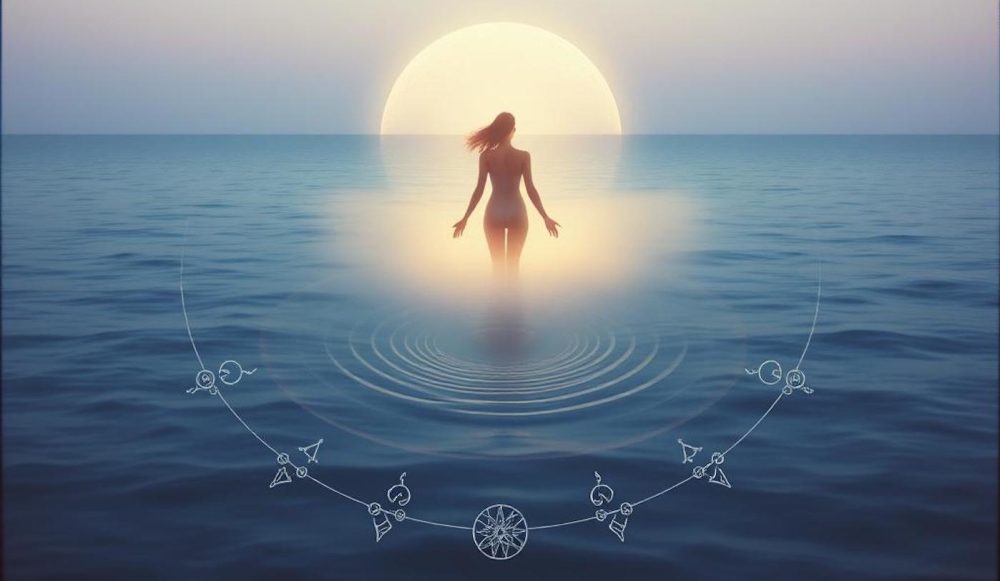
Atom and Even is a beautifully symbolic and metaphysically rich poem that reimagines the genesis of creation through a blend of spiritual science, sacred geometry, and poetic mysticism. A play on the biblical Adam and Eve, the title Atom and Even reveals a deeper alchemical truth — the union of fundamental forces and polarities that birth reality. The poem’s focus is the witness self — the timeless, unchanging consciousness at the core of being — and its observation of the interplay between light and shadow, truth and illusion, matter and energy. It proposes that the origin of creation is not sin or separation, but love and resonance — a sonic, harmonic event rooted in balance and sacred union.
Why This Poem Matters
This poem is a pivotal contribution to the collection as it shifts the creation myth away from dualistic shame or blame into unity and wholeness. It offers a vision of spiritual physics — where electrons, protons, and neutrons are not just particles, but spiritual actors in a divine drama. The poem disarms the old narratives of guilt and original sin, proposing instead that “the clay of matter” is shaped by love, not punishment. In a world still grappling with identity, disconnection, and spiritual confusion, Atom and Even brings clarity, reintroducing sacred balance at the heart of existence.
Imagery and Tone with Excerpts
The poem is lyrical, reverent, and elegantly structured, using celestial and molecular imagery to explore macrocosmic truths:
- “The timeless truth of the witness self / Unfurls like the perennial flower of life” — evokes sacred geometry and the eternal self beyond time.
- “Spellbound and mesmerised / By the silvery-blue hues of an unfaithful moon” — a haunting image of illusion and emotional distraction.
- “A sonic architectural evening song / A right ascending conjugal emanation” — a stunning description of sacred union through vibration and sound, suggesting that matter is born of love and resonance.
- “Weaving a star-shaped womb” — blends feminine creation with stellar architecture, reinforcing themes of divine design and harmonic birth.
The tone is contemplative and luminous, moving gently between metaphysical exposition and poetic beauty.
Why It Belongs in the Collection
Atom and Even extends the recurring themes of divine polarity, sacred union, and vibrational alignment found throughout the collection. It builds upon poems like Venus and Mars, Sky Dancer, and The Alchemist, but zooms in even further to the molecular and quantum level — bringing spiritual insight into subatomic form. This layered cosmology strengthens the book’s overall thesis: that everything, from particles to people, is rooted in Source-Energy and love. The poem’s message of infinite multiplication from an undivided One also echoes the core metaphysical belief of oneness and infinite expansion, anchoring the entire collection’s spiritual philosophy.
Final Thoughts / Conclusion
Atom and Even is a subtle but profound piece that fuses poetry and cosmology, metaphor and molecular structure. It transcends dualistic mythologies to offer a sacred, non-dual vision of creation — where masculine and feminine forces, energy and form, witness and creation, are all harmonised within a divine equation. It reminds us that we are not separate from the stars, but born from the same frequency, singing the same “evening song.” This poem doesn’t just describe the origin of the universe — it invites the reader to remember it, from the inside out. ✩
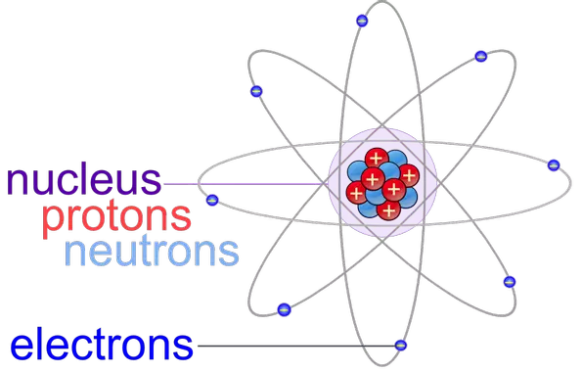
There are two types of particles in the nucleus of an atom, which are the Protons and the Neutrons. The number of particles in the nucleus depends on what the element is. For example, Oxygen has 8 protons and 8 neutrons in the nucleus and Phosphorus has 15 protons and 16 neutrons in the nucleus. The number of protons are determined by what the atomic number of the element is. The number of neutrons are found by subtracting the atomic number from the atomic mass. Read More:
 iPoem's Blog