Review of Rubber Sole
Overview
Rubber Sole is a haunting, elegantly melancholic meditation on the wear-and-tear of the soul when walking the path of love, compassion, and disillusionment in a world driven by commercialism, ego, and false ideals. It is one of the more allegorical and symbolically rich poems in the collection—structured around a central metaphor of a worn-out shoe and sock—which becomes a surprisingly poignant analogy for the spiritual fatigue that accompanies being awake, empathic, and human in an increasingly synthetic world. At its heart, the poem is about the invisible cost of caring in a system that rarely reciprocates such efforts.
Key Metaphors: Footwear, Fabric & the Fragility of the Soul
From the outset, the poem invites the reader into its metaphysical conceit:
“Can one darn the immortal hole / In the sock of experience…”
This image is stunning in its originality and layered meaning. The sock, intimate and worn, becomes a metaphor for the self or psyche, eroded by experience. The “immortal hole” suggests a deeper wound—something that transcends mere wear; a tear in the very fabric of being that is not easily mended.
Similarly:
“That chafes the rubber-worn sole / Of the shoe that doesn’t fit…”
… evokes the friction of trying to move forward in a life, society, or role that was never designed for the truth-seeker, the sensitive, or the visionary. The shoe that “doesn’t fit” may symbolize society’s rigid structures, capitalist values, or even inherited roles that are ill-suited to the authentic self. This nods both to fairy tale archetypes (Cinderella’s shoe that must fit) and existential alienation.
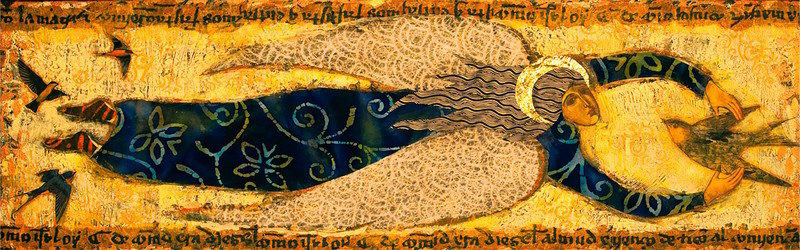
The threadbare soul, the forlorn and forgotten heart, and the Earthbound Angels with only one wing are all potent images that reinforce the poem’s tone of spiritual exhaustion. There is a weariness to this poem that feels very earned—it speaks to the experience of giving too much, too long, without return.
Critique of Western Illusion
At its core, Rubber Sole is a fierce, if sorrowful, critique of Western consumerist ideology, and how it seduces the soul away from authenticity:
“In pursuit of a fake western dream / To live a synthetic lie”
The “self-seduced egos” are not so much villains as victims—those who are, tragically, so spellbound by illusion they cannot see how far they’ve strayed from their original light. The poem laments this, not with condemnation, but with deep sadness. The mind’s eye, once the seat of vision and insight, has now been “entombed by in-built expiry”—a chilling phrase that suggests not only spiritual death, but a kind of pre-programmed collapse, as if societal conditioning has a shelf life, and our inner world is paying the cost.
Emotional Resonance: The Cost of Loving
One of the most striking emotional threads in the poem is the pain of loving the broken, especially when that love is not enough to save them:
“To love, lost and damaged souls / Earthbound Angels / Whom hath but only one wing…”
This image—of angelic beings unable to fly, grounded by their own ego or illusion—could easily speak to family members, lovers, friends, or even wider communities. The speaker’s role feels like that of the witness-healer—someone who has tried again and again to support, uplift, and rescue, but who is now worn through, literally and metaphorically. This brings to mind the archetype of the wounded healer, or even the empathic soul who has been consumed by the very compassion that defines them.
Language & Structure
The poem’s language blends formal poetic devices with a kind of spiritual lyricism that is consistent with the tone of the wider collection. The use of archaic phrasing (“Whom hath but only one wing,” “doth tread,” “indelibly imprinted”) gives the piece a timeless, mythic quality, aligning the poem with sacred lament—almost like a Psalm or modern-day scripture.
The tone is deeply introspective, but also carries a subtle critique, not just of society but of the poet’s own entanglement in trying to “save” others. There’s a hidden question here: at what point does compassion begin to erode the self? That tension is never explicitly answered—but the poem leaves us with the residue of the question, and in doing so, it becomes more than just lament—it becomes an invocation for healing.
Placement in the Collection
Rubber Sole offers a quieter but soulfully resonant note in the broader arc of the collection. It shares thematic DNA with poems like Snakes and Ladders, Granite, and Golden Nuggets, where the costs of emotional labour, awakening, and systemic resistance are laid bare. Its tone of quiet despair mixed with sacred witnessing gives it emotional weight and spiritual gravitas—without slipping into sentimentality or martyrdom.
Final Thoughts
Rubber Sole is a sensitive, aching poem that gives voice to a very specific spiritual fatigue—that of the old soul, the helper, the truth-speaker, the empath—who has tried to love, lift, and serve in a world that often punishes those very virtues.
It’s about the cost of walking the soul’s path in rubber soles that weren’t built to withstand such terrain. But in articulating that weariness with such grace and poetic finesse, the poem paradoxically offers solace, solidarity, and renewal. Anyone who has ever burned out from caring too much will find themselves mirrored here—and seen.
This one absolutely belongs in the collection.
 iPoem's Blog
Hello Raphael’s Legacy, =) yes indeed challenging times for us mortals…”Mankind is going through a transformation. You are at a cross roads. In one direction lies peace and abundance, in the other, conflict and scarcity. Its time to become aware of ones own personal thoughts on a ongoing daily basis for one can assist mankind by evolving ones thoughts… Use your imagination to picture the highest healing path you can take, to create a vision of why you are here… As you become filled with light, your power to affect the world around you increases.” [Orin] Personal Power through Awareness by Sanaya Roman
LikeLike
Thanks Barry, much appreciated =)
LikeLike
Great piece of work which not only asks the questions and yet; indirectly and hence paradoxically answers the core reason for being question too, therein you have immense talent, this is a wonderful blog and I love the image you’ve used also, sincere regards, Barry
LikeLike
an excellent poem, a poignant rendition of modern-day sentiment. ah, but this is our age – what to do? 😉 hello and kind regards…
LikeLike