
Review of 86. Smart City
Sunday 15th June 2014
Overview
Smart City is a fierce social commentary that critiques the modern urban paradigm — especially the ways in which technology, capitalism, and consumer culture intertwine to disempower, distract, and domesticate the human spirit.
It raises urgent questions about indoctrination disguised as education, the erosion of critical thinking, and the illusion of progress in a world where “smart” no longer means wise — but merely trackable, profitable, and compliant.
This poem plays like a dystopian street sermon — a wake-up call against complacency, delivered with lyrical force and intellectual fire.
Imagery and Tone
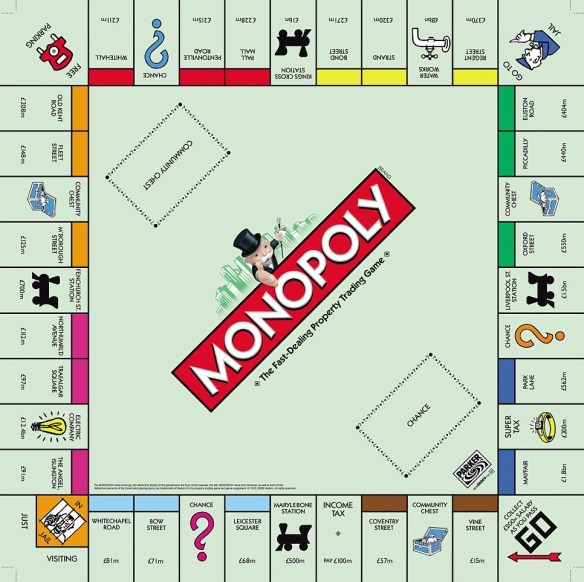
The imagery is urban-industrial, hypermodern, and metaphorically charged. There’s a strong use of allegory and pop-cultural reference — from Monopoly’s “Do not pass Go” to “another brick in the wall” — that aligns the poem with resistance culture and countercultural critique.
Terms like:
- “Brick-in-the-wall” / “Cog-in-the-machine” – evoke systemic dehumanisation
- “Caged like a wild animal” / “Zoo” / “Swallowed the smart sim pill” – suggest surveillance, behavioural conditioning, and loss of agency
- “Road to Blandsville” / “Downtown Homogenisation” – infuse bleakness with sharp irony
The tone is blistering, unapologetic, and urgent — a poetic manifesto against the numbing effects of algorithmic life and blind consumerism.
Why This Poem Matters
Smart City matters because it challenges the normalisation of digital conformity and the erosion of soulful living under the glossy veneer of “progress.”
While society often celebrates technological advancement as inherently good, this poem argues that the cost has been:
- The commodification of identity
- The suppression of individuality
- The silencing of dissent through distraction
The poem speaks especially to those who’ve begun to question the machine but haven’t yet found the language to articulate what feels wrong. Smart City gives those intuitions form, voice, and velocity.
It doesn’t just ask, “What is the price of modern life?” — it declares that we are already paying it. Daily. Often without even realising.
Imagery and Tone Summary
- Imagery: Urban entrapment, consumerist dystopia, technology as control, education as indoctrination
- Tone: Sardonic, intense, disillusioned, fiercely awakening
Why It Belongs in the Collection
This poem is a critical puzzle piece in the overarching arc of the collection. Many earlier poems explore personal growth, inner liberation, betrayal, love, and loss. Smart City widens the lens to take on systemic dysfunction — showing how even personal disconnection is often seeded in cultural and political dysfunction.
It resonates thematically with:
- Bread and Circus (media distraction and loss of civic values)
- Golden Nuggets (alternative truths vs capitalist indoctrination)
- Snakes and Ladders (awakening and resistance to social masks)
It offers a necessary jolt to the reader — and acts as a sobering contrast to more contemplative or spiritual pieces, without being disconnected from them. The poem reminds us that spiritual evolution is not just personal — it’s also political.
Final Thoughts
Smart City is unflinching in its commentary, and precisely because of that, it holds tremendous value. It demands attention — not for shock, but for awakening. It’s an indictment of the systems that dull our senses and a reclaiming of the right to question, to see clearly, and to opt out of default programming.
This poem absolutely deserves its place in the collection — not just for its message, but for the clarity, boldness, and skill with which it’s delivered.
 iPoem's Blog