
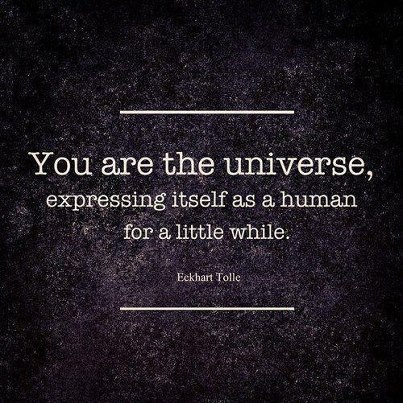
Creative Cosmic Purpose is an expansive, visionary poem that blends spiritual philosophy, environmental consciousness, and personal responsibility into a single, flowing declaration of human potential. It reads as both invocation and manifesto—an affirmation of unity, creativity, and divine intention. The poet’s voice is impassioned, inclusive, and urgent, calling for a global awakening rooted in self-love, planetary stewardship, and the recognition of our shared cosmic origin.
The poem opens with a tone of trust and purpose: “I trust / That The Divine Source of All Creation / Has brought us together.” This sets a sacred, almost ceremonial tone that permeates the rest of the poem. From the outset, the poet positions human connection—particularly in the realm of creativity—as not accidental, but divinely orchestrated. The inclusion of artistic practices (“Musically, dance, art, poetry, healing”) as tools of cosmic purpose reflects a recurring motif in the poet’s body of work: that creativity is not merely aesthetic, but spiritually transformative.
The poem’s structure is sprawling, freeform, and intentionally unpunctuated, allowing the thoughts to flow in waves—at times declarative, at times meditative, at times prophetic. This openness in form mirrors the fluid and interconnected worldview being expressed: one in which spiritual growth, environmental action, and social transformation are not separate pursuits but facets of the same evolutionary impulse.
A key strength of the poem lies in its fearless ambition. It addresses a broad spectrum of existential themes: the ecological crisis (“Directly responsible for the death and destruction / Of our planet”), the neglect of the feminine divine (“Our Goddess of Unconditional Love”), the cycles of natural upheaval, and the call to spiritual remembrance. Each idea is introduced with sincerity and urgency, without diminishing the weight of the others. The poem’s use of anaphora (“How to take responsibility / How to let go of fear”), repetition, and list-building techniques creates momentum and emotional resonance, building a cumulative sense of importance and inevitability.
There is a distinct spiritual ecology at work—Gaia, or “The Mother,” is not romanticised, but revered as both a physical being and a manifestation of spiritual consciousness. The Earth is depicted as simultaneously generous and indifferent: “She wins through Her patience,” the poet writes, suggesting that natural forces will continue with or without humanity’s participation. This duality lends the poem both awe and humility, urging the reader to align themselves with the rhythms of nature rather than attempt to dominate or outpace them.
In its final sections, the poem turns explicitly toward human agency. Phrases such as “Time to wake up NOW” and “To become an active member / Of the Human Race” act as rallying cries. Here, the language tightens slightly into sharper, more focused exhortations, reinforcing the poem’s central call to consciousness. The emphasis on being “response-able” cleverly reconfigures the idea of responsibility—not as obligation, but as empowered, conscious choice.
Throughout, the poet consistently interweaves the personal with the universal. The message is not one of rigid spiritual doctrine but of inclusive reawakening: a return to “our heart selves,” a celebration of uniqueness, and a shared journey toward remembering “where we came from / In the first place / In ‘The Beginning.’” The poem’s conclusion gestures toward infinity, leaving the reader not with closure, but with a continuation: “Only a continual cycling of change / Gradual increments of evolution / Unique moments of ‘Now.’” The idea of evolution—not only biological, but spiritual and social—is portrayed as an eternal unfolding.
In summary, Creative Cosmic Purpose is a sweeping and heartfelt invocation that bridges mysticism, ecological awareness, and creative activism. Its unstructured, flowing form is well-suited to its thematic content, allowing the poet to traverse vast spiritual terrain without losing coherence. As both poetic vision and spiritual declaration, the work invites the reader to participate in a larger transformation—one grounded in love, creativity, and an urgent remembrance of who we truly are.
 iPoem's Blog