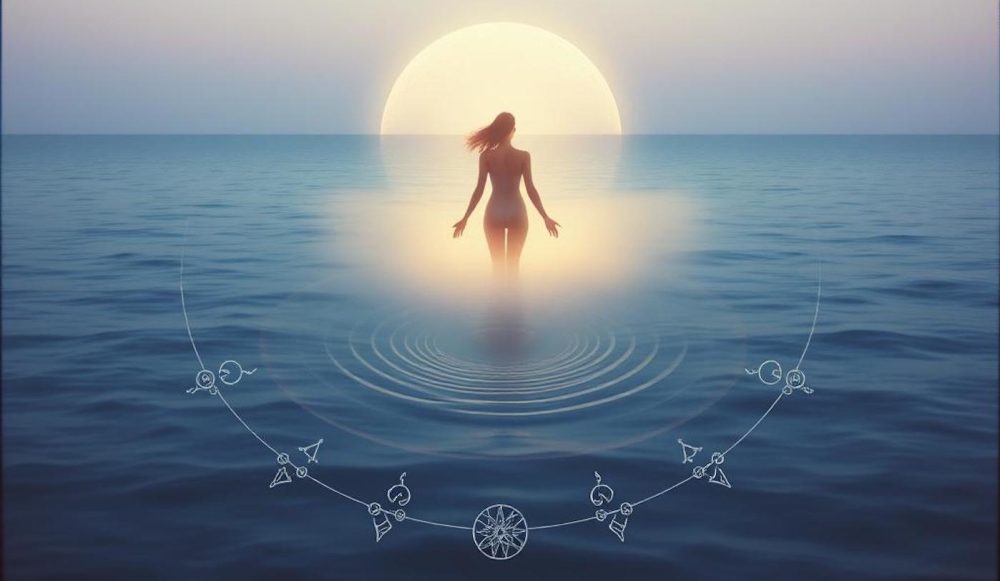
Etymology—The Album Amicorum, also known as the ‘Alba Amicorum’, was an early form of the poetry book, which translates to an ‘album of friends,’ which later evolved into the autograph book, friendship book and an album of souvenirs. The word ‘album’ originates from the word ‘alba’ meaning ‘white,’ as in the white or blank page, in use since the mid 1500’s and was intricately illustrated with hand-painted watercolours depicting people, places and scenes, serving as a study journal for the Dutch scholar, a travelogue of a soldier, or a visual diary, memoir, or keepsake of an aristocrat to preserve memories of foreign places and pleasant encounters, serving perhaps as an early precursor to the photograph album.
Instructions:
- Ensure your default browser camera is turned on in settings
- Scan the QR Code
- Tap: Open > Start AR > Allow camera access
- A taskbar will indicate that the data is loading; when fully loaded, it will say “AR Ready.”
- When AR is ready, hold your smartphone camera over the first image—a song will automatically start playing.
- Each of the 17 images triggers a different song.
- To stop the song from playing, a) choose a different image, or b) close the browser window.
- If there is no sound, try copying and pasting https://belove.info into a new browser window, or use a different browser following the same steps. If still no sound try disabling your VPN.

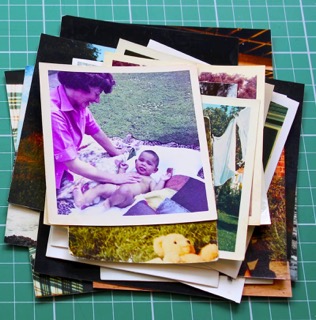

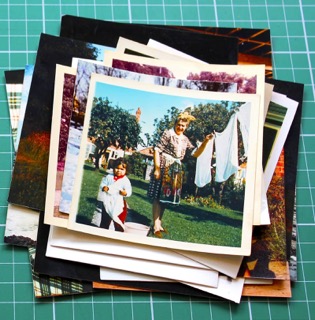

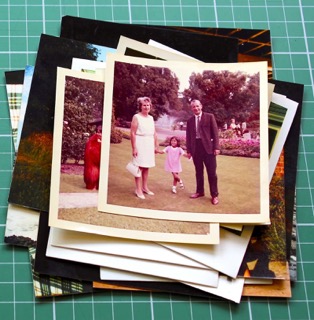
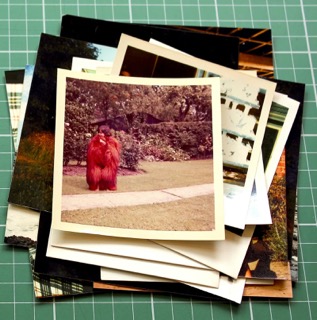


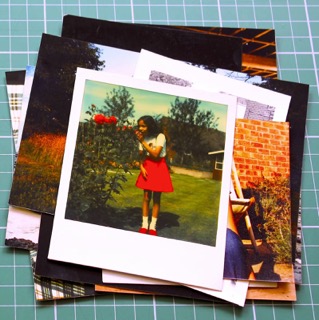
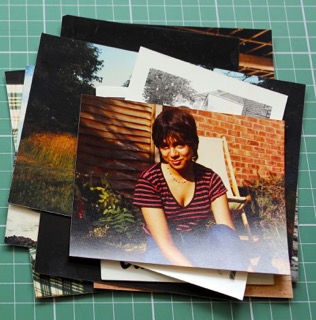
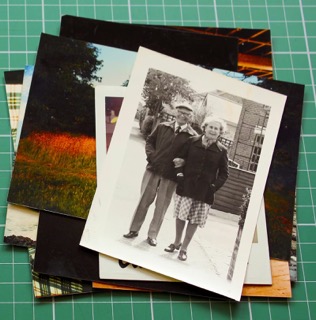
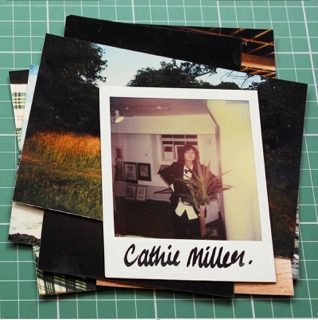
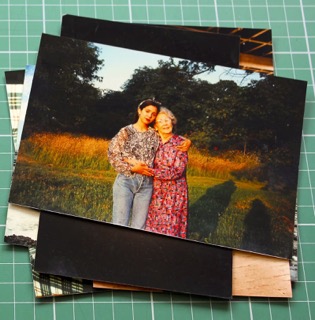
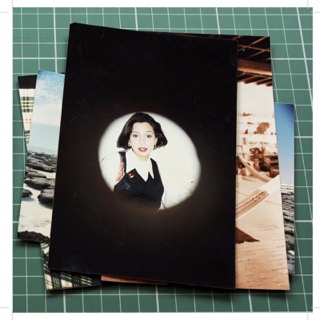
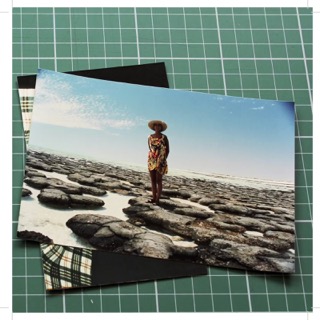
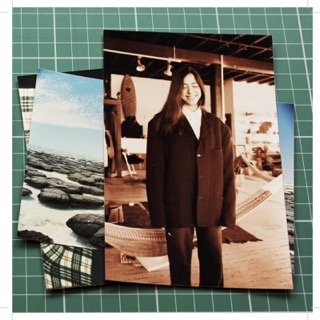
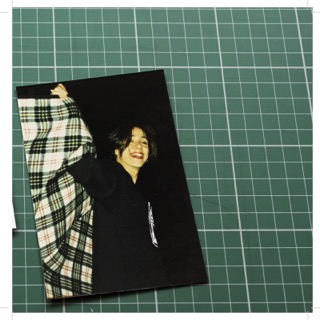
Summary: For my MRes project, I focused on decolonising the Artist’s Book, a form that traditionally has low visibility as a result of being hidden away in library archives, viewable only by appointment. Album Amicorum—Latin for “album of friends“—explores how the hidden can be made visible, through narrative, image, text, sound and emerging technologies. My aim was to resurrect an analogue Artist’s Book I had created (formerly entitled Sequence) by adding layers of digital materiality, using XR technology to enable a smartphone camera to recognise selected images from the book. Each image triggers a specific song, generated by AI, using my own poems, the archive of which I have compiled into a separate collection entitled Nóēma Poēma. For me what is one of the most interesting things about the Album Amicorum project and the use of emerging technology is that it enables the viewer to hear the adult thoughts of the artist, long before these thoughts existed, whilst viewing childhood photographs from the artist’s family album, in real time.
The project became a unique synthesis of audiovisual, analogue, digital and matrilineal themes, via a reimagined Artist’s Book that is also an album of songs, adapted from didactic poetics. I also used some of these songs to explore a motion-capture dance sequence for a VR experience to rekindle a sense of playfulness. As a result, through the processes of autoethnography, autotheory and self-archival, I have collated a hybrid trilogy that incorporates multimodal digital materialities and transmedia storytelling with multisensory art forms. For me, each poem is a keyframe moment in the experiential timeline of my life, and each song has become a sonic memory that is now an integral part of my identity.
1—Album Amicorum—the world’s first decolonised, interactive artist’s book using AR, XR and AI tech. The process of decolonising the Artist’s Book was achieved by using AI, AR and XR technology to enable smartphone cameras to recognise selected images, providing layers of digital materiality and accessibility. Each image triggered an AI-generated music track using lyrics transposed from my own original poems, compiled into a separate volume entitled Noēma Poēma, weaving memory, identity and matrilineal wisdom with emerging technologies, that is also an album of songs.
2—Love Made Visible—is a blues-jazz album, serving as a poetic soundscape that sings the texts from Nóēma Poēma to life, also adding context to the analogue photographs from the family album, where the viewer can hear the adult thoughts of the child in the photographs, long before these thoughts ever existed. [More EP‘s and Singles are available on Bandcamp.]
3—Nóēma Poēma—a comprehensive collection of poetic musings that maps the inner terrain over four decades of generational change, also serving as source material for future digital soundscapes and immersive experiences; consisting of 131 poems, manifestos and invocations across 412 pages.
I’m particularly interested in inner narratives—the stories we tell ourselves—and how these can be rewritten through immersive and poetic experience by tapping into an underlying matrilineal wisdom, the hidden unseen spiritual aspects of living with presence, which I believe help us to attune with the natural frequencies of the earth, and as such I am very interested in light and sound as cymatic pattern, frequency and vibration as ways to build new and improved societal systems using storytelling in conjunction with neuro-informed design and spatial intelligence. I would also like to deepen my inquiry into immersive storytelling as a tool for consciousness expansion, healing, and the restoration of cultural memory.
To my knowledge, Album Amicorum is the first digitally augmented and decolonised Artist’s Book of its kind, which with the righpublisher, can potentially extend beyond the archives of special collections.


Music LP’s/EP’s/singles are available for download from Bandcamp
All the song lyrics originally began as poems, which I have collated into one volume entitled “Noēma Poēma“.

Cat’s 2025 Thesis: Reimagining Humanitarian, Spiritual and Matrilineal Values in a Patriarchal World, through AI, Cymatics and the Poetic Medium is available as a full-colour hardback volume (A4 landscape).
In addition, the 2025 thesis builds upon Cat’s former 2019 academic dissertation: ‘How does the Materiality of the Artist’s Book Help to Augment an Understanding With Respect to Creating a Narrative About Memory and Identity?‘ available as a free download from the Wellcome Collection website..
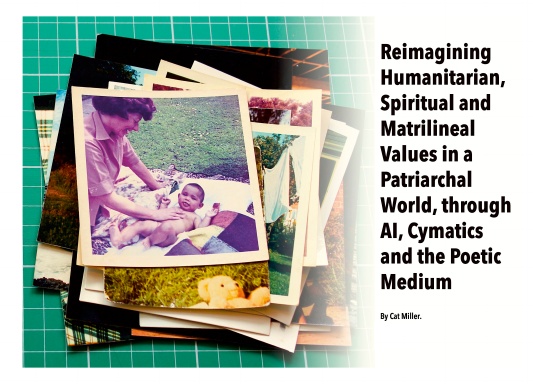
My research journey began at the UAL Camberwell MA book Arts, with a recto-verso Artist’s Book, formerly entitled ‘Sequence’ that I created for my mother—using family photographs to support her post-stroke memory loss and sense of identity. The bookwork was influenced by the following artists:
– Wade Guyton—layering digital photography and print.
– Chandra Mohini—showing the backs of photographs as art.
– Michael Snow—his book Cover to Cover with synchronised image sequences.
This led to the idea of layers—of time, image, memory, and identity—which then evolved into digital layers through AI, XR and VR which became: Album Amicorum.

 iPoem's Blog